Thank You in French: Merci, Merci Beaucoup & 12 More Ways
Merci is the first French word most people learn and the one they will say most often — but it is only the front door of French gratitude. Behind it sits a whole register system: the warm merci beaucoup , the formal je vous remercie , the slangy cimer , and a trap or two…
What you'll learn
Merci is the first French word most people learn and the one they will say most often — but it is only the front door of French gratitude. Behind it sits a whole register system: the warm merci beaucoup, the formal je vous remercie, the slangy cimer, and a trap or two (looking at you, merci bien). This guide gives you every useful way to say thank you in French, how to pronounce each one, how to answer when someone thanks YOU, and the cultural rules French people follow without thinking.
The essentials: merci and merci beaucoup
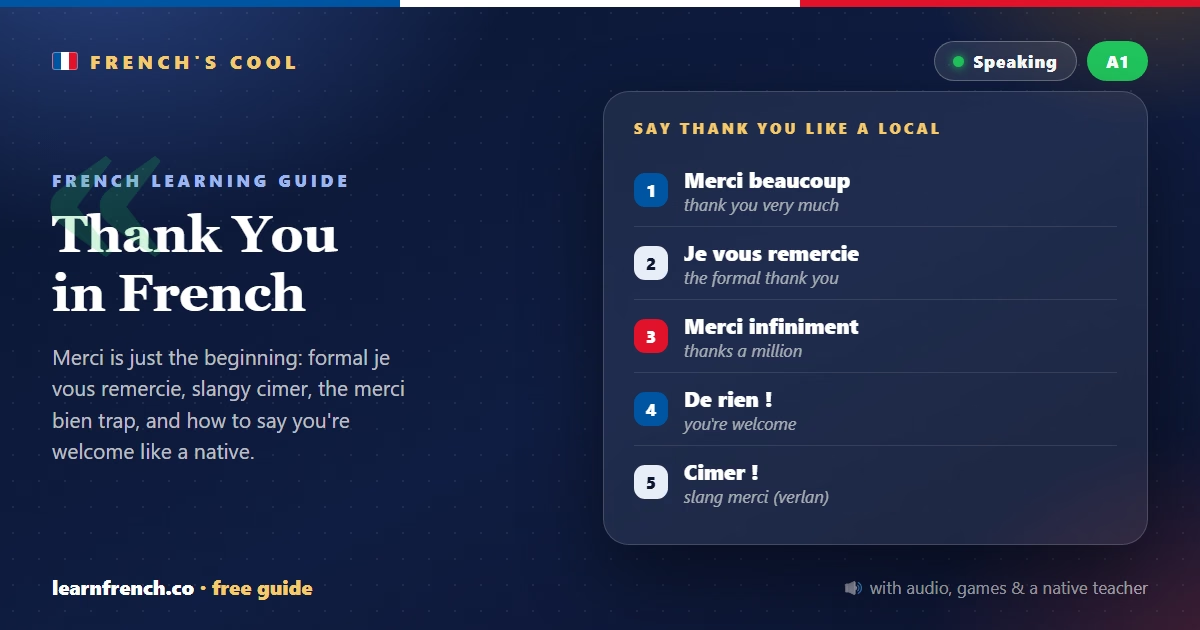
Merci (mair-SEE) is thank you — universal, polite, never wrong. Merci beaucoup (mair-SEE boh-KOO) is thank you very much, and it is the everyday upgrade French speakers reach for dozens of times a day. Two habits make both sound native: say them to a person, not to the air — French politeness is directed — and add the address word: merci, madame; merci beaucoup, monsieur. In shops and bakeries this tiny addition is half of sounding polite in France.
- Merci — thank you
- Merci beaucoup — thank you very much
- Merci à tous — thank you, everyone
- Merci pour tout — thanks for everything
- Merci d’avance — thanks in advance
- Non merci — no, thank you
Formal ways to express gratitude
When merci feels too small — emails, bosses, in-laws, official letters — the French verb remercier (to thank) takes over. Je vous remercie (zhuh voo ruh-mair-SEE) is the formal thank you of professional life: je vous remercie pour votre réponse, je vous remercie de votre patience. Stack the superlatives when you mean it: merci infiniment (thanks a million — literally infinitely) and mille mercis (a thousand thanks) are warm without being stiff, and je vous remercie du fond du cœur — from the bottom of my heart — is for the moments that deserve it. In writing, avec tous mes remerciements (with all my thanks) closes a letter gracefully.
Casual and slang thank yous
With friends, French relaxes. Merci mille fois (thanks a thousand times) is enthusiastic and safe anywhere. French slang goes further: cimer is verlan — the French back-slang that flips syllables — for merci (mer-ci → ci-mer), and you will hear it from younger French speakers in Paris the way English speakers say cheers or ta. Use it with friends only; cimer to a shopkeeper earns you an eyebrow. Text-message French shortens everything: mci or merciii with extra i’s for warmth.
How to say you’re welcome in French
Gratitude is a two-way street, and the reply matters as much as the thanks. The standard answer is de rien (duh RYA(N)) — it’s nothing. More polite: je vous en prie (formal) / je t’en prie (informal) — the elegant you’re-welcome of waiters, hosts and anyone being gracious. Regional bonus: in Quebec you’ll hear bienvenue for you’re welcome, and across France avec plaisir — with pleasure — especially in the south. If someone thanks you for a favour you’d happily repeat, quand tu veux (any time) is the friendly sign-off.
— Voulez-vous vous asseoir ici ? (Would you like to sit here?)
— Merci beaucoup, c’est très gentil ! (Thank you very much, that’s very kind!)
— Je vous en prie. (You’re welcome.)
The culture of merci
One quirk worth knowing: a bare merci in answer to an offer means no, thank you. If someone offers you wine and you say « merci », the bottle may pass you by. Accept with oui, merci or volontiers (gladly); decline with non merci.
FAQ
Do you say merci or merci beaucoup?
Both, constantly. Merci is the default for every small exchange; merci beaucoup when someone did a little more than the minimum. You cannot overuse either.
How do you politely say thank you in French?
Merci beaucoup, madame/monsieur in person; je vous remercie in formal writing and professional settings. Adding the address word (madame, monsieur) is the real politeness upgrade.
Is it correct to say « merci bien »?
It exists and natives use it, but it can sound ironic with the wrong intonation. Learners should prefer merci beaucoup — identical warmth, zero risk.
What’s a slang way to say thank you?
« Cimer » — verlan for merci — among young friends, plus stretched spellings like mercii in texts. Keep both far away from formal situations.
How do I answer when someone thanks me?
De rien (casual), je vous en prie (polite/formal), avec plaisir (warm). All three are correct everywhere in France.
Merci d’avoir lu — thanks for reading! To practise your pleases and thank-yous on a real French person, book a free lesson with Xavier, drill the phrases with our free French games, pick up daily vocabulary with the word of the day, or browse the rest of the free lessons and vocabulary lists.
🎬 This article in 20 seconds
The quick version — the full detail is below. More shorts → Open this short as a page — transcript included →