Reading
Articles
Notes on learning French — levels, exams, grammar that finally clicks, and the culture behind the language. Written by Xavier, one lesson at a time.
 Thank You in French: Merci, Merci Beaucoup & 12 More WaysMerci is just the beginning: formal je vous remercie, slangy cimer, the merci bien trap, and how to say you're welcome like a native.Merci is the first French word most people learn and the one they will say most often — but it is only the front door of French gratitude. Behind it sits a whole register system: the warm merci beaucoup , the formal je vous remercie , the slangy cimer , and a trap or two…
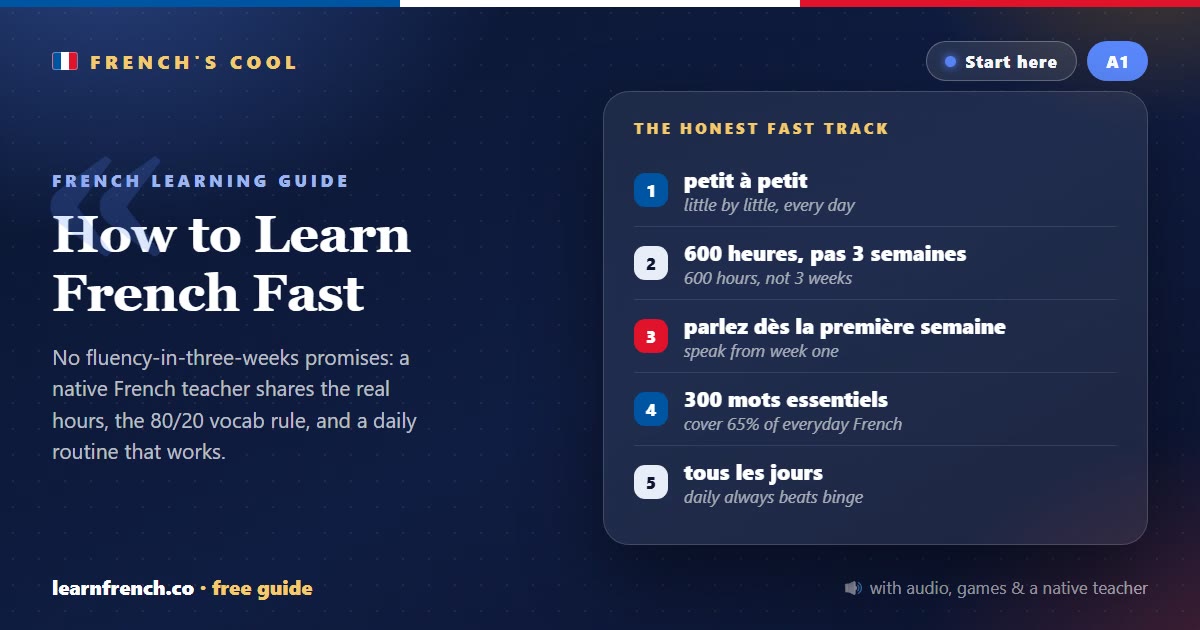 A1How to Learn French Fast: An Honest Guide for BeginnersType "how to learn French fast" into a search engine and you will be promised fluency in three weeks — usually by someone selling a subscription. As a native French teacher, I would rather give you the honest version: how many hours French really takes, which 20% of the language delivers 80% of your results,…
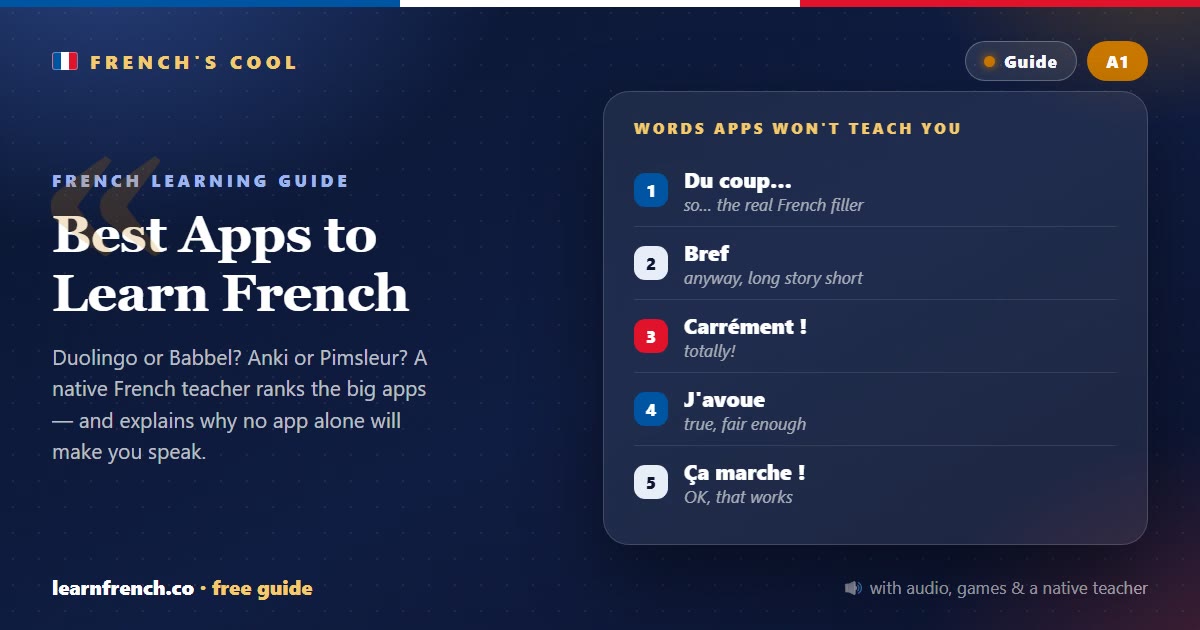 A1Best Apps to Learn French: A Teacher's Honest Review (2026)Every single week, a student asks me the same question: « Xavier, quelle appli ? » (kell ah-PLEE) — which app should I use to learn French? So I did what a slightly obsessive French teacher does: I worked through the big French learning apps myself — Duolingo, Babbel, Busuu, Memrise, Anki, Pimsleur, LingQ, Rosetta…
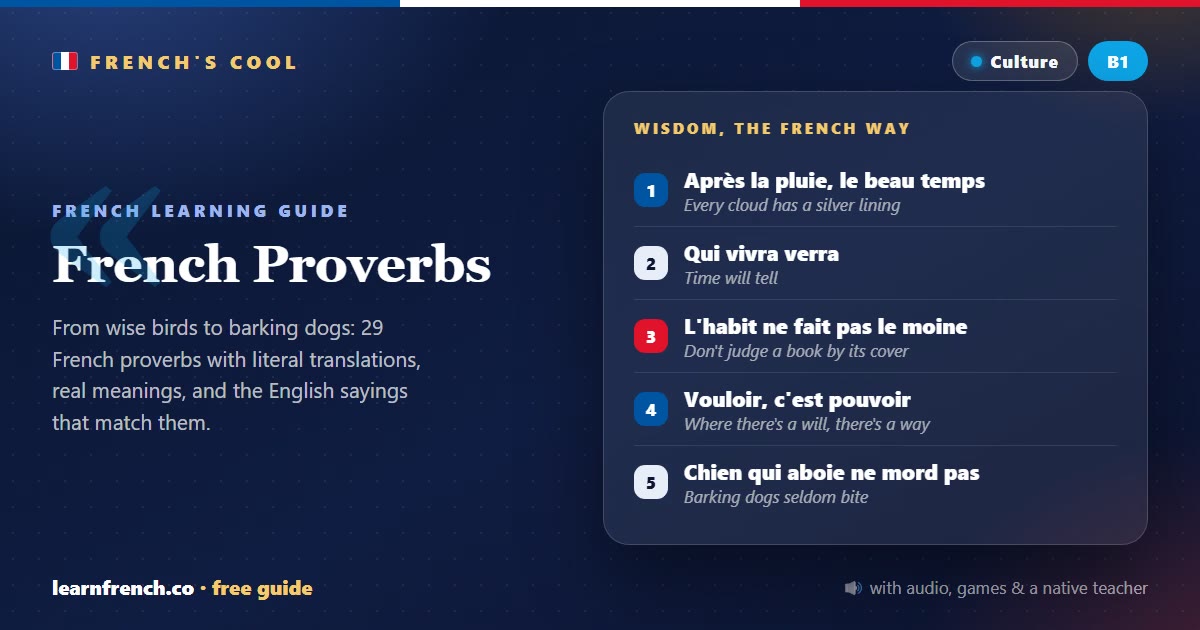 B1French Proverbs: 29 Famous Sayings with English EquivalentsMy grandmother never gave advice directly. If I complained that something was taking too long, she would peel her potatoes and murmur, « Petit à petit, l'oiseau fait son nid » — little by little, the bird builds its nest. That is how French proverbs work: they are the shortcuts French culture uses instead of…
 A215 French Tongue Twisters to Sharpen Your PronunciationFrench muscles exist. Not the ones in the mirror — the ones in your mouth. A French tongue twister, or virelangue (veer-LAHNG, literally a "tongue-turner"), is the fastest way to train them. Below you'll find 15 real French tongue twisters, ranked from easy to fiendish, each with a translation, pronunciation help, and the exact sound…
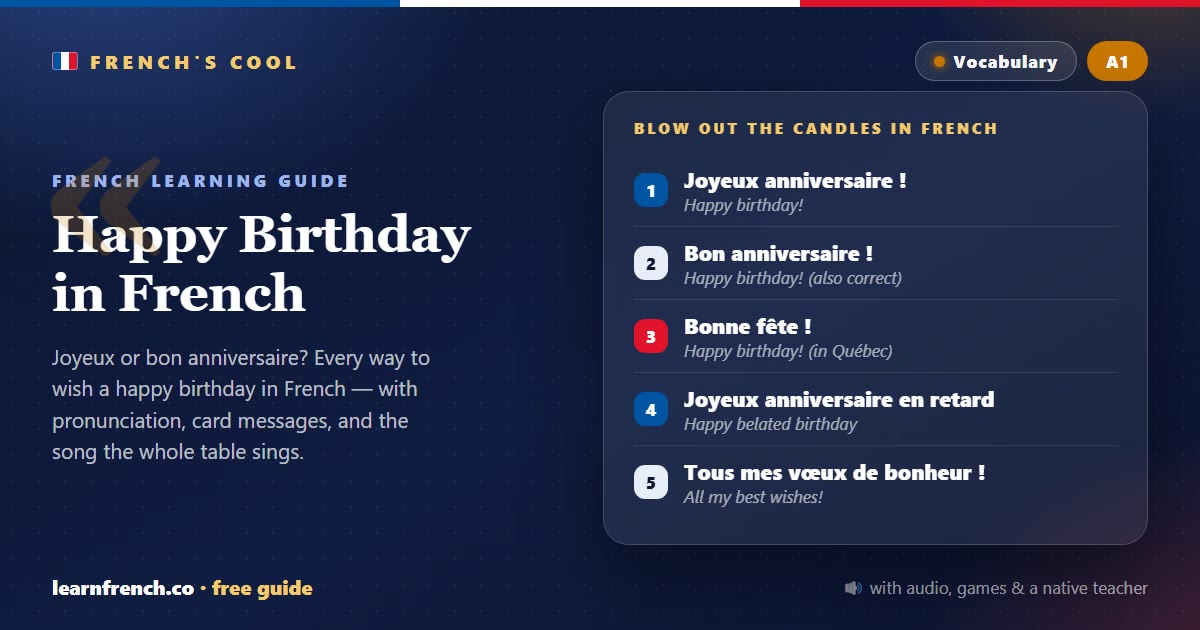 A1Happy Birthday in French: Joyeux vs Bon AnniversaireAsk a translator how to say happy birthday in French and you get two answers: joyeux anniversaire and bon anniversaire . Both are correct, French speakers use both, and neither will raise an eyebrow at a birthday party. But there is a third phrase — bonne fête — that means one thing in Montréal and…
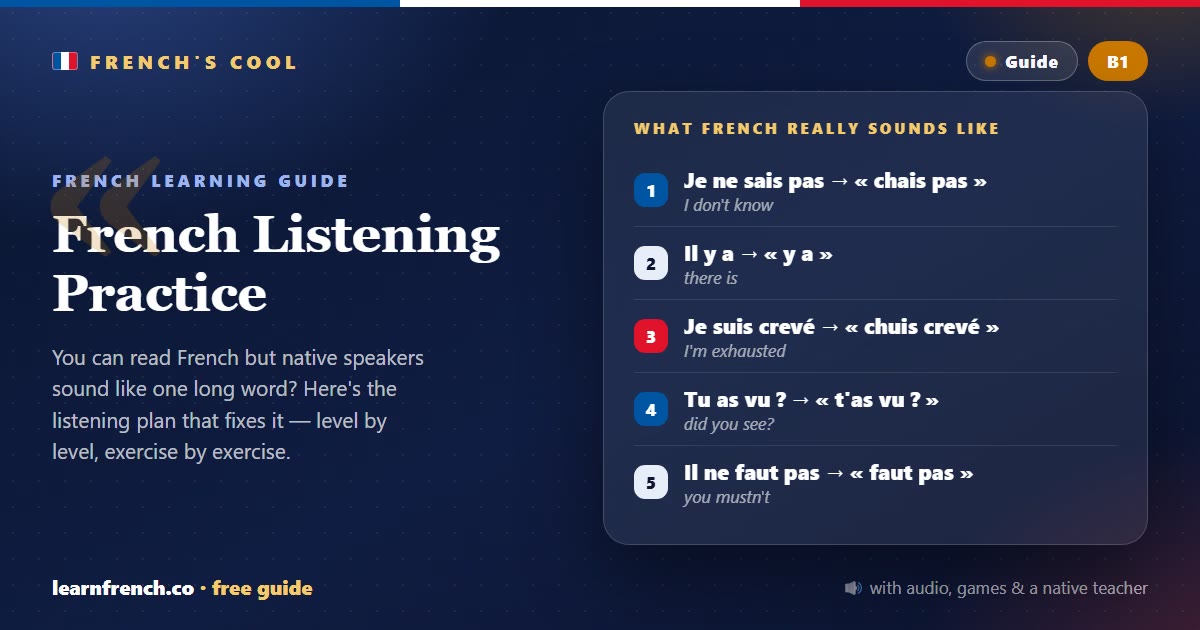 B1French Listening Practice: A Level-by-Level Training PlanYou can read a French menu. You can conjugate être in your sleep. Then a native French speaker opens their mouth and the whole sentence arrives as one long, melted word. If that sounds familiar, the problem is not your grammar and not your memory — it's that nobody ever gave you a plan to…
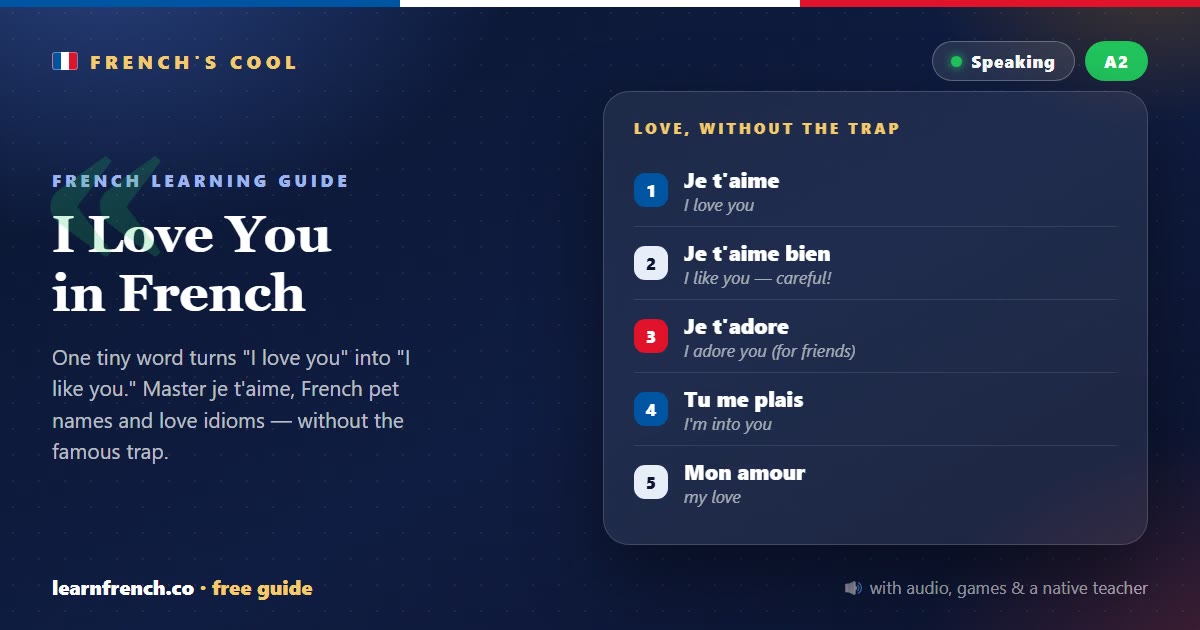 A2I Love You in French: Je t'aime + 12 More Ways to Say ItFrench is called the language of love, so you would expect saying "I love you" in French to be simple. It almost is: je t'aime covers it. But French hides a trap that catches nearly every English speaker — add the innocent little word bien , and you have just demoted the love of your…
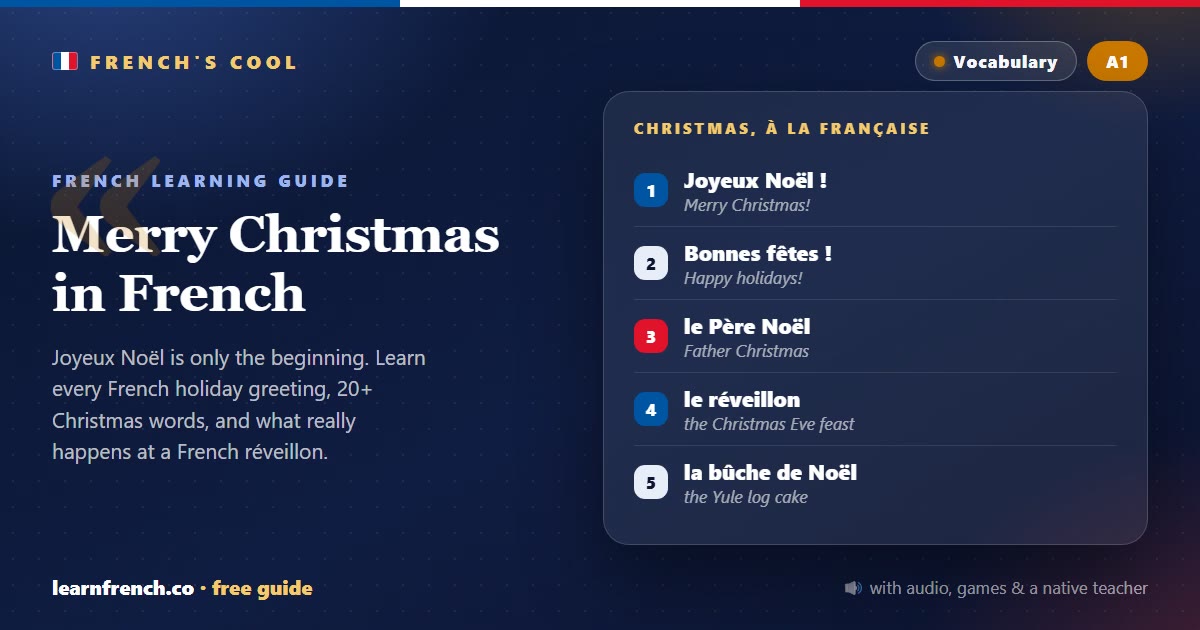 A1Merry Christmas in French: Joyeux Noël + Every Holiday GreetingMerry Christmas in French is Joyeux Noël — literally "joyful Christmas" — and it is pronounced zhwah-yeuh noh-EL . That one expression will carry you through most of December. But French has a whole wardrobe of holiday greetings, each with its own occasion, and a Christmas vocabulary that tells you a lot about how France…
 A2Learn French with Podcasts: The Level-by-Level GuidePodcasts are the easiest French habit to keep: no screen, no desk, no excuse. The trap is choosing by popularity instead of by level — a podcast you understand 30% of teaches you almost nothing. Here’s the ladder, rung by rung. Beginner (A1–A2): French with training wheels Coffee Break French — bite-sized lessons with English…
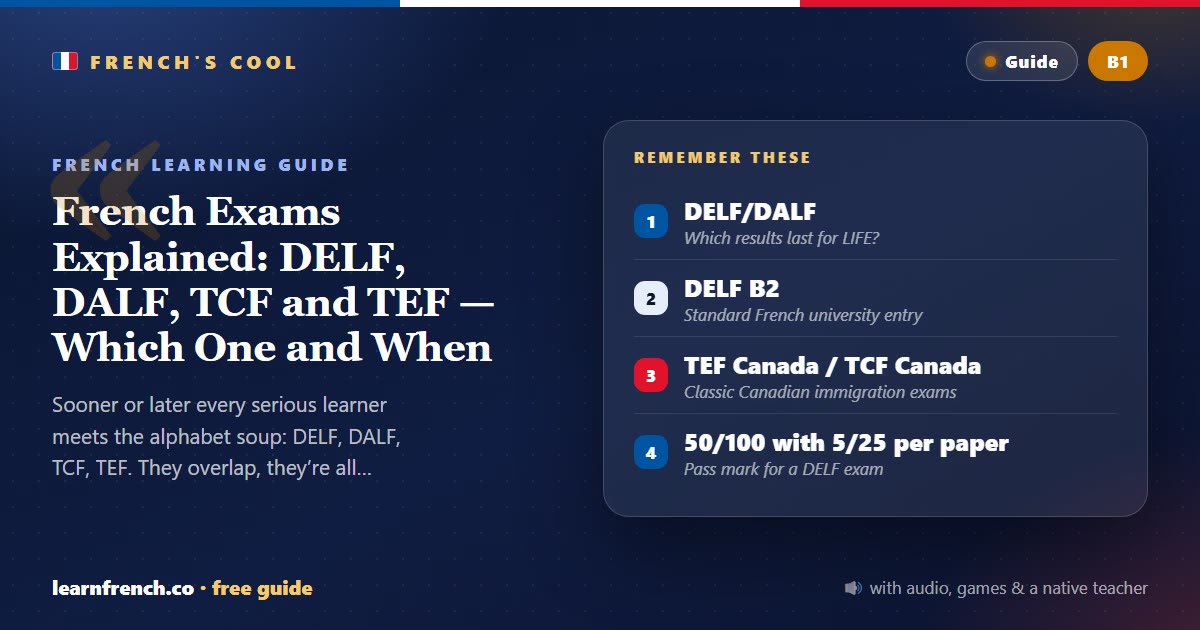 B1French Exams Explained: DELF, DALF, TCF and TEF — Which One and WhenSooner or later every serious learner meets the alphabet soup: DELF, DALF, TCF, TEF. They overlap, they’re all official — and they serve different masters. Here’s the map. The two families Diplomas (DELF/DALF) — you pass a level, you keep it for life . Tests (TCF/TEF) — they photograph your level today; results expire after…
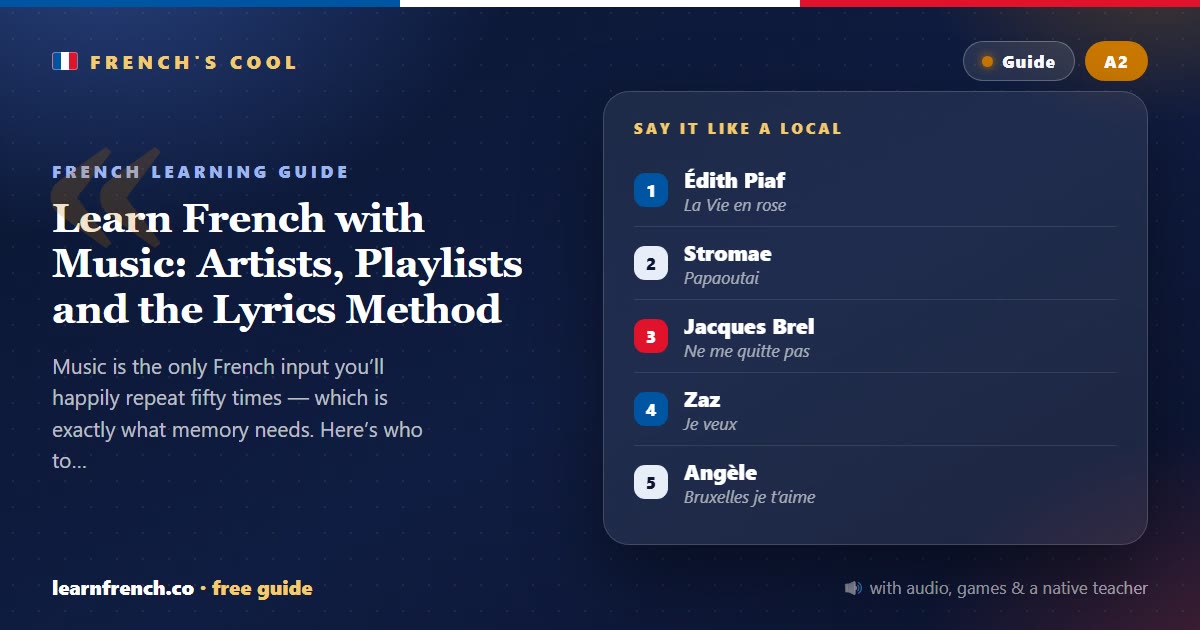 A2Learn French with Music: Artists, Playlists and the Lyrics MethodMusic is the only French input you’ll happily repeat fifty times — which is exactly what memory needs. Here’s who to listen to at each level, and how to turn a three-minute song into a full lesson. Why sung French works Melody chunks language into memorable phrases, slows vowels down so you can actually hear…
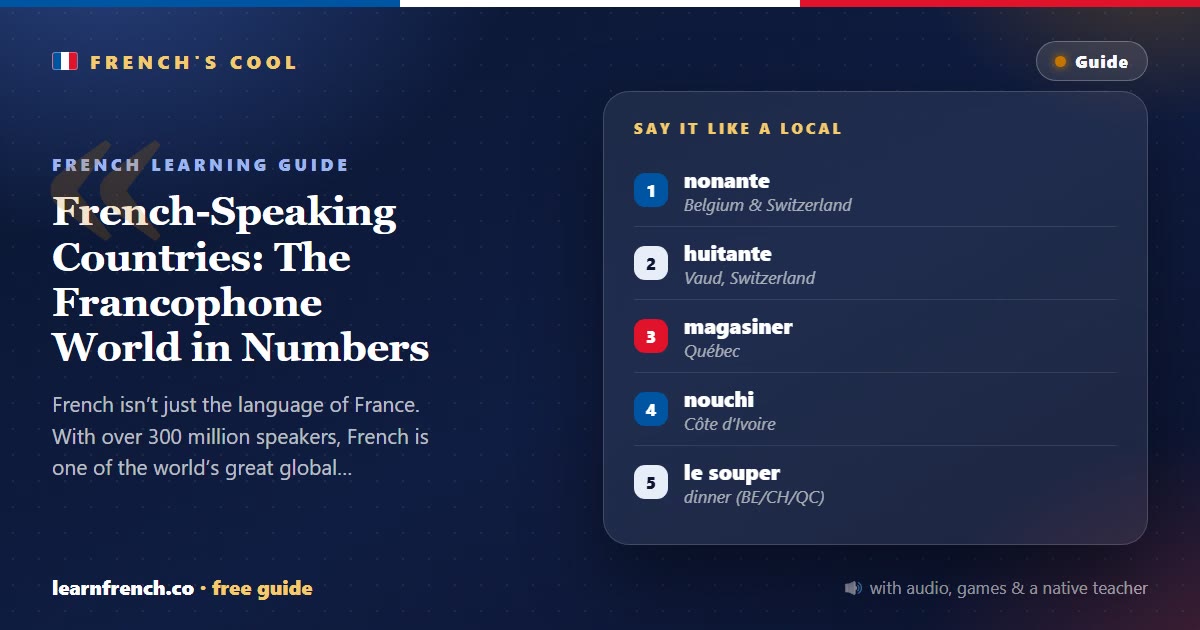 A2French-Speaking Countries: The Francophone World in NumbersFrench isn’t just the language of France. With over 300 million speakers , French is one of the world’s great global languages — official in 29 countries across five continents. Here’s a tour of the francophone world , and why it makes learning French such a smart investment. Where is French an official language? Region…
 A2A Weekend in Paris: The French You’ll Actually UseTwo days, one city, and just enough French to make it click. You don’t need to be fluent for a Paris weekend — you need the right phrases at the right moments . Here’s a Friday-to-Sunday walk-through, with the French you’ll actually say (tap 🔊 to hear each one), and where to dig deeper on…
 A212 French Culture Surprises (and How Not to Offend Anyone)You can speak perfect French and still feel lost, because so much of « being French » is unwritten . Here are twelve things that catch newcomers off guard — knowing them will save you a few awkward moments (and win you some smiles). 1. « Bonjour » is not optional Walk into a shop,…
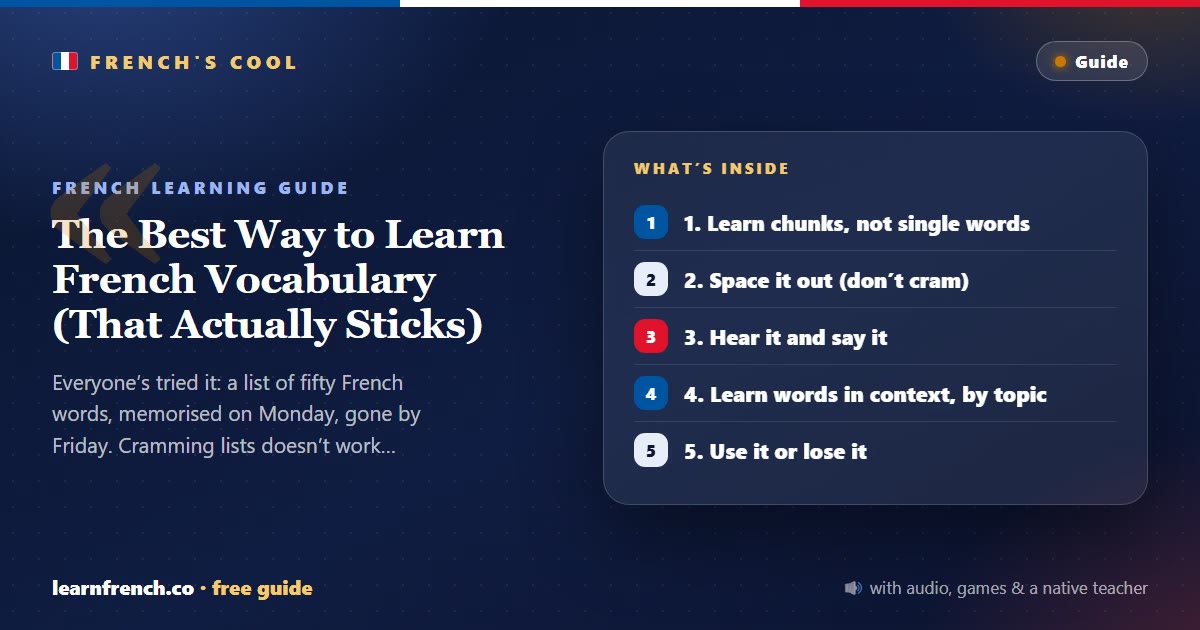 A1The Best Way to Learn French Vocabulary (That Actually Sticks)Everyone’s tried it: a list of fifty French words, memorised on Monday, gone by Friday. Cramming lists doesn’t work because it fights how memory actually operates. Here are five habits that make French vocabulary stick for good — and where to practise each on this site. 1. Learn chunks, not single words Your brain stores…
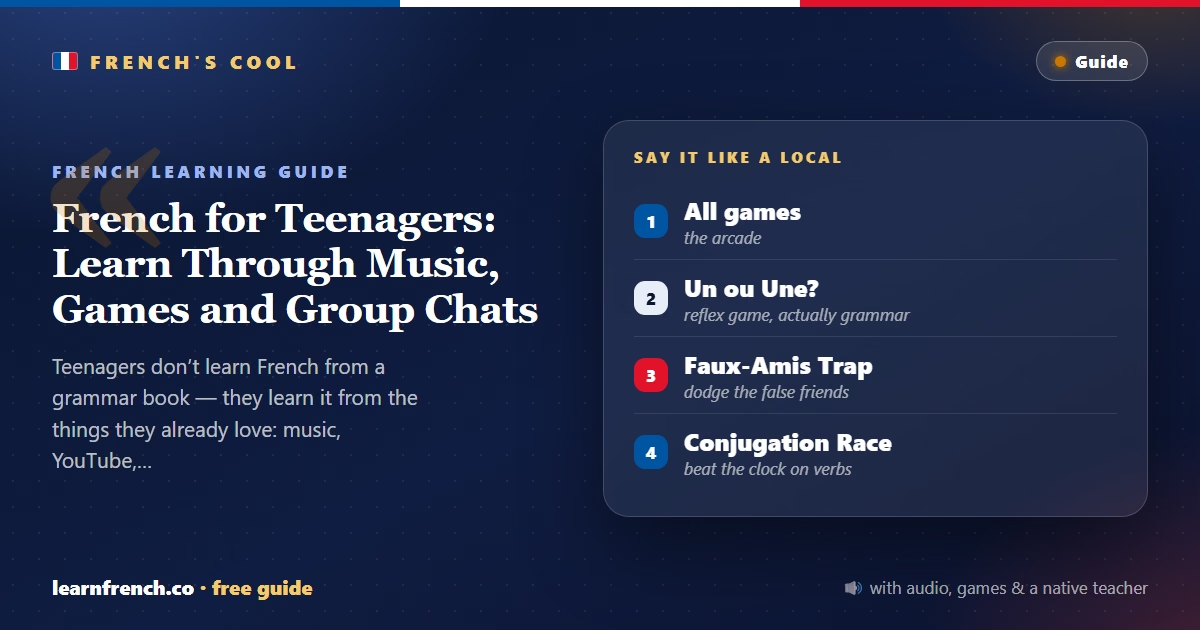 A2French for Teenagers: Learn Through Music, Games and Group ChatsTeenagers don’t learn French from a grammar book — they learn it from the things they already love: music, YouTube, games and group chats. The trick is to point that energy at French . Here’s how a teen (or a parent helping one) can turn screen time into real progress — and where to start…
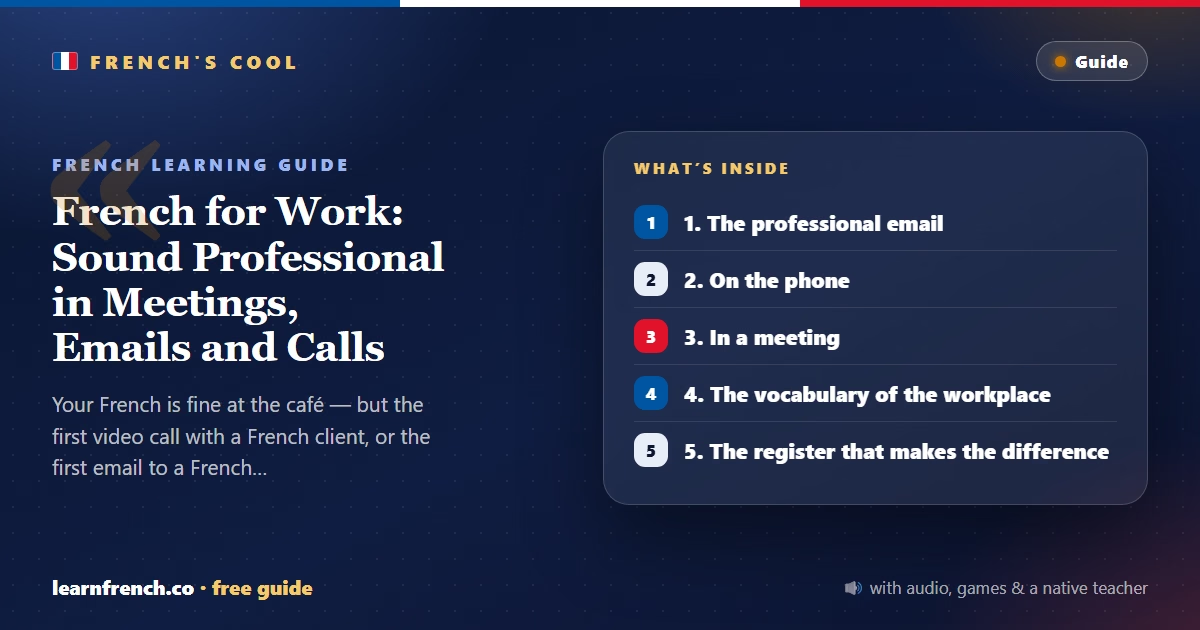 B1French for Work: Sound Professional in Meetings, Emails and CallsYour French is fine at the café — but the first video call with a French client, or the first email to a French colleague, is a different game. Professional French has its own register: more formal, more vous , more fixed phrases. The good news is that it’s largely formulaic — learn the templates…
 A1How to Learn French Verbs (Without Memorising 1,000 Conjugations)There are thousands of French verbs, and beginners often try to memorise them one conjugation at a time. That way lies despair. The truth every fluent speaker knows: French verbs run on a small set of patterns . Learn the patterns, learn ~20 irregular workhorses, and you can conjugate almost anything. Here’s the system —…
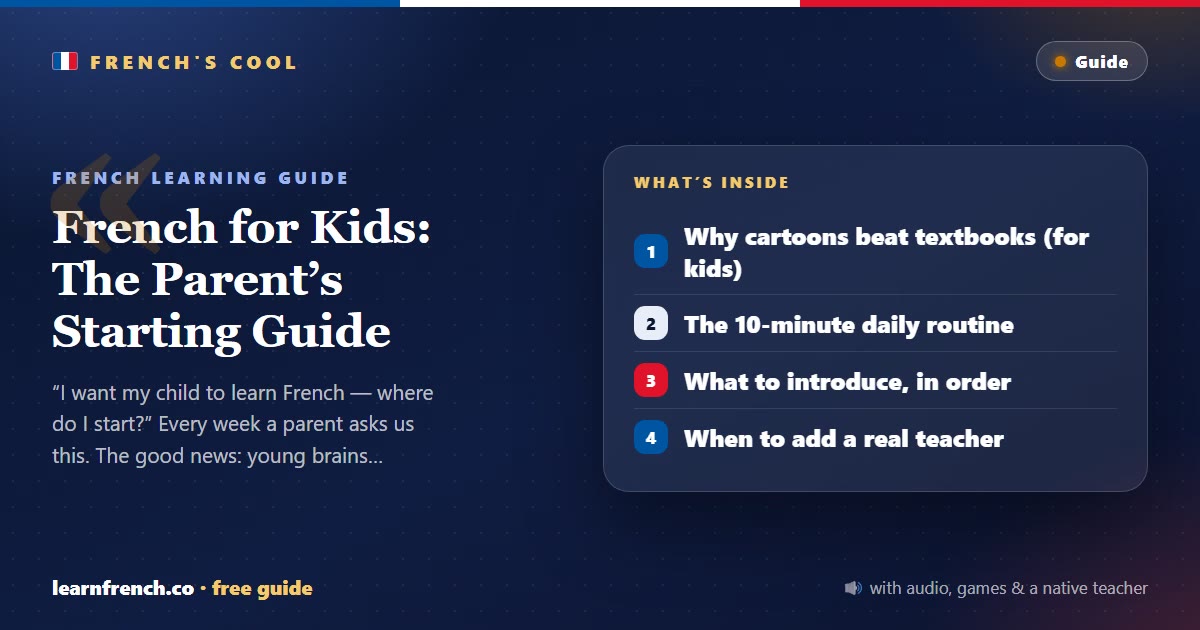 A1French for Kids: The Parent’s Starting Guide“I want my child to learn French — where do I start?” Every week a parent asks us this. The good news: young brains are language sponges, and French for kids doesn’t need worksheets or pressure. It needs cartoons, games and ten joyful minutes a day . Here’s the method — and the complete free…
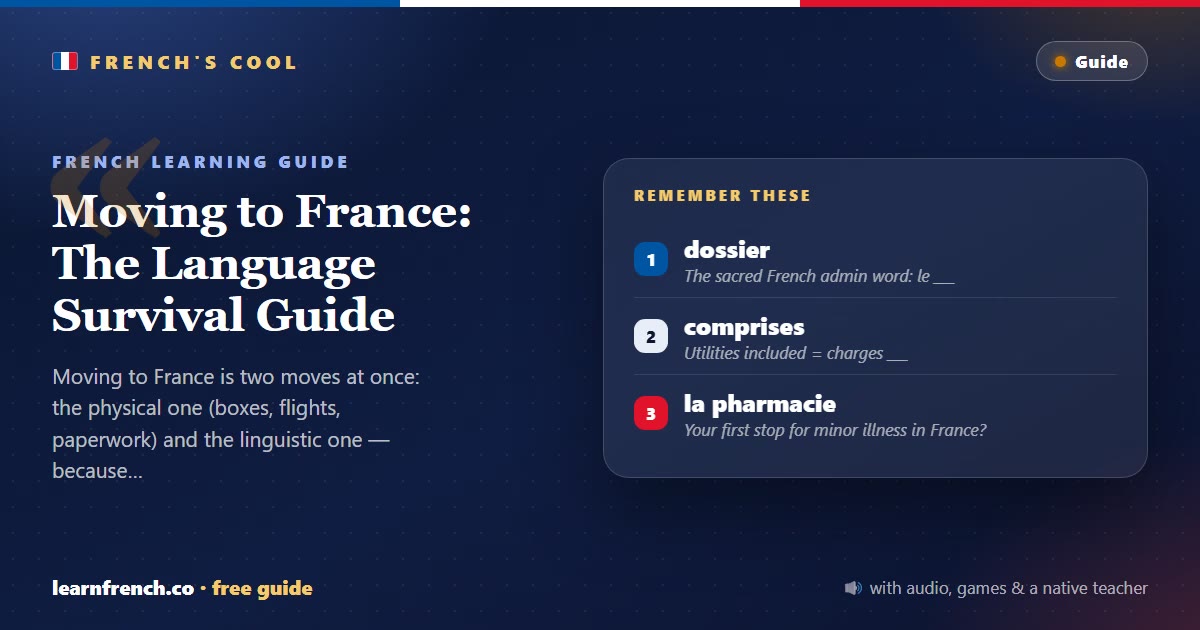 B1Moving to France: The Language Survival GuideMoving to France is two moves at once: the physical one (boxes, flights, paperwork) and the linguistic one — because in France, daily life runs in French , and the famous bureaucracy doubly so. This guide covers the five arenas where your French will be tested in the first months, with the exact phrases (and…
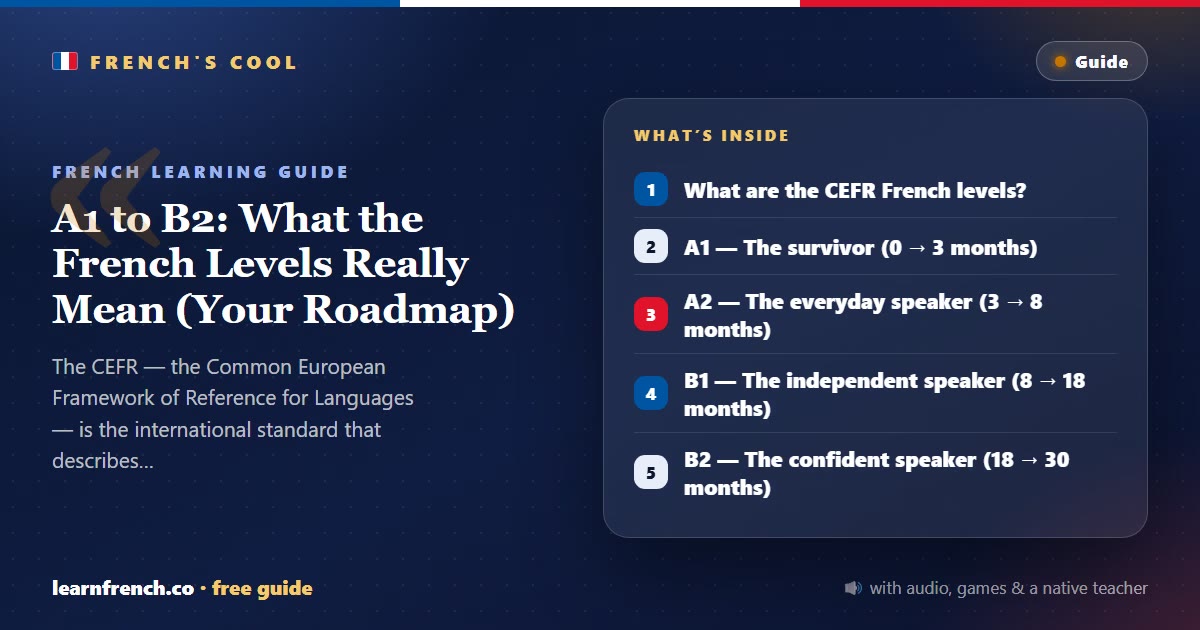 A1A1 to B2: What the French Levels Really Mean (Your Roadmap)What are the CEFR French levels? The CEFR — the Common European Framework of Reference for Languages — is the international standard that describes language proficiency on a single scale. For French it defines six CEFR levels from A1 to C2 : A1 and A2 (basic user), B1 and B2 (independent user), and C1 and…
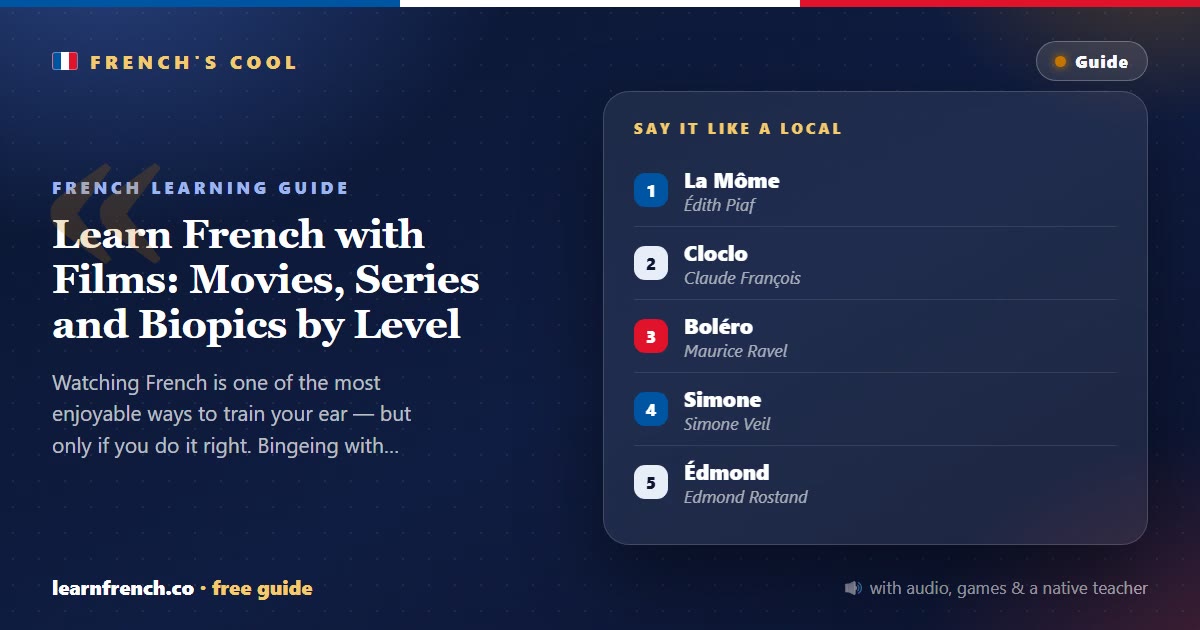 A2Learn French with Films: Movies, Series and Biopics by LevelWatching French is one of the most enjoyable ways to train your ear — but only if you do it right. Bingeing with English subtitles teaches you almost nothing. Here's how to make it count, and what to watch at each level. The subtitle strategy Progress through three stages: start with English subtitles to enjoy…
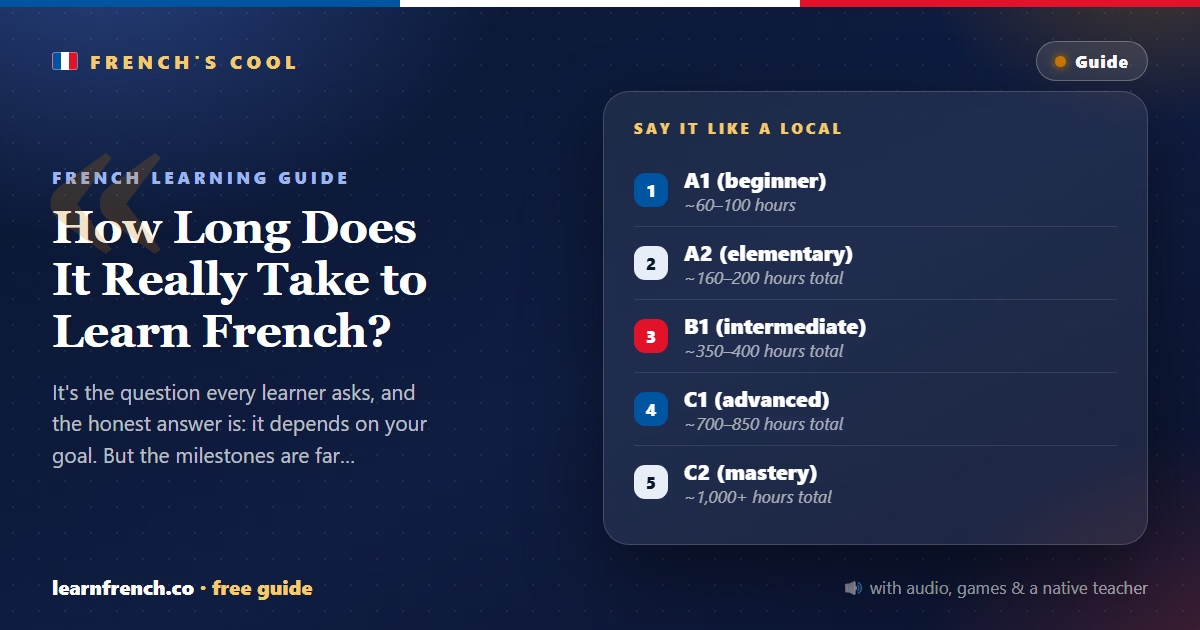 A1How Long Does It Really Take to Learn French?It's the question every learner asks, and the honest answer is: it depends on your goal. But the milestones are far more predictable than most people think — and knowing them keeps you motivated when progress feels slow. The official estimate For English speakers, French is one of the easier languages — it shares thousands…
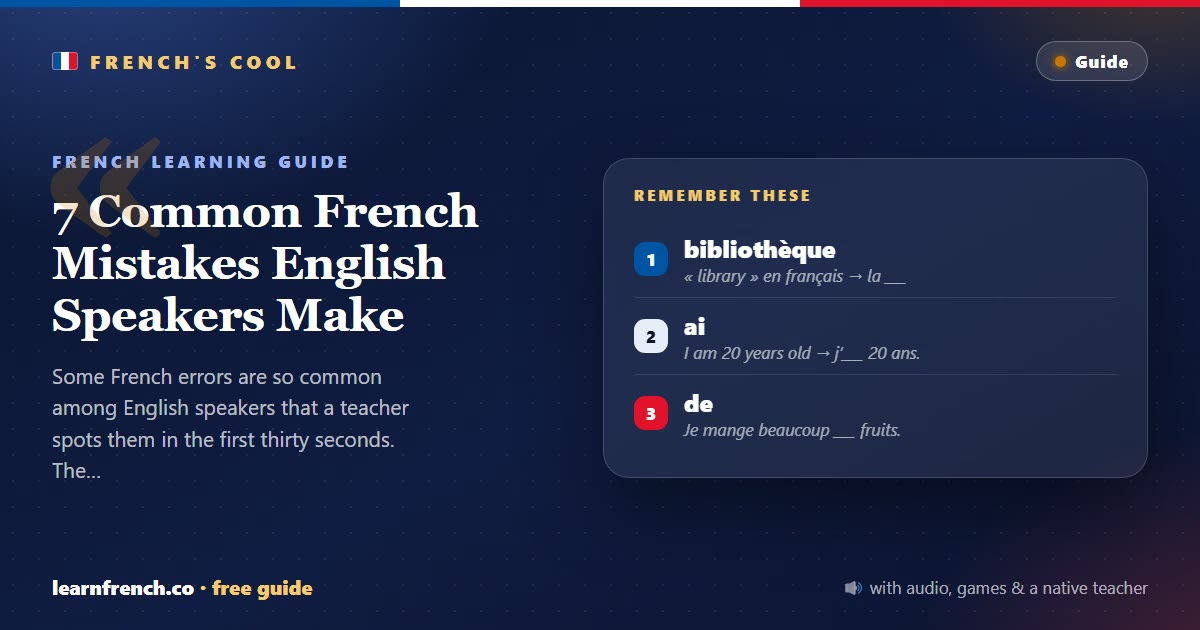 A27 Common French Mistakes English Speakers MakeSome French errors are so common among English speakers that a teacher spots them in the first thirty seconds. The good news: each one is a single habit, and once you see it, it's easy to fix. Here are the seven I correct most often — plus how to stop making them. ▶ Watch this…
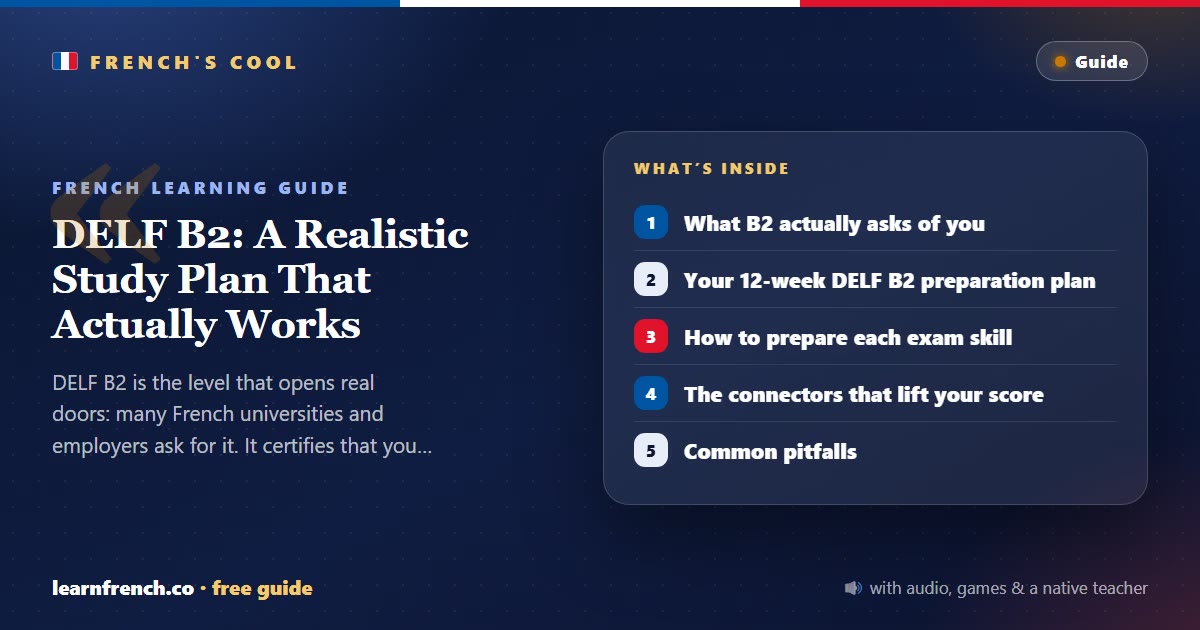 B2DELF B2: A Realistic Study Plan That Actually WorksDELF B2 is the level that opens real doors: many French universities and employers ask for it. It certifies that you can argue a point, follow a debate, and write a structured text. It's demanding but completely achievable with a focused plan. Here's a realistic one. What B2 actually asks of you B2 is the…