Devoir — to have to / must | French Verb Chart
On this page
🖨️ Print-friendly: use Ctrl+P (⌘P) or your browser menu to print this chart cleanly.
📚 This is the overview. « devoir » is taught level by level — pick your CEFR level below for a full lesson (explanation, pronunciation, exercises & games).
Présent (Indicatif)
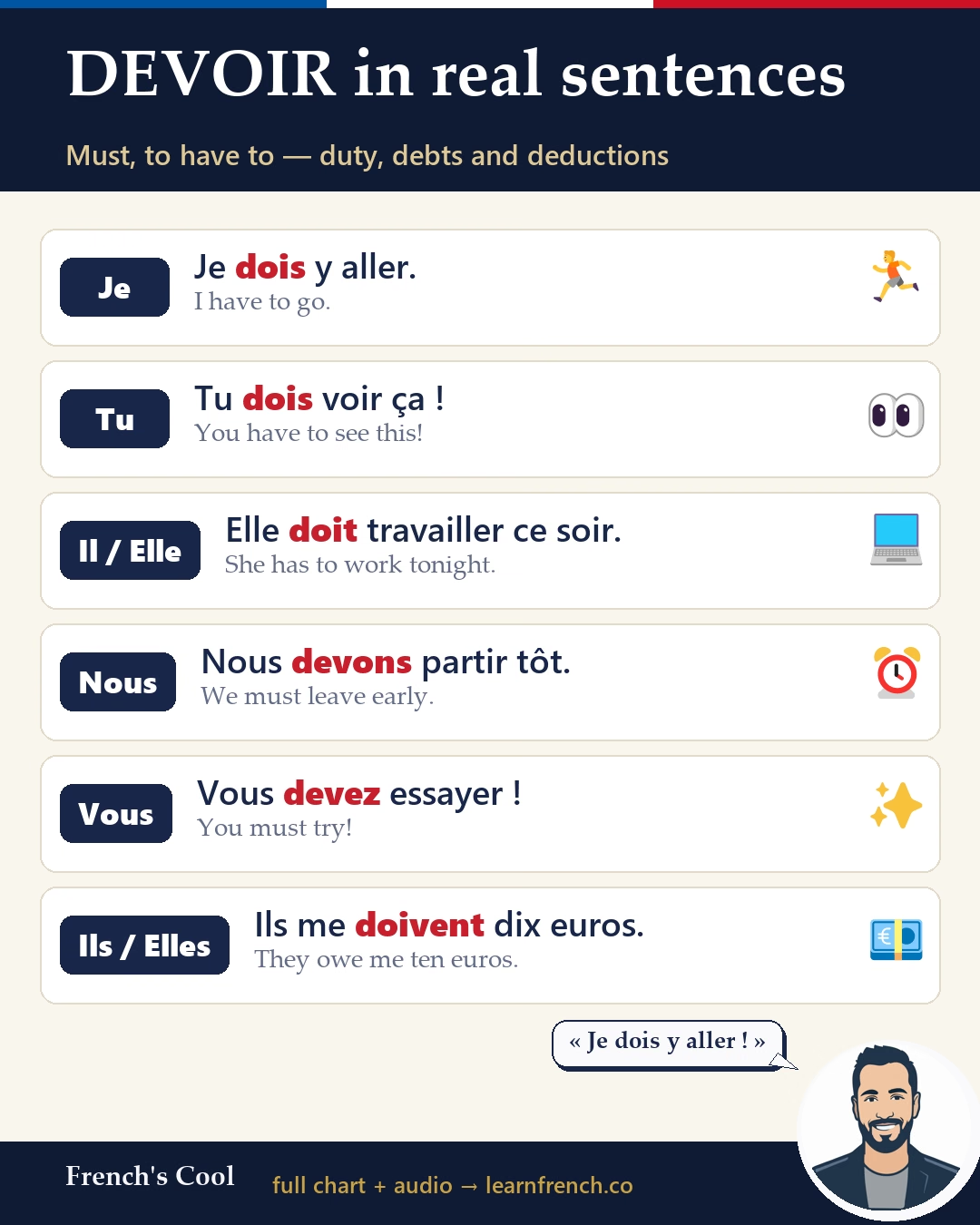
- je doisI must
- tu doisyou must
- il / elle doithe / she must
- nous devonswe must
- vous devezyou must
- ils / elles doiventthey must
Passé composé (Indicatif)
- j’ai dûI had to
- tu as dûyou had to
- il / elle a dûhe / she had to
- nous avons dûwe had to
- vous avez dûyou had to
- ils / elles ont dûthey had to
Imparfait (Indicatif)
- je devaisI had to
- tu devaisyou had to
- il / elle devaithe / she had to
- nous devionswe had to
- vous deviezyou had to
- ils / elles devaientthey had to
Futur simple (Indicatif)
- je devraiI will have to
- tu devrasyou will have to
- il / elle devrahe / she will have to
- nous devronswe will have to
- vous devrezyou will have to
- ils / elles devrontthey will have to
Conditionnel présent
- je devraisI should
- tu devraisyou should
- il / elle devraithe / she should
- nous devrionswe should
- vous devriezyou should
- ils / elles devraientthey should
Subjonctif présent
- que je doivethat I must
- que tu doivesthat you must
- qu’il / elle doivethat he / she must
- que nous devionsthat we must
- que vous deviezthat you must
- qu’ils / elles doiventthat they must
Impératif, Participe & Infinitif
- devoirinfinitive
- devantpresent participle
- en devantgerund (gérondif)
- dûpast participle
- dois · devons · devezimperative
- avoirauxiliary in compound tenses
📈 « devoir » from A1 to native
The same verb grows with your level — from your first words to real native slang.
🎬 The 20-second version
Five phrases with « devoir » — guess before the reveal. Practise with the free games → Open this short as a page — transcript included →
📘 How to use Devoir
- Obligation: je dois partir (I must / have to leave) — always + infinitive.
- Probability: il doit être fatigué (he must be tired).
- With a noun = to owe: tu me dois 10 euros.
- Je devrais (conditional) = I should — advice and regrets: tu devrais dormir.
🔑 Key forms
🔊 Common expressions
💡 Nuances & good to know
- devoir = obligation (must): je dois partir; and probability: il doit être malade (he must be ill).
- devoir also = to owe (money): je te dois dix euros.
- The conditional softens to advice: tu devrais = you should (see le conditionnel).
🔊 More real-life examples
🇬🇧 Devoir in plain English: must, owe, should and probably
Devoir is the hardest-working modal in french verb conjugation, because one irregular verb covers four English ideas. Must / have to: je dois partir — obligation, the core meaning, always devoir + infinitive. To owe: tu me dois dix euros — the original sense (the noun le devoir, duty, and les devoirs, homework, both descend from it). Should: the conditionnel je devrais — softened obligation, the advice tense: tu devrais dormir (you should sleep). Probably: devoir marks deduction — il doit être fatigué = he must be tired / he’s probably tired. Same table, four jobs; the tense you pick IS the meaning, which makes devoir the clearest showcase of how mood works in the french verb system — and why the common verbs trio devoir-pouvoir-vouloir deserves early, joint study: together they conjugate politeness itself.
The forms, present first: je dois, tu dois, il doit, nous devons, vous devez, ils doivent — the oi/e/oi vowel dance of its cousins. Passé composé: j’ai dû, with a circumflex the Académie insists on (dû, but due/dus without) — meaning “had to” or “must have”: j’ai dû partir = I had to leave / I must have left, context deciding. Imparfait je devais (was supposed to), futur je devrai on the devr- stem, subjonctif que je doive, and no imperative at all — French does not order people to must, a small philosophical mercy in the grammar. The conditional past « j’aurais dû » — I should have — is the language’s official tense of regret, and the single most useful advanced form on this page: master it and you can editorialise your entire past. Aller drill: pair each tense with its meaning aloud (dois=must, devrais=should, ai dû=had to, aurais dû=should have) — four forms, four translations, one very productive table.
Devoir — FAQ
What’s the difference between « je dois » and « je devrais »?
Dois = must (obligation now); devrais = should (advice, conditional). The gap between them is exactly the English must/should gap — tense as tone.
What does « j’aurais dû » mean?
“I should have” — past conditional, the regret tense: j’aurais dû réserver (I should have booked). Its optimistic twin is « tu aurais pu » — you could have.
Why does dû have a circumflex?
To distinguish it from the article du (de + le). Only the masculine singular participle takes the hat: dû, but due, dus, dues — one of French spelling’s tidiest rules.
🔊 Example sentences
✍️ Practice
Vous ___ payer maintenant. (devoir, present)
Show answer
devez
Hier, j’___ travailler tard. (devoir, passé composé)
Show answer
ai dû
Tu ___ étudier plus. (devoir, conditional (should))
Show answer
devrais
Advice: vous ___ voir ce film ! (conditional)
Show answer
devriez
Je te ___ combien ? (owe, present)
Show answer
dois
🎬 Video lesson
 Devoir · Vouloir · Pouvoir — Present tense
🎮 Practise this with games
🎯 More practice — conjugation drill — all six tenses
je ___ (Devoir — present)
Show answer
dois
tu ___ (Devoir — passé composé)
Show answer
as dû
il ___ (Devoir — imperfect)
Show answer
devait
nous ___ (Devoir — future)
Show answer
devrons
vous ___ (Devoir — conditional)
Show answer
devriez
Go further: this chart is one small piece — get the full picture in our guide Master the present tense — the full beginner guide.
Devoir conjugation FAQ
What is the present tense of devoir?
je dois, tu dois, il / elle doit, nous devons, vous devez, ils / elles doivent. Full charts for every tense are above, each form with audio.
What is the past participle of devoir?
dû — the passé composé is « j’ai dû ». Devoir uses avoir as its auxiliary verb.
How do you say devoir in the future tense?
« je devrai » — the future stem never changes across persons, only the endings do.
What does devoir mean in English?
to have to / must. It is one of the essential French verbs — drill the present first, then the passé composé; those two tenses carry most conversations.
🎮 Practise this lesson
Games built from this exact page — turn what you just read into play:
🧩 Sentence Builder rebuild these sentences
🏁 Conjugation Race type the right form
🎧 Listening Game which sentence do you hear?
🎬 All seven CEFR levels, end to end
« devoir » at every CEFR level — the tense, its forms and the mechanic that makes it stick. Practise it with the free games →