Pouvoir — to be able / can | French Verb Chart
On this page
🖨️ Print-friendly: use Ctrl+P (⌘P) or your browser menu to print this chart cleanly.
📚 This is the overview. « pouvoir » is taught level by level — pick your CEFR level below for a full lesson (explanation, pronunciation, exercises & games).
Pouvoir conjugation made simple: full conjugation charts to conjugate the French verb pouvoir (can / to be able to) in every major tense — présent, passé composé, imparfait, futur and more — with audio for each form. Pouvoir is the modal verb behind polite requests like « pouvez-vous… ? », so this is a conjugation to master early.
Présent (Indicatif)
- je peuxI can
- tu peuxyou can
- il / elle peuthe / she can
- nous pouvonswe can
- vous pouvezyou can
- ils / elles peuventthey can
Passé composé (Indicatif)
- j’ai puI was able
- tu as puyou were able
- il / elle a puhe / she was able
- nous avons puwe were able
- vous avez puyou were able
- ils / elles ont puthey were able
Imparfait (Indicatif)
- je pouvaisI could
- tu pouvaisyou could
- il / elle pouvaithe / she could
- nous pouvionswe could
- vous pouviezyou could
- ils / elles pouvaientthey could
Futur simple (Indicatif)
- je pourraiI will be able
- tu pourrasyou will be able
- il / elle pourrahe / she will be able
- nous pourronswe will be able
- vous pourrezyou will be able
- ils / elles pourrontthey will be able
Conditionnel présent
- je pourraisI could
- tu pourraisyou could
- il / elle pourraithe / she could
- nous pourrionswe could
- vous pourriezyou could
- ils / elles pourraientthey could
Subjonctif présent
- que je puissethat I can
- que tu puissesthat you can
- qu’il / elle puissethat he / she can
- que nous puissionsthat we can
- que vous puissiezthat you can
- qu’ils / elles puissentthat they can
Impératif, Participe & Infinitif
- pouvoirinfinitive
- pouvantpresent participle
- en pouvantgerund (gérondif)
- pupast participle
- peux · pouvons · pouvezimperative
- avoirauxiliary in compound tenses
📈 « pouvoir » from A1 to native
The same verb grows with your level — from your first words to real native slang.
🎬 The 20-second version
Five phrases with « pouvoir » — guess before the reveal. Practise with the free games → Open this short as a page — transcript included →
📘 How to use Pouvoir
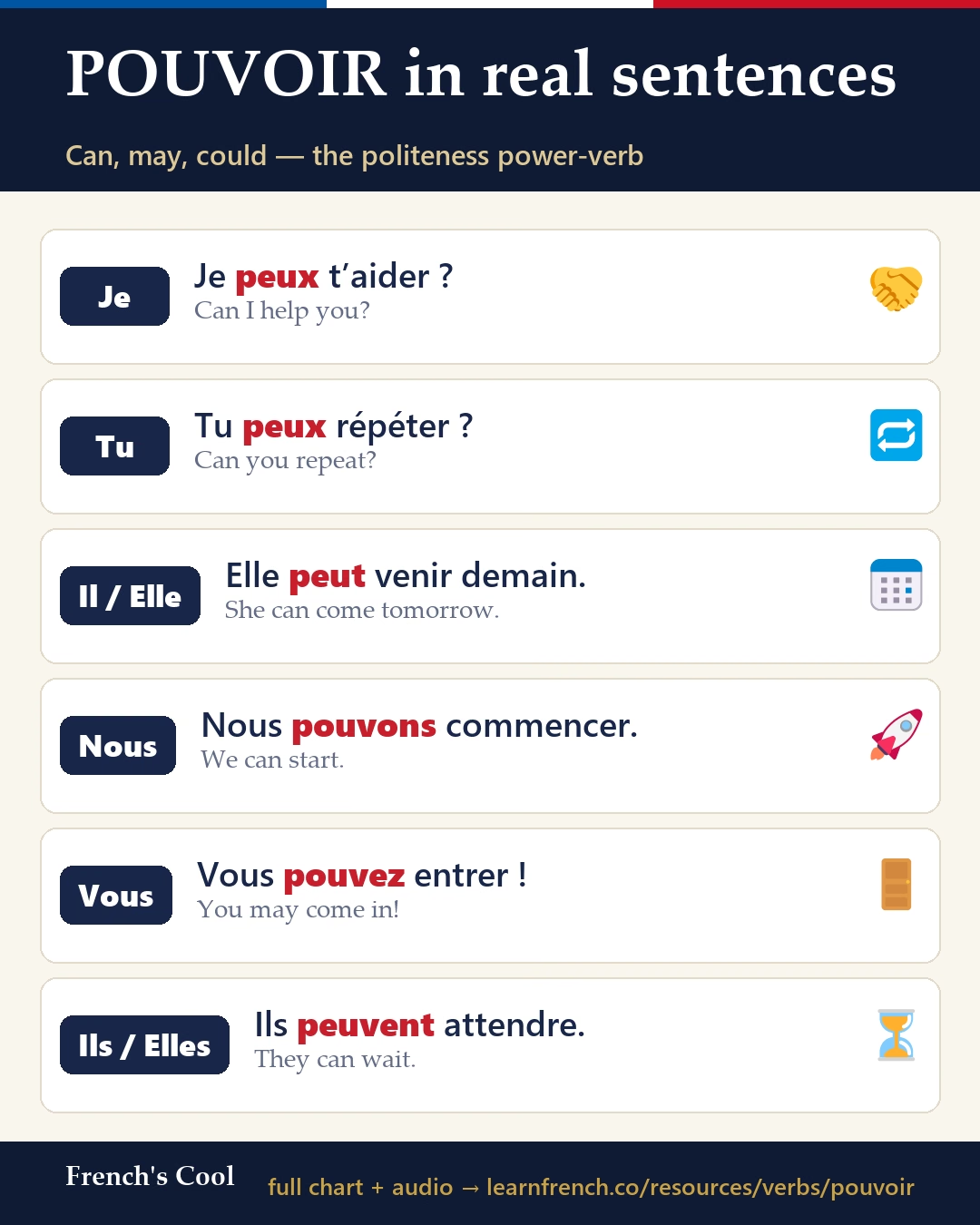
- Ability & permission: je peux t’aider (I can help you), on peut entrer ? (may we come in?).
- Polite requests use the conditional: Pourriez-vous… ? (Could you…?)
- Il se peut que + subjunctive = it may be that: il se peut qu’il pleuve.
- Always followed by an infinitive — never a noun.
🔑 Key forms
🔊 Common expressions
💡 Nuances & good to know
- pouvoir covers ability, permission and possibility: je peux nager (can), je peux sortir ? (may I), ça peut arriver (it can happen).
- Formal question uses inversion puis-je (not « peux-je »): puis-je vous aider ?
- Idiom: je n’en peux plus = I can’t take it anymore / I’m exhausted.
🔊 More real-life examples
🇬🇧 Reading the table like a native
A complete conjugaison table is only useful if you know which rows matter, so here is the learner’s guide to the verb forms above. The main tenses for pouvoir in daily speech: present (je peux — and the fossilised inversion « puis-je ? » for very formal questions), passé composé with avoir (j’ai pu — never être), imperfect, and the future. The conditionnel (je pourrais) is the politeness workhorse — “could” — and the subjonctif (que je puisse) follows expressions of wish and doubt: « pour que je puisse venir ». Note the 3rd person singular il peut vs the plural ils peuvent — the stem vowel changes, the classic trap of this conjugation in French.
Grammar notes a native speaker applies without thinking: in the negative, pouvoir often drops pas in careful writing (« je ne peux vous dire ») — but everyday French keeps it: « je ne peux pas ». The English translation splits three ways — can (ability), may (permission), might (possibility) — and French uses pouvoir for all three, with context carrying the difference. That is why this page pairs the complete table with examples rather than a rule per row: the active skill is picking the right tense, and daily exposure to the forms — reading them aloud, once a day, top to bottom — teaches the pattern faster than any online drill. Bookmark this page of the website as your reference table, and let the games below test what stuck.
Pouvoir — FAQ
What’s the difference between « je peux » and « puis-je » ?
Same tense, different register: je peux is standard, puis-je is the elegant inversion reserved for formal questions — « puis-je vous aider ? ». Never say *peux-je*.
How do you say “I could” in French?
« Je pourrais » (conditionnel) for could-as-possibility or polite requests, « je pouvais » (imperfect) for could-as-past-ability, and « j’ai pu » for managed-to.
Why is the subjunctive « puisse » so different?
Pouvoir’s subjonctif uses the old stem puiss- : « qu’il puisse », « pour que tu puisses ». You’ll meet it after il faut que and pour que — and in the set phrase « puissiez-vous… » in literature.
🔊 Example sentences
✍️ Practice
___ -vous répéter, s’il vous plaît ? (pouvoir, present)
Show answer
Pouvez
Hier, je n’ai pas ___ dormir. (pouvoir, past participle)
Show answer
pu
Si j’avais le temps, je ___ voyager. (pouvoir, conditional)
Show answer
pourrais
___ -vous m’aider, s’il vous plaît ? (polite conditional)
Show answer
Pourriez
Il se peut qu’il ___ raison. (subjunctive of avoir)
Show answer
ait
🎬 Video lesson
 Pouvoir (to be able to) — Present Tense
🎮 Practise this with games
🎯 More practice — conjugation drill — all six tenses
je ___ (Pouvoir — present)
Show answer
peux
tu ___ (Pouvoir — passé composé)
Show answer
as pu
il ___ (Pouvoir — imperfect)
Show answer
pouvait
nous ___ (Pouvoir — future)
Show answer
pourrons
vous ___ (Pouvoir — conditional)
Show answer
pourriez
Go further: this chart is one small piece — get the full picture in our guide Master the present tense — the full beginner guide.
The conjugation of pouvoir in real sentences
The conjugation of pouvoir matters because this irregular French verb covers several everyday jobs:
- ability: « Je peux nager. » — I can swim.
- permission: « Vous pouvez entrer. » — You may come in.
- polite requests: « Pourriez-vous m’aider ? » — Could you help me? (conditional)
- possibility: « Ça peut arriver. » — That can happen.
Pouvoir is always followed by an infinitive — conjugate pouvoir, leave the second verb unchanged. The charts above give the full verb conjugation in every mood — indicative (present tense, passé composé, imperfect, future), conditional, subjunctive and imperative — with audio so you can conjugate pouvoir with the right pronunciation.
Pouvoir conjugation FAQ
What is the present tense of pouvoir?
je peux, tu peux, il / elle peut, nous pouvons, vous pouvez, ils / elles peuvent. Full charts for every tense are above, each form with audio.
What is the past participle of pouvoir?
pu — the passé composé is « j’ai pu ». Pouvoir uses avoir as its auxiliary verb.
How do you say pouvoir in the future tense?
« je pourrai » — the future stem never changes across persons, only the endings do.
What does pouvoir mean in English?
to be able / can. It is one of the essential French verbs — drill the present first, then the passé composé; those two tenses carry most conversations.
🎮 Practise this lesson
Games built from this exact page — turn what you just read into play:
🧩 Sentence Builder rebuild these sentences
🏁 Conjugation Race type the right form
🎧 Listening Game which sentence do you hear?
🎬 All seven CEFR levels, end to end
« pouvoir » at every CEFR level — the tense, its forms and the mechanic that makes it stick. Practise it with the free games →