Venir — to come | French Verb Chart
On this page
🖨️ Print-friendly: use Ctrl+P (⌘P) or your browser menu to print this chart cleanly.
📚 This is the overview. « venir » is taught level by level — pick your CEFR level below for a full lesson (explanation, pronunciation, exercises & games).
Présent (Indicatif)
- je viensI come
- tu viensyou come
- il / elle vienthe / she comes
- nous venonswe come
- vous venezyou come
- ils / elles viennentthey come
Passé composé (Indicatif)
- je suis venu(e)I came
- tu es venu(e)you came
- il / elle est venu(e)he / she came
- nous sommes venu(e)swe came
- vous êtes venu(e)(s)you came
- ils / elles sont venu(e)sthey came
Imparfait (Indicatif)
- je venaisI was coming
- tu venaisyou were coming
- il / elle venaithe / she was coming
- nous venionswe were coming
- vous veniezyou were coming
- ils / elles venaientthey were coming
Futur simple (Indicatif)
- je viendraiI will come
- tu viendrasyou will come
- il / elle viendrahe / she will come
- nous viendronswe will come
- vous viendrezyou will come
- ils / elles viendrontthey will come
Conditionnel présent
- je viendraisI would come
- tu viendraisyou would come
- il / elle viendraithe / she would come
- nous viendrionswe would come
- vous viendriezyou would come
- ils / elles viendraientthey would come
Subjonctif présent
- que je viennethat I come
- que tu viennesthat you come
- qu’il / elle viennethat he / she come
- que nous venionsthat we come
- que vous veniezthat you come
- qu’ils / elles viennentthat they come
Impératif, Participe & Infinitif
- venirinfinitive
- venantpresent participle
- en venantgerund (gérondif)
- venupast participle
- viens · venons · venezimperative
- êtreauxiliary in compound tenses
📈 « venir » from A1 to native
The same verb grows with your level — from your first words to real native slang.
🎬 The 20-second version
Five phrases with « venir » — guess before the reveal. Practise with the free games → Open this short as a page — transcript included →
📘 How to use Venir
- To come: tu viens à la fête ? — origin: je viens de Nantes.
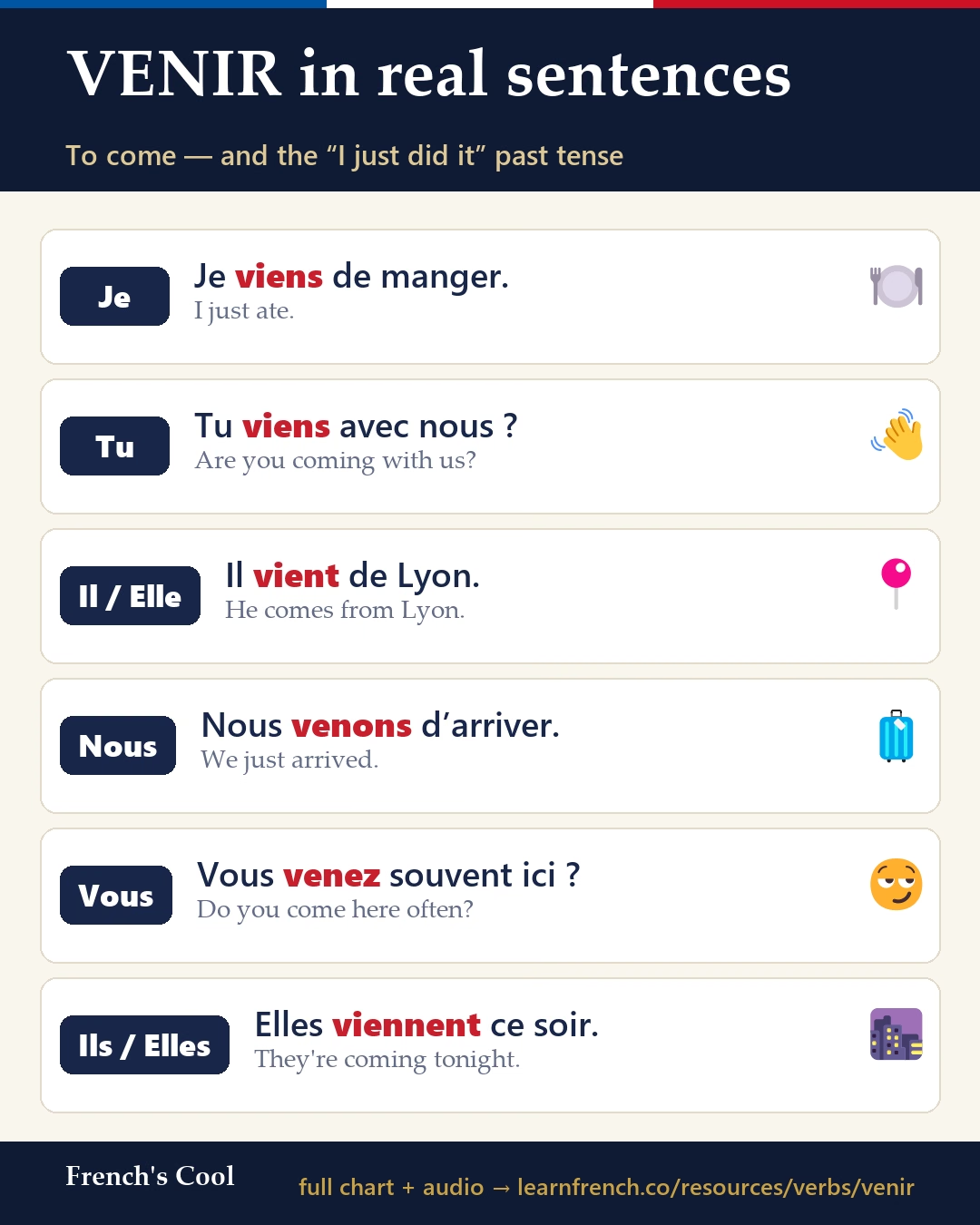
- Passé récent: venir de + infinitive = just did — je viens de manger (I just ate). Essential!
- Takes être in the passé composé: elle est venue.
- The plural doubles the n: ils viennent.
🔑 Key forms
🔊 Common expressions
🇬🇧 Venir in plain English: the verb that tells the recent past
Venir — “to come” — is an irregular verb with three personalities worth mastering in order. First, the present: je viens, tu viens, il vient, nous venons, vous venez, ils viennent — note the vowel flip (ie/e/ie) that makes this conjugation a pronunciation drill as much as a grammar one; each pronoun’s form must be learned by ear, and the conjugation tables above are best read aloud. Second, the passé composé takes être: « je suis venu(e) », participle agreeing with the subject — venir sits firmly in the movement-verb family, never avoir. Third — the special power: venir de + infinitive is the French recent past: « je viens de manger » = I just ate. Where English says “just”, French conjugates venir; no other structure buys you so much natural fluency for one pattern. The future and conditional run on the irregular stem viendr- (je viendrai, je viendrais), the imperative is simply viens ! / venez !, and the present subjunctive — que je vienne — earns its place in everyday speech after il faut que and avant que. (If you’ve studied Spanish: the Spanish verb venir is this verb’s cousin, similar irregularity, different music — French speakers never roll the r.)
The family multiplies the value of every form you memorize: revenir (come back), devenir (become — also être in the past: elle est devenue), se souvenir (remember), prévenir (warn — but avoir!) all conjugate exactly like venir. Learn one table, own five verbs — the best grammar bargain in the language, and the reason venir belongs in your first ten verbs. Test your knowledge with the games below; the translation reflex worth drilling until automatic is the recent past: anything you just did, say with viens de.
Venir — FAQ
What does « je viens de » mean?
“I just…” — venir de + infinitive is the recent past: je viens d’arriver (I just arrived). It works in the imperfect too: je venais de partir (I had just left).
Is the passé composé of venir with être or avoir?
Être, always: je suis venu, elle est venue, nous sommes venus — with agreement. Its lookalike prévenir defects to avoir (j’ai prévenu), the family’s one traitor.
Which verbs conjugate like venir?
Tenir and both families: revenir, devenir, se souvenir, intervenir; maintenir, obtenir, soutenir. One pattern, a dozen verbs — viens/viennent vowels and the -iendr- future included.
🔊 Example sentences
✍️ Practice
Elle ___ avec nous. (venir, present)
Show answer
vient
Hier, ils ___ chez moi. (venir, passé composé)
Show answer
sont venus
Est-ce que vous ___ souvent ici ? (venir, present)
Show answer
venez
Passé récent : nous ___ de finir. (venir de)
Show answer
venons
Elle est ___ hier soir. (past participle, feminine)
Show answer
venue
🎬 Video lesson
 Venir (to come) — Present Tense
🎮 Practise this with games
🎯 More practice — conjugation drill — all six tenses
je ___ (Venir — present)
Show answer
viens
tu ___ (Venir — passé composé)
Show answer
es venu(e)
il ___ (Venir — imperfect)
Show answer
venait
nous ___ (Venir — future)
Show answer
viendrons
vous ___ (Venir — conditional)
Show answer
viendriez
Go further: this chart is one small piece — get the full picture in our guide Master the present tense — the full beginner guide.
Venir conjugation FAQ
What is the present tense of venir?
je viens, tu viens, il / elle vient, nous venons, vous venez, ils / elles viennent. Full charts for every tense are above, each form with audio.
What is the past participle of venir?
venu(e) — the passé composé is « je suis venu(e) ». Venir uses être as its auxiliary verb. Because it takes être, the past participle agrees: elle est venue, ils sont venu(e)s.
How do you say venir in the future tense?
« je viendrai » — the future stem never changes across persons, only the endings do.
What does venir mean in English?
to come. It is one of the essential French verbs — drill the present first, then the passé composé; those two tenses carry most conversations.
🎮 Practise this lesson
Games built from this exact page — turn what you just read into play:
🧩 Sentence Builder rebuild these sentences
🏁 Conjugation Race type the right form
🎧 Listening Game which sentence do you hear?
🎬 All seven CEFR levels, end to end
« venir » at every CEFR level — the tense, its forms and the mechanic that makes it stick. Practise it with the free games →