12 French Culture Surprises (and How Not to Offend Anyone)
You can speak perfect French and still feel lost, because so much of « being French » is unwritten . Here are twelve things that catch newcomers off guard — knowing them will save you a few awkward moments (and win you some smiles). 1. « Bonjour » is not optional Walk into a shop,…
What you'll learn
You can speak perfect French and still feel lost, because so much of « being French » is unwritten. Here are twelve things that catch newcomers off guard — knowing them will save you a few awkward moments (and win you some smiles).
1. « Bonjour » is not optional
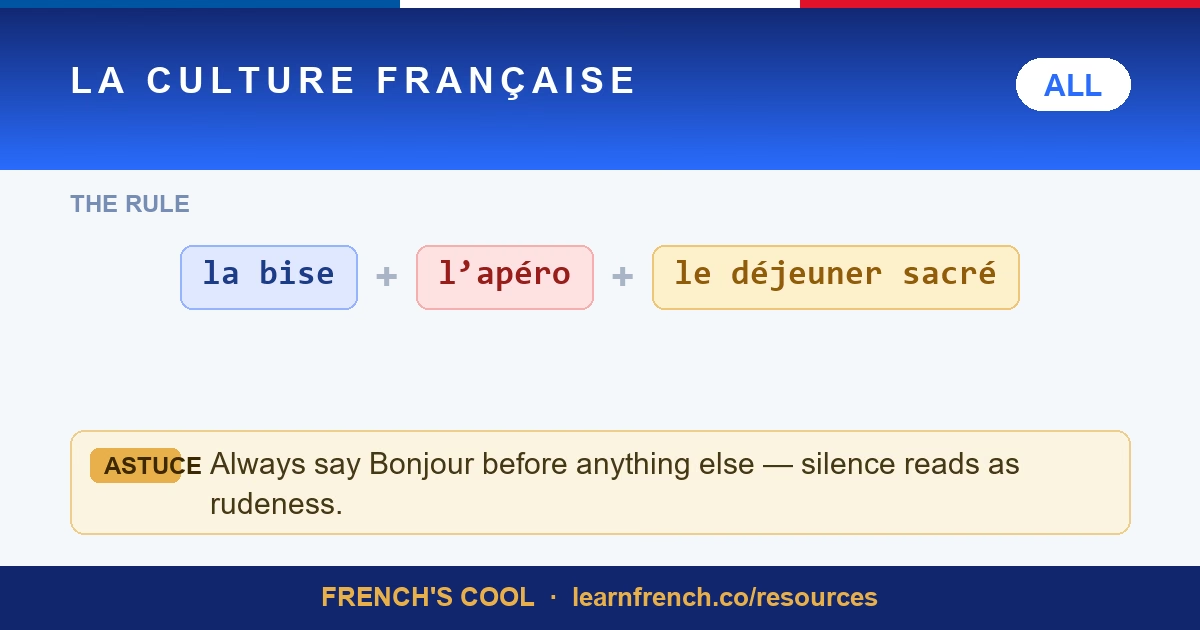
Walk into a shop, a lift, a waiting room — you say bonjour first, THEN speak. Skipping it is genuinely rude.
2. La bise (cheek kisses)
Friends greet with light cheek kisses — usually two, but it’s three or four in some regions. Follow the locals.
3. Meals are long, and cheese comes before dessert
A real French meal is a slow, ordered ritual — see French gastronomy. Lunch (12–14h) is sacred; many shops still close for it.
4. Everything closes on Sunday — and in August
Sundays are quiet; in August, whole cities empty as the French take their holidays. Plan around it.
5. Tu or vous — get it wrong and it’s awkward
Default to vous with strangers, elders and at work; tu comes with permission or closeness. When in doubt, vous. (More on registers.)
6. The daily bakery run
Fresh baguette most days is normal life. « Une baguette, s’il vous plaît » is one of your first real phrases.
7. Strikes happen (les grèves)
Protests and strikes are part of civic life — trains and schools included. It’s cultural, not chaos.
8. Tap water & bread are free at restaurants
Ask for « une carafe d’eau » (free tap water); bread comes automatically. You don’t tip heavily — service is included.
9. You greet the whole shop
Entering a small shop, a « bonjour » to the room is normal; « au revoir, bonne journée » on the way out.
10. Administration loves paperwork
Le « dossier » is king — bring every document, twice. Patience is a French administrative virtue.
11. « Bon… » starts every goodbye
« Bon », « allez », « bon ben voilà » — the French wind DOWN a conversation before ending it. Just stopping feels abrupt.
12. Complaining is a national sport (a friendly one)
A good râler (grumble) about the weather or the trains is social bonding, not real negativity. Join in gently!
Moving over for real? Read the language survival guide.
✍️ Culture check
Before speaking in a shop, you always say… (rule #1)
Show answer
Bonjour
In which month do French cities empty for holidays? (timing)
Show answer
August (août)
Free tap water at a restaurant is called… (phrase)
Show answer
une carafe d’eau
Play the Quiztap to start · quick practice from this material
Loading the quiz…
The facts worth repeating (and the customs behind them)
The culture of France rewards specifics, so here are the ones that survive fact-checking. Food: the french baguette entered UNESCO’s intangible heritage list in 2022 — France bakes several billion a year — and the country counts well over a thousand french cheeses (De Gaulle’s famous complaint about governing a nation of 246 was an undercount). The Michelin guide, the world’s restaurant scripture, began as a French tyre company’s road-trip pamphlet. Cinema: the Lumière brothers held the first paid film screening in Paris in 1895, which is why the french film industry treats cinema as a birthright — France still runs Europe’s biggest film industry and the Cannes festival. Fashion: Paris earned the fashion capital title under Louis XIV’s court and never returned it; french fashion houses (Chanel, Dior, LVMH) make la mode a pillar of the economy, and french style remains the national export nobody legislated. History compressed: the French royal line ended in revolution, Napoleon Bonaparte’s french empire wrote the legal code half the world still uses, and the Louvre museum — a royal palace turned art warehouse — is the most visited museum on Earth, with the Champs-Élysées a short walk away insisting it is the world’s most beautiful avenue.
The living french customs matter more than trivia for anyone visiting france: the bonjour ritual before ANY request (the deepest rule of french etiquette), lunch as a protected institution (french society still largely stops between noon and two — many french citizens legally cannot be emailed after hours, thanks to the right-to-disconnect law), the bise with its region-dependent kiss-count, and dinner at eight at the earliest. French life runs on these forms, from the french family Sunday lunch to the western europe-famous 25 days of paid vacation actually taken. The Alliance Française network teaches the language; the customs above teach why the language sounds the way it does — formal where life is formal, playful where life is protected. Modern french culture is precisely this negotiation between the museum and the living room — and knowing five of these facts about france makes every local culture conversation warmer, in français or English.
FAQ
What is very important in French culture?
The politeness frame (bonjour/merci/au revoir as non-negotiable), food as social architecture, and the separation of work from life. Get those three and the rest forgives itself.
What are some French cultural traditions?
La bise, the long Sunday family lunch, the apéro before dinner, galette des rois in January, the August shutdown, and the Fête de la Musique every June 21st — streets nationwide become stages.
What are five famous French things?
The baguette, the Eiffel Tower, the Louvre, champagne, and haute couture — with the TGV and 1,000 cheeses waiting as substitutes.
What are fun facts in French?
« Un fait amusant » : France is the world’s most visited country; the Eiffel Tower grows ~15 cm in summer heat; and the French army still maintains carrier pigeons. All excellent small-talk currency.
French cuisine: the heart of French culture
No set of French culture facts is complete without food. French cuisine is so central to national identity that the « gastronomic meal of the French » is inscribed on the UNESCO list of intangible cultural heritage — the ritual of the meal itself, not just the dishes. A few things that surprise visitors:
- Bread is sacred. The baguette is protected by law (the « décret pain »), and the fresh morning croissant and pastry run is a genuine daily habit.
- Cheese is a course. France has hundreds of cheeses — de Gaulle famously joked about governing a country with that many — and it comes before dessert.
- Wine (le vin) is everyday, not fancy. Regions like Bordeaux, Burgundy and Champagne are part of ordinary meals, paired without ceremony.
- Regional dishes define identity. Coq au vin, boeuf bourguignon, ratatouille, cassoulet — each region defends its own.
Want the vocabulary to order all of it? Build it on the food and drink vocabulary charts.
Art, architecture and heritage
French people take art and history seriously, and it shows everywhere:
- The Louvre in Paris is the most-visited museum on Earth, home to the Mona Lisa.
- The Eiffel Tower, once controversial, is now the country’s global symbol.
- France has more UNESCO World Heritage sites than almost any nation — from Mont-Saint-Michel to the palace of Versailles.
- Landscapes are part of the pride too: the French Alps, the lavender of Provence, the châteaux of the Loire.
And the French Revolution of 1789 still shapes daily life — « Liberté, Égalité, Fraternité » is stamped on town halls, coins and the national mindset.
French traditions and customs at a glance
Beyond the etiquette above, these customs and traditions round out the picture of culture in France:
- La fête nationale (14 July) — Bastille Day, with fireworks and the Paris military parade.
- Les vacances — August is holiday season; cities empty and many shops close.
- Le terroir — deep pride in where food and wine come from.
- La laïcité — a strong tradition of separating religion and the state.
- Le café — the sidewalk café as a place to sit, watch and talk for hours.
French culture facts FAQ
What is very important in French culture?
Politeness rituals (always « bonjour » first), French cuisine and the shared meal, the language itself, and a strong sense of terroir and regional identity. French people value taking time — over food, conversation and craftsmanship — more than rushing.
What are five famous French things?
The Eiffel Tower, the Louvre, the croissant and baguette, French wine and cheese, and the French Revolution’s motto « Liberté, Égalité, Fraternité ». All five say something about how the culture sees itself: history, art, food and ideals.
What are some common French cultural traditions?
La bise (cheek kisses), the long Sunday lunch, the daily bakery run, Bastille Day, August holidays, and the café as a social institution. Many revolve around food, family and taking time — the core of French tradition.
What is a fun fact about France?
France is the most-visited country in the world, the baguette is legally protected, and the French gastronomic meal is officially recognised as cultural heritage by UNESCO. Understanding these facts makes the everyday customs above far less puzzling.
🧰 Blend in like a local
The pages that turn culture shock into culture know-how:
🎯 More practice — translation — put it into French
Translate into French: « Hello! I’d like a coffee, please. » (translation)
Show answer
Bonjour ! Je voudrais un café, s’il vous plaît.
Translate into French: « One baguette, please! » (translation)
Show answer
Une baguette, s’il vous plaît !
Translate into French: « A jug of tap water, please. » (translation)
Show answer
Une carafe d’eau, s’il vous plaît.
Planning a move or a long trip? Book a free lesson with Xavier →
🎮 Practise this lesson
Games built from this exact page — turn what you just read into play:
🧩 Sentence Builder rebuild these sentences
🎬 This article in 20 seconds
The quick version — the full detail is below. More shorts → Open this short as a page — transcript included →