Moving to France: The Language Survival Guide
Moving to France is two moves at once: the physical one (boxes, flights, paperwork) and the linguistic one — because in France, daily life runs in French , and the famous bureaucracy doubly so. This guide covers the five arenas where your French will be tested in the first months, with the exact phrases (and…
What you'll learn
Moving to France is two moves at once: the physical one (boxes, flights, paperwork) and the linguistic one — because in France, daily life runs in French, and the famous bureaucracy doubly so. This guide covers the five arenas where your French will be tested in the first months, with the exact phrases (and audio) for each.
1. L’administration — the boss level
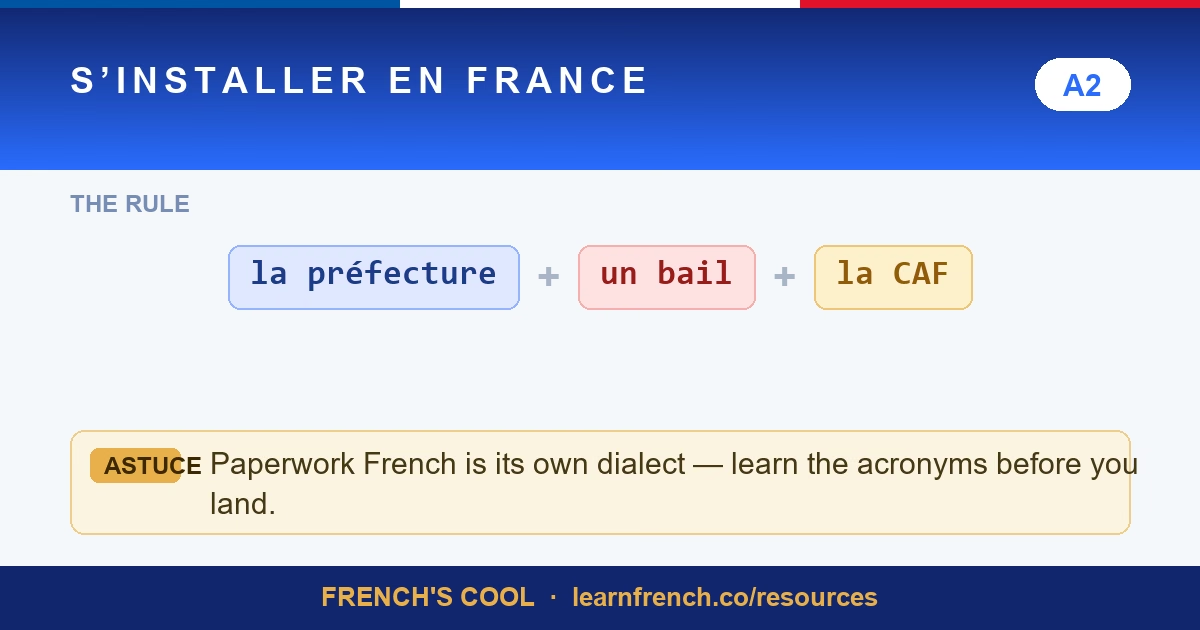
Prefecture, bank, CAF, social security: everything begins with bonjour and revolves around one sacred word — le dossier (your file of documents). Bring photocopies of everything, twice.
Survival kit: the politeness rules (bonjour-first is doubly true at the prefecture), numbers for queue tickets and forms, and question words.
2. Le logement — finding a home
Learn the codes: T2/deux pièces counts living room + bedrooms (not bathrooms), charges comprises (CC) = utilities included, la caution = deposit, le garant = guarantor (they will ask). Room-by-room vocab is in the La Maison chart.
3. La santé — pharmacy first
France’s green-cross pharmacies are mini-clinics: describe your symptoms and the pharmacist will advise, often saving you a doctor’s visit.
The avoir mal à pattern + body parts are in the body & health chart. Key admin: la carte Vitale (health card), une ordonnance (prescription), le médecin traitant (your registered GP).
4. Les courses et le quotidien — daily life
The boulangerie is your daily French lesson — one sentence a day. Markets love small talk; supermarkets need un caddie (trolley, 1€ coin!) and a sac réutilisable. Food vocabulary lives in La Nourriture, ordering out in Au Restaurant, and getting anywhere in Les Transports (don’t forget to composter!).
5. Les gens — making it social
The stereotype of cold French people usually dissolves with three habits: bonjour before everything, vous until invited to tu, and accepting that small imperfect French beats perfect English. Neighbours, colleagues (see Le Travail), the boulangère — your first conversation partners are everywhere.
Your first-90-days language plan
- Weeks 1–2: politeness + numbers + survival questions (the three charts above). Say bonjour to everyone.
- Weeks 3–6: one arena per week — pharmacy, market, transport, restaurant. Rehearse with the 🔊 buttons before you go.
- Weeks 7–12: daily-routine verbs, past tense for telling people how your move went, and a weekly lesson with a teacher to fix what the street can’t.
✍️ Quick quiz — did it stick?
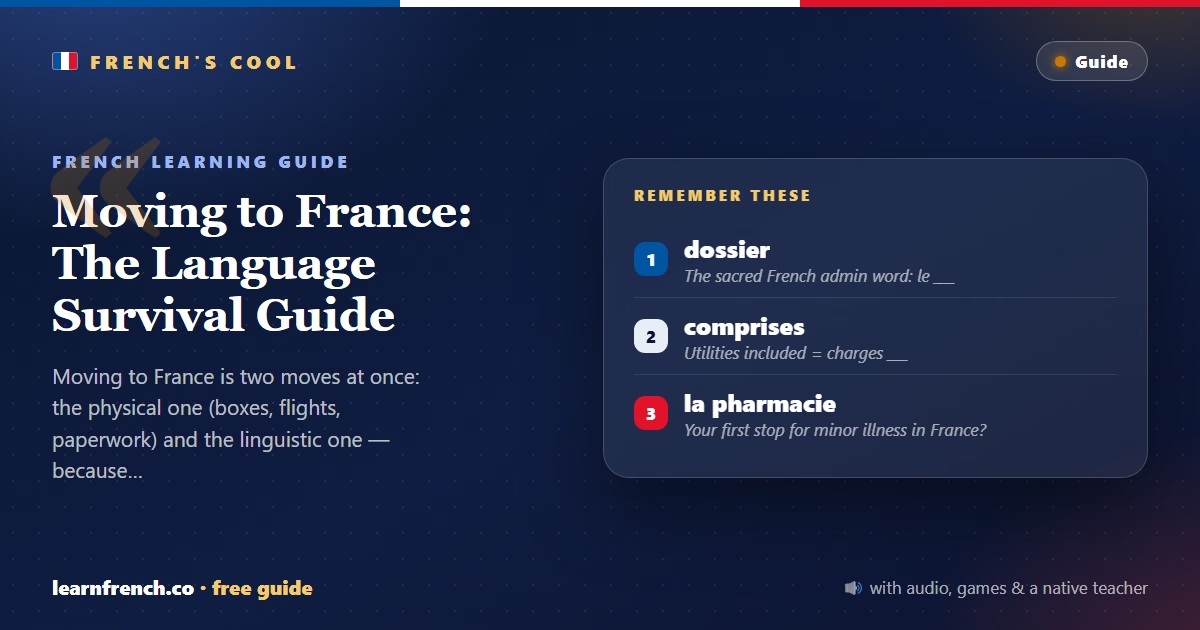
The sacred French admin word: le ___ (bring photocopies)
Show answer
dossier
Utilities included = charges ___ (housing code)
Show answer
comprises
Your first stop for minor illness in France? (green cross)
Show answer
la pharmacie
The three social habits: bonjour first, ___ until invited, imperfect French beats perfect English (politeness)
Show answer
vous
Play the Quiztap to start · quick practice from this material
Loading the quiz…
The language threshold at each stage of the move
The honest sequencing for anyone thinking about moving: you don’t need french to arrive in France — you need it to STAY well. Stage by stage. Arrival and setup: basic french (solid A1–A2) carries the first months — greetings, numbers, shops, the bonjour ritual. Plenty of expats arrive who don’t speak french at all and survive; they also describe those months as the loneliest, because you can’t understand the small talk that makes a place home. Bureaucracy: the préfecture, CPAM and your bank operate in French, full stop — this is where « can’t communicate » gets expensive. A B1-level of french (or a patient bilingual friend) turns the famous French paperwork from nightmare into chore. Work and study: outside international tech companies, the job market wants working French; french universities ask B2 (a student visa itself has no language test, but the degree will). Settling for good: the residence card’s long-stay track asks A2, and citizenship now requires B2 — the state literally grades your integration in CEFR levels, so french proficiency is not decoration, it’s paperwork.
How to build it in time: start before you’re moving abroad — six months of french lessons pre-departure beats two years of good intentions after, because relocation eats willpower. Once you arrive in France, the environment is the language school: French classes anchor the grammar (an intensive language-school month on landing is the classic expat move), and daily errands do the immersion — if you learn and practice deliberately during year one, the path from basic level to fluent conversation is roughly the 600-hour math from our how-long guide, on accelerated terms. The mistake to dodge: the anglophone bubble, where new arrivals speak the language of home for five years and wonder why their french skills froze at ordering. You’re moving to a French life; french learning IS the relocation — the visa is just the paperwork version of it, and becoming a french speaker is the part nobody can stamp for you. The good news from everyone who’s done it: French without classrooms surrounds you there — radio queues, market banter, neighbours — and a new language learned inside its own country arrives faster than any timeline you’ll read, including this one.
FAQ
Can you move to France if you only speak English?
Legally yes — no visa category tests language on entry. Practically, English-only works in central Paris and tech, and shrinks fast outside them. Budget for French classes as a settling-in cost, like furniture.
What is the 5 to 7 rule in France?
« Le cinq à sept » — the 5–7pm window: officially after-work drinks and errands; historically (and in knowing jokes) the discreet-affair hours. Use it for the apéro meaning and you’ll land the reference safely.
Is 3000 euros monthly a good salary in France?
Net, it’s comfortably above the median (~€2,100 net) — very comfortable outside Paris, decent-but-budgeted inside it once rent takes its bite. Salaries are usually quoted gross (brut): €3,000 brut ≈ €2,340 net.
What is the 80/20 rule in French?
A fifth of the language covers four-fifths of daily life — and for a move, that fifth is exactly: politeness, numbers, appointments, and the préfecture’s favourite nouns. Learn those first; nuance ships later.
Do you need to speak French to move to France?
Short answer: you can move to France without speaking a word — plenty of expats arrive on English alone — but you’ll hit a ceiling fast. Day-to-day admin, healthcare and housing all run in the French language, and the more you plan to live in France long-term, the more your language skills stop being optional. Even where the law doesn’t force it, the practical answer is: learn French before you go, and keep learning after you arrive.
French language requirements for visas and residency
France has been raising the French language bar for immigration, and the rules tightened further under the 2024 immigration law with changes phasing in through 2026. The exact level you need depends entirely on your situation, but the shape is consistent:
- A1 — the entry level, historically tied to the carte de séjour pluriannuelle (multi-year residence card).
- A2 — increasingly required for the 10-year resident card (carte de résident).
- B1 — the level associated with French citizenship / naturalisation, and now moving into some longer-stay categories.
Short-stay tourist visas and many initial long-stay visas don’t require a language test up front, but renewals and permanent residency increasingly do. Because these thresholds change and vary by nationality and visa category, always confirm the current requirement on the official sources — service-public.fr and the OFII (Office français de l’immigration et de l’intégration) — rather than relying on any blog, including this one. Our job is to get your French to the level they ask for.
Not sure where you stand? Map your level with our A1–B2 roadmap and start climbing.
Can you live in France without speaking French?
You can survive — in Paris and big cities, English gets you through airports, chain shops and many rentals. But you can’t fully live in France on it. The préfecture appointment, the doctor’s office, the school meeting, the plumber, the neighbours on your street — those happen in French. Expats who never speak French report the same thing: a glass wall between them and real life in France. The good news is that even modest language skills — enough to greet, explain and ask — dissolve most of that wall.
How much French to learn before you move
- Before you go (aim A1–A2): greetings, numbers, dates, « je voudrais… », asking for help, and the vocabulary of admin, housing and health. Enough to not be helpless on day one.
- First year (aim A2–B1): handle a full appointment, understand official letters, hold a real conversation with French people. This is also the band most residency steps ask for.
- Settling for good (aim B1+): the level tied to naturalisation and to genuinely feeling at home. Keep going past the test — fluency is what makes life in France yours.
Whatever your target, a daily habit beats cramming. Build one with our how-long-to-learn-French guide and the free learning resources.
Moving to France language FAQ
Can you move to France if you only speak English?
Yes, you can move to France and even find some English-speaking work, especially in international companies and big cities. But visas renewals, residency and citizenship increasingly require proof of French, and daily life in France is far easier once you speak French. Treat English-only as a starting point, not a plan.
What French level do I need for a French visa or residency?
It depends on the card: broadly A1 for multi-year residence, A2 for the long-term resident card, and B1 for citizenship — with levels rising under recent reforms. Confirm the exact, current requirement for your category on service-public.fr and with OFII before you rely on any figure.
Should I learn French before moving to France?
Absolutely. Even a few months of study to reach A1–A2 transforms your arrival — admin, housing and healthcare stop being frightening, and you integrate with French people from week one instead of year three. Start now with our level roadmap.
Is there a language test when you renew your visa?
For many longer-stay and permanent statuses, yes — France uses recognised tests (such as the DELF and TEF/TCF) or an approved level certificate to prove your French. The requirement depends on your specific card and nationality, so check the official rules for your case each time you renew.
🧰 Your practice kit
The charts every new arrival should drill first — all with audio and exercises:
🎯 More practice — translation — put it into French
Translate into French: « Hello, I’m here to submit my file. » (translation)
Show answer
Bonjour, je viens déposer mon dossier.
Translate into French: « Which documents do I need to provide? » (translation)
Show answer
Quels documents faut-il fournir ?
Translate into French: « Can I make an appointment? » (translation)
Show answer
Est-ce que je peux prendre rendez-vous ?
Translate into French: « I’m looking for a one-bedroom flat. » (translation)
Show answer
Je cherche un appartement deux pièces.
Translate into French: « How much is the rent, utilities included? » (translation)
Show answer
Le loyer est de combien, charges comprises ?
Want a guide through all of it? Book a free lesson with Xavier →
🎮 Practise this lesson
Games built from this exact page — turn what you just read into play:
🧩 Sentence Builder rebuild these sentences
🎧 Listening Game which sentence do you hear?
🎬 This article in 20 seconds
The quick version — the full detail is below. More shorts → Open this short as a page — transcript included →