French for Kids: The Parent’s Starting Guide
“I want my child to learn French — where do I start?” Every week a parent asks us this. The good news: young brains are language sponges, and French for kids doesn’t need worksheets or pressure. It needs cartoons, games and ten joyful minutes a day . Here’s the method — and the complete free…
What you'll learn
“I want my child to learn French — where do I start?” Every week a parent asks us this. The good news: young brains are language sponges, and French for kids doesn’t need worksheets or pressure. It needs cartoons, games and ten joyful minutes a day. Here’s the method — and the complete free toolkit on this site.
Why cartoons beat textbooks (for kids)
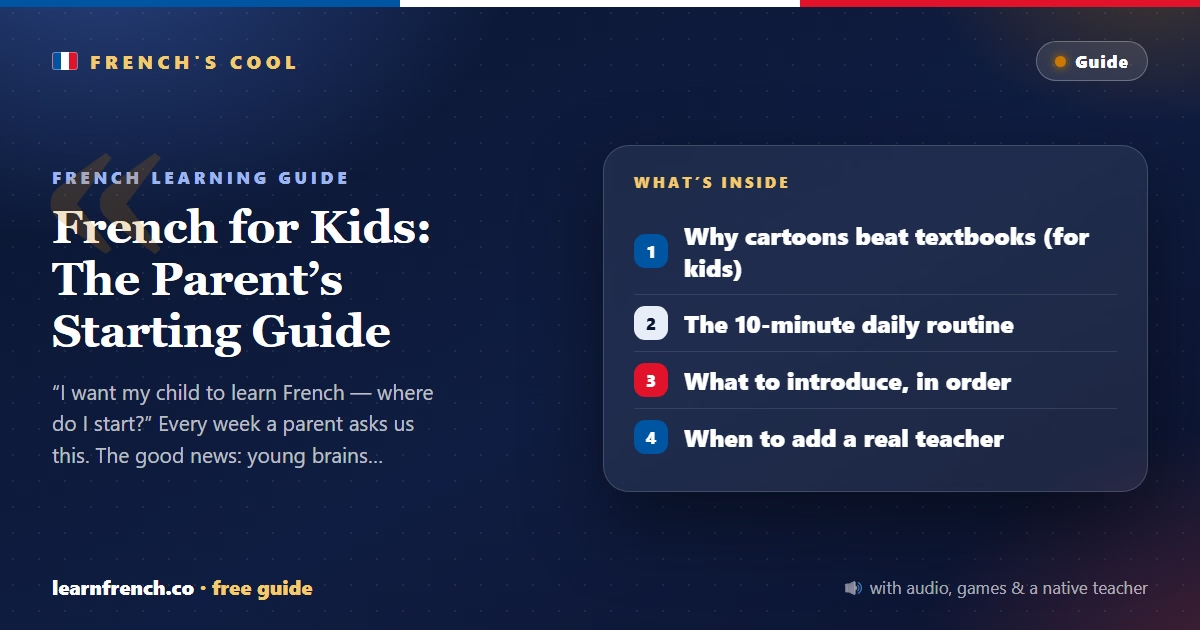
Children acquire language from comprehensible, emotional input — a donkey refusing his bath teaches se laver better than any drill, because the story carries the meaning. That’s why our video lessons wrap each cartoon episode with key phrases (with audio), a language point and a mini-quiz: the child watches, the learning is scaffolded.
The 10-minute daily routine
- Watch one short episode together (5 min) — Trotro or Peppa in French.
- Play one game (3 min) — Memory Match or Word Scramble. The audio buttons do the pronunciation for you.
- One phrase out loud (1 min) — tap 🔊, repeat together, laugh at each other’s accents. Done.
Parent phrases (even if YOU don’t speak French)
You don’t need French to co-learn — these four phrases make you the play partner:
What to introduce, in order
- Sounds & words first: colours, animals, numbers — all tappable audio.
- Then school French: La Salle de Classe (Écoutez! Répétez!) and the alphabet.
- Games as reward, always: Un ou Une? feels like a reflex game, IS grammar.
When to add a real teacher
Once your child asks questions the cartoons can’t answer — or you want pronunciation shaped early — short, playful live lessons work wonders. Xavier teaches kids with the same games-first philosophy. The trial lesson is free, and children are very welcome.
✍️ Quick quiz — for the parents!
Kids acquire language best from… (the principle)
Show answer
comprehensible, emotional input (stories!)
The daily dose that beats weekend cramming: (routine)
Show answer
10 minutes a day
« Encore une fois ! » means… (co-watching phrase)
Show answer
One more time!
Play the Quiztap to start · quick practice from this material
Loading the quiz…
The exposure engine: routines that work at home
Kids learning french don’t need lessons at first — they need exposure wired into the day, because a child learns a second language the way they learned the first: through repetition inside affection. The engine, by age. Toddler years: songs and routines — a French playlist at breakfast, comptines (Frère Jacques onward) in the car, counting stairs en français. At this age being exposed to french IS the curriculum; the accent window is wide open and pronunciation soaks in free. Younger kids (4–8): cartoons in French (familiar shows re-watched in French work best — the plot is known, so the language carries), picture books read aloud badly-but-bravely by you, and games — the memory match and gender duel on this site were built exactly for this age’s love of winning. Label the house, count the groceries, make French the language of one daily ritual (bath, snack, bedtime story) so it owns territory instead of borrowing time. School-age: add structure — first french workbooks, flashcards the child makes (making beats reviewing), and the french school of choice: a weekly class.
What the home engine can’t supply is a live native speaker responding to YOUR child — the ingredient research keeps flagging for bilingual kids: interaction, not just input. That’s the moment to add a native teacher on Zoom — short, playful sessions (French’s Cool teaches kids with exactly this format) turn passive vocabulary into conversation, correct the family accent gently, and give the child a French-speaking relationship that isn’t a screen. Parents’ most common worry — « my own level of french is terrible, will I teach mistakes? » — has a comforting answer: your enthusiasm transfers, your accent doesn’t stick if native input exists anywhere in the mix; french and english can share the home without confusion (code-mixing is a phase, not a problem — raised bilingual children sort the languages out on schedule). Keep sessions short, keep it fun — help your child WANT the next French moment and the interactive resources, online platform lessons and french resources all multiply; make it a chore and the best curriculum dies. The exposure engine plus one real French-speaking human: that’s the whole method, and it produces kids interested in french who one day surprise you at a boulangerie — use french early and the child’s learning does the rest.
FAQ
What is the best way for kids to learn French?
Daily micro-exposure (songs, cartoons, rituals) plus weekly live interaction with a French speaker. Volume of fun beats rigor of curriculum at every age before secondary school.
How do I teach French in a fun way?
Attach French to things the child already loves: their cartoon in French, their snack counted in French, games with winners. The gender-duel and memory games on this site were designed as the dessert course of learning.
What is the 80/20 rule in learning French?
For kids: a small core of everyday phrases and songs delivers most of the benefit — and consistency (ten minutes daily) is the 20% of parental effort producing 80% of the result.
What are the 5 W’s in French?
Qui, quoi, où, quand, pourquoi — and « pourquoi ? » will arrive in French with the same relentlessness it did in English. Consider it progress.
How to teach kids French at home
You don’t need to be fluent to teach kids French at home — you need consistency and play. Children learn a language the way they learned their first one: through repetition, songs and fun, not grammar drills. The goal is exposure every day, in tiny doses, tied to things they already enjoy. Here’s what actually works:
- Songs and nursery rhymes. « Frère Jacques », « Alouette », « Un, deux, trois » — music makes vocabulary stick effortlessly for kids.
- Cartoons in French. Switch the audio on shows they already love; familiar stories make new words guessable.
- Label the house. Sticky notes on la porte, la table, le lit turn daily life into immersion.
- Picture books. Read simple French books together, pointing at pictures — even 10 minutes counts.
- Play games. Hide-and-seek counting in French, « Jacques a dit » (Simon says), colour hunts around the room.
Keep it playful and pressure-free
The fastest way to put a child off a language is to make it feel like a test. Praise effort, never correct harshly, and stop while they still want more. Short, playful, daily sessions beat long weekly ones every time. If your own French is shaky, learn alongside them — children love being the expert, and hearing you try makes them braver.
Teaching kids French at home FAQ
What is the best way for kids to learn French?
The best way for kids to learn French at home is little-and-often, playful exposure: French songs, cartoons, games and picture books woven into the daily routine, plus a chance to speak French with a parent, tutor or class. Fun and consistency beat intensity every time — a joyful 10 minutes a day outperforms a stressful hour.
What is the best age to start teaching kids French?
The earlier the better — young children absorb sounds and accents remarkably easily — but it’s genuinely never too late. Under-7s pick up pronunciation almost automatically; older kids learn faster with structure. Any age benefits from daily, playful exposure.
How can I teach my child French if I don’t speak it?
Lean on native-French songs, cartoons, apps and books to supply the language, and learn the handful of everyday parent phrases yourself. You’re the coach and cheerleader, not the textbook — consistency matters more than your own level.
How much French practice should a child do each day?
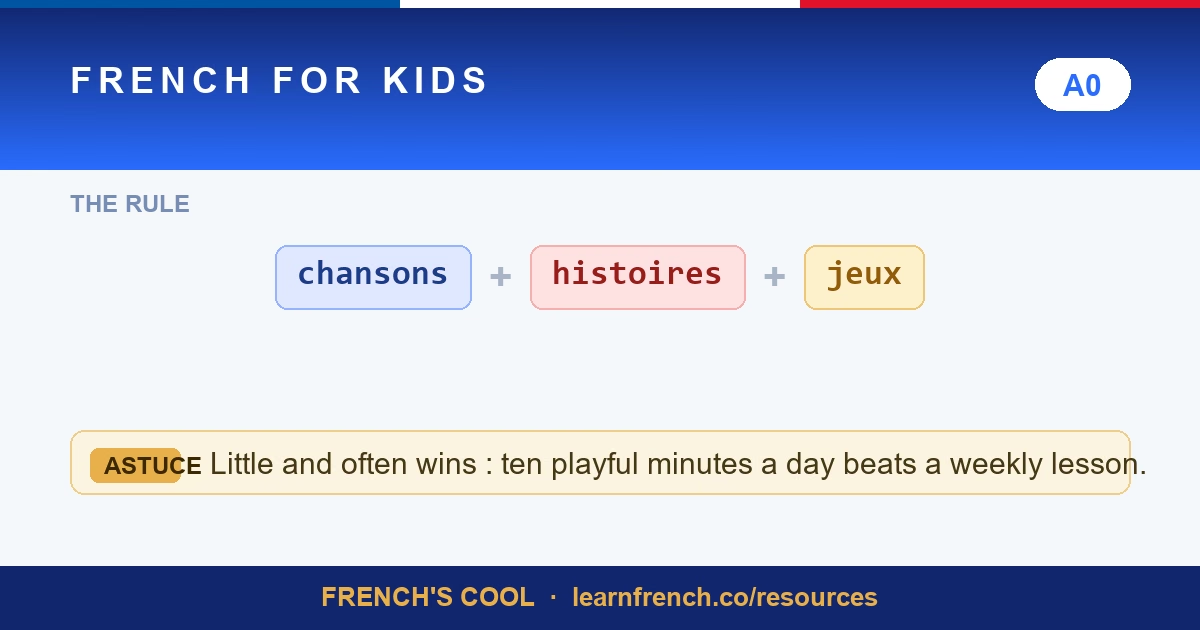
Ten to fifteen minutes a day is plenty for kids. A song at breakfast, a cartoon after school, a bedtime picture book — spread across the day, that daily exposure adds up far faster than one long weekend session.
Raising a bilingual child (even outside France)
You don’t have to live in France to raise a bilingual child. Families all over the world help kids learn French at home by building a mini French language environment: a fixed French time each day, French at meals, or the « one parent, one language » approach. Bilingual children don’t get confused by two languages — decades of language learning research shows they simply sort them out, often with a slight delay and then a rush. The key is steady, meaningful input.
Focus on vocabulary and listening first; grammar takes care of itself at this age through exposure, exactly as it did in their first language. What matters is that French feels normal, useful and fun — not a chore.
When online classes or a tutor help
Once your child has a base, online French lessons add something home practice can’t: another voice to speak French with and gentle structure. Short, play-based French lessons — 15 to 25 minutes for younger children — keep it fun while a teacher models a natural accent. Whether you teach French yourself, use apps, or add a class, consistency at home is still what drives progress. Support any route with our free learning resources and vocabulary charts.
🧰 Your kids toolkit
Everything mentioned, one tap away:
🎯 More practice — translation — put it into French
Translate into French: « It’s bath time! (from the Trotro episode) » (translation)
Show answer
C’est l’heure du bain !
Translate into French: « Shall we watch Trotro? » (translation)
Show answer
On regarde Trotro ?
Translate into French: « What’s that? » (translation)
Show answer
C’est quoi, ça ?
Translate into French: « Well done! Great! » (translation)
Show answer
Bravo ! Super !
Translate into French: « One more time! » (translation)
Show answer
Encore une fois !
Ready for a human? Book a free kids-friendly lesson →
🎮 Practise this lesson
Games built from this exact page — turn what you just read into play:
🧩 Sentence Builder rebuild these sentences
🎧 Listening Game which sentence do you hear?
🎬 Watch next: Start with the Titounis colour song — 2 minutes of sing-along French.
🎬 This article in 20 seconds
The quick version — the full detail is below. More shorts → Open this short as a page — transcript included →