Your First Week of French: A 7-Day Beginner Plan
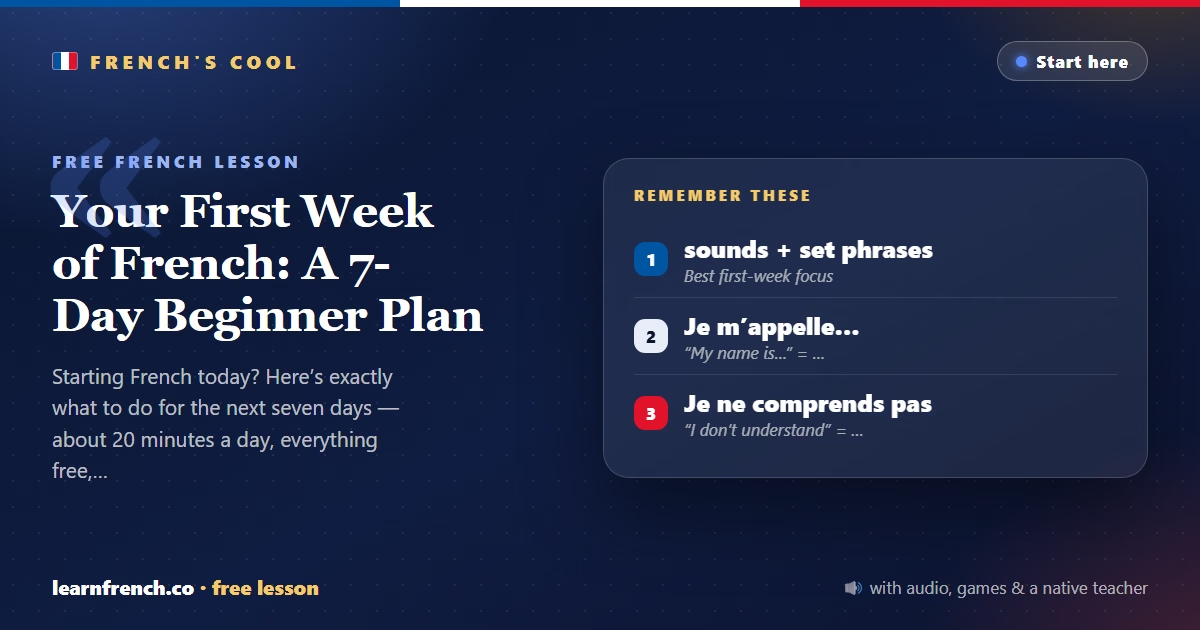
Starting French today? Here’s exactly what to do for the next seven days — about 20 minutes a day, everything free, everything on this site.
What you'll learn
Starting French today? Here’s exactly what to do for the next seven days — about 20 minutes a day, everything free, everything on this site. By Sunday you’ll greet, introduce yourself, count, and survive a first mini-conversation.
🌱 A tiny daily loop beats a heroic Sunday
Week one is about rhythm, not volume: 15 minutes of listening + 10 minutes aloud + 5 minutes of review, every day. Thirty focused daily minutes will outrun any three-hour weekend session — your memory consolidates between sessions, not during them.
🎬 This lesson in one minute
The quick version — the full lesson is below. More shorts →
The plan
| Day | Mission (~20 min) | Your tools |
|---|---|---|
| 1 | Greetings: bonjour, salut, ça va — say each aloud 10× | greetings chart |
| 2 | Introduce yourself: je m’appelle…, j’habite à… | intro lesson |
| 3 | Numbers 0–20 + your age with avoir | numbers chart |
| 4 | Être & avoir, present tense — the two pillars | verb posters |
| 5 | Watch one story video, repeat 5 phrases aloud | A1 video lessons |
| 6 | Play: one round of each game on a topic you liked | games arcade |
| 7 | Put it together: the 60-second self-introduction, recorded on your phone | first conversation |
Three rules for week one
- Out loud beats in-head. French lives in your mouth; whisper if you must, but produce sound every day.
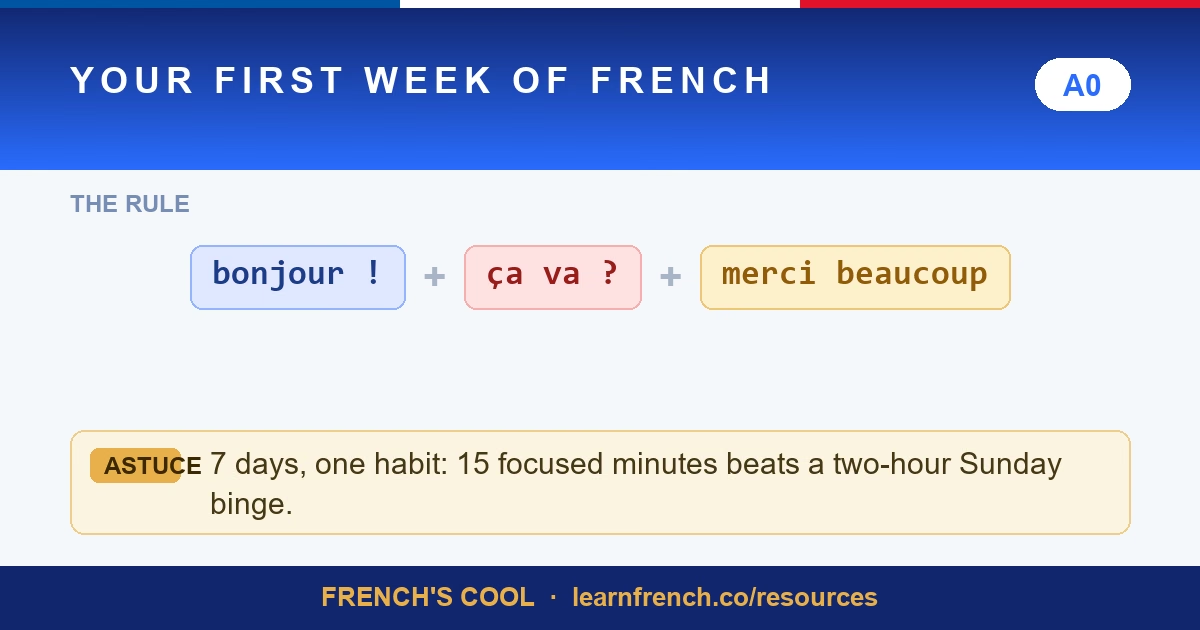
- Small and daily beats big and rare. Twenty minutes daily outruns a two-hour Sunday binge — that’s how memory works.
- Wrong is fine. Week-one French is supposed to be clumsy. Fluent people are just beginners who kept going.
After day 7
Take stock: if you enjoyed it, the road is mapped — the A1–C2 roadmap shows what comes next, and the A1 library has hundreds of free lessons. Want a shortcut and a real conversation partner? Your first lesson with Xavier is free — a perfect end-of-week-one reward.
In real sentences
Read each one aloud, then tap 🔊 and shadow the audio — rhythm first, speed later.
Drill it: French greetings · the free level test · the pronunciation guide
✍️ Your turn: week-one reflexes
Which three verbs should own your first week? (the big three)
Show answer
Être, avoir, aller — they power half of spoken French and every tense you’ll meet later.
Why learn « Comment dit-on… ? » on day one? (the master key)
Show answer
It converts every gap in your vocabulary into a conversation instead of a dead end.
The golden pronunciation reflex from day one? (endings)
Show answer
Final consonants are usually silent (petit, vous, français) — trust your ear over the spelling.
Build a real day-1 sentence with je + verb + place. (you can already)
Show answer
Je vais à Paris. / Je suis à la maison. — subject + verb + à + place already works.
Apps only, or apps + structure? (honest answer)
Show answer
Apps are excellent fuel and terrible engines. Pair one with a structured path — a course, these lessons in order, or a teacher — and the app minutes start compounding.
FAQ
Do I need to study grammar in my first week?
Barely. Être and avoir on day 4 is all the grammar week one needs. Phrases first, patterns second, terminology last — that order keeps you moving.
Is 20 minutes a day really enough to start?
For week one, yes — consistency builds the habit, and the habit builds the language. You can always do more, but never skip to zero.
What if I already know a little French?
Skim days 1–3 as revision, then jump your level on the roadmap. A quick self-test: can you do day 7’s 60-second introduction without notes?
How much time per day is actually enough?
Twenty to thirty minutes daily, honestly kept, changes your French within a month. The trap is zero-days: two skipped days quietly become a skipped week. Shrink the session before you skip it — five minutes keeps the chain alive.
Should I worry about grammar in week one?
Only enough to build sentences: je/tu/il + a present-tense verb + a noun. Collect phrases greedily, questions especially. The grammar arrives naturally once you have sentences for it to explain.
Quick practice
Play the Quiztap to start · quick practice from this material