French-Speaking Countries: The Francophone World in Numbers
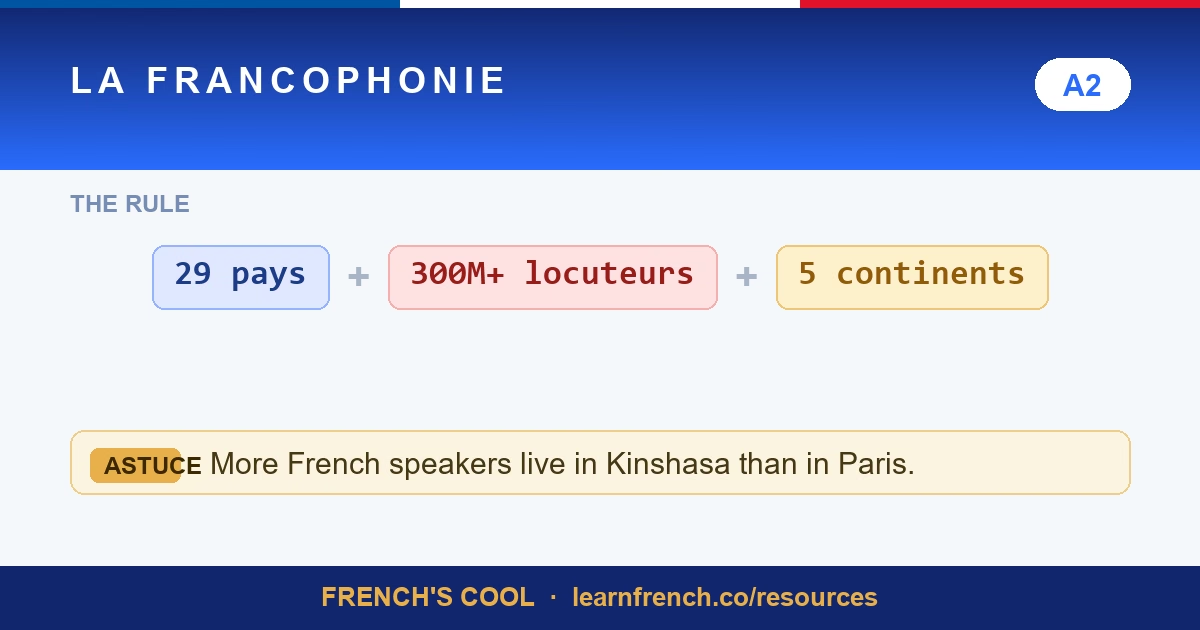
French isn’t just the language of France. With over 300 million speakers , French is one of the world’s great global languages — official in 29 countries across five continents. Here’s a tour of the francophone world , and why it makes learning French such a smart investment. Where is French an official language? Region…
What you'll learn
French isn’t just the language of France. With over 300 million speakers, French is one of the world’s great global languages — official in 29 countries across five continents. Here’s a tour of the francophone world, and why it makes learning French such a smart investment.
Where is French an official language?
| Region | Examples |
|---|---|
| Europe | France, Belgium, Switzerland, Luxembourg, Monaco |
| Africa | DR Congo, Senegal, Côte d’Ivoire, Cameroon, Morocco*, Tunisia*, and many more |
| North America | Canada (Québec), Haiti |
| Caribbean & overseas France | Guadeloupe, Martinique, French Guiana, Réunion |
| Pacific & Asia | Vanuatu, New Caledonia, French Polynesia |
*French is widely used in the Maghreb without being the constitutional official language.
Africa: the future of French
The heart of the francophone world is shifting south. Africa already counts around 26 French-speaking countries, and the OIF projects that by 2050 a large majority of the world’s French speakers will live in Africa — with Kinshasa (DR Congo) already rivalling Paris as the biggest French-speaking city in the world. Hear it in action in our video lessons, including clips on the languages of Africa.
The many accents of French
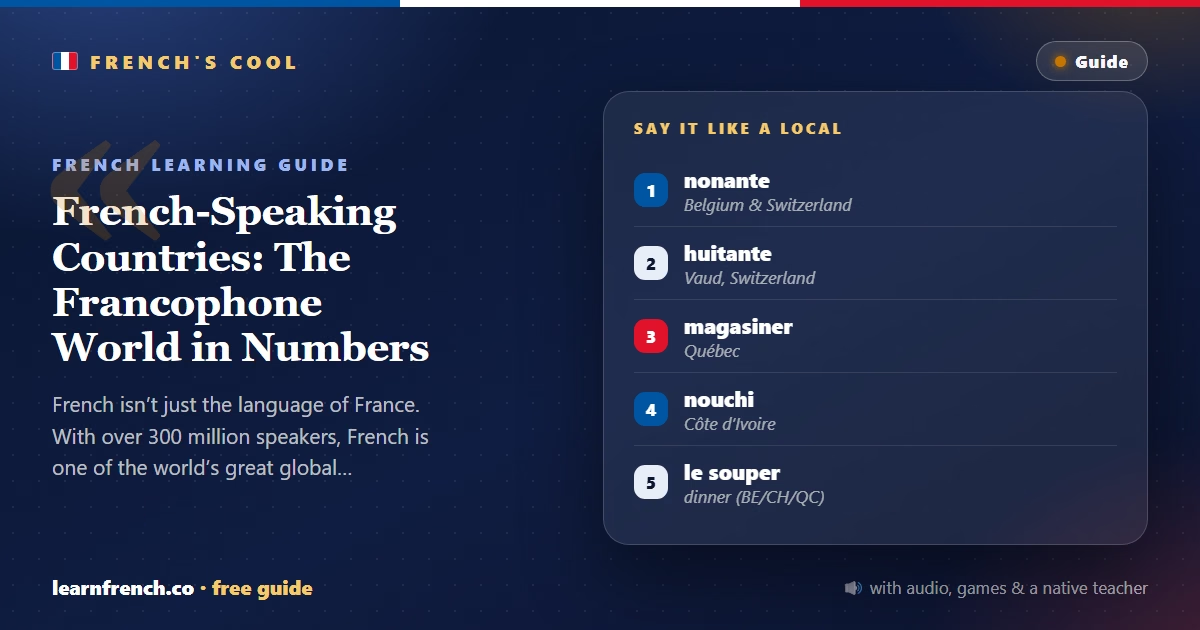
Québécois French, Belgian French, Senegalese French, Swiss French — same language, wonderfully different music. A few famous differences: Belgium and Switzerland sensibly say septante (70) and nonante (90) instead of soixante-dix and quatre-vingt-dix; Québec keeps charming older words like char (car); African French coins brilliant new ones. Whichever French you learn, you’ll be understood everywhere.
Why this matters for learners
- Career reach: French opens doors on five continents, and it’s an official language of the UN, EU, NATO and the Olympics.
- Travel: from Marrakech to Montréal to Tahiti — one language, dozens of destinations. Pack our travel phrasebook.
- Culture: francophone music, film and literature stretch far beyond France — discover Guadeloupe in our video lesson.
French on the world stage
Beyond the map, French carries institutional weight: it’s an official language of the United Nations, the European Union, NATO, the International Olympic Committee (listen for it at every opening ceremony), the Red Cross, and international courts. Diplomats still call it la langue diplomatique. For careers in international organisations, NGOs and EU institutions, French remains one of the two working languages that actually get used daily.
Your francophone action plan
- Pick a second francophone accent to listen to weekly — a Québécois podcast or Senegalese news — so real-world variety never surprises you.
- Follow one francophone artist (music is the easiest immersion there is).
- Watch our francophone Africa clips for the numbers in real French.
FAQ
How many countries speak French?
French is an official language in 29 countries, and it’s spoken meaningfully in over 50. Around 300 million people speak French worldwide, making it one of the five most-spoken languages.
Which continent has the most French speakers?
Africa — and its share is growing fast. Around 26 African countries use French officially or widely, and demographers expect most of the world’s French speakers to be African within a generation.
Is the French in Québec or Africa different from France?
The accent and some vocabulary differ — like British vs American English — but it’s one language. Standard French is understood everywhere, so whatever French you learn travels with you.
Quick practice
Play the Quiztap to start · quick practice from this material
The grand tour: where French will actually take you
« Le français est une chance » — and here is the map of that chance, continent by continent. Around 320 million people speak French today, and the OIF projects up to 700 million by 2050, mostly in Africa.
Europe beyond France
- Belgium — Brussels and Wallonia. Listen for septante (70) and nonante (90), and meals shifted by one: le déjeuner is breakfast, le dîner is lunch, le souper is dinner.
- Switzerland — la Romandie (Geneva, Lausanne). Same septante/nonante, plus huitante (80) in Vaud. Slower, very clear French — wonderful for learners.
- Luxembourg — trilingual daily life; French dominates shops and administration.
- Monaco — official language French, glamour included.
Africa: the centre of gravity
- Kinshasa (DR Congo) is the largest French-speaking city in the world — bigger than Paris.
- Senegal — Dakar’s French mixes with Wolof; home of Léopold Sédar Senghor, poet-president and father of the Francophonie.
- Côte d’Ivoire — Abidjan’s famous nouchi street French exports slang to Paris (« c’est enjaillant ! » = it’s fun).
- The Maghreb — Morocco, Algeria, Tunisia: French is the language of business and higher education alongside Arabic.
- Plus Cameroon, Gabon, Madagascar, Rwanda, Benin, Burkina Faso… over 20 African states in the Francophonie.
The Americas
- Québec — 8+ million speakers who protect French fiercely. Learn three words and win hearts: char (car), magasiner (to shop), c’est plate (it’s boring). And yes, breakfast is le déjeuner here too.
- Haiti — French co-official with Haitian Creole, which grew from it.
- Louisiana — Cajun French survives in music and festivals; Laissez les bons temps rouler !
- French Guiana, Martinique, Guadeloupe — France itself, in South America and the Caribbean.
Pacific & Asia
- Tahiti & French Polynesia, New Caledonia — French with a lagoon view.
- Vietnam, Cambodia, Laos — francophone heritage in architecture, bakeries (bánh mì began with the baguette) and universities.
- Lebanon — a proudly trilingual culture where French remains a language of schooling and literature.
Le français régional
Same language, local flavour
🎬 This article in 20 seconds
The quick version — the full detail is below. More shorts → Open this short as a page — transcript included →