French for Travel: The Phrasebook You’ll Actually Use
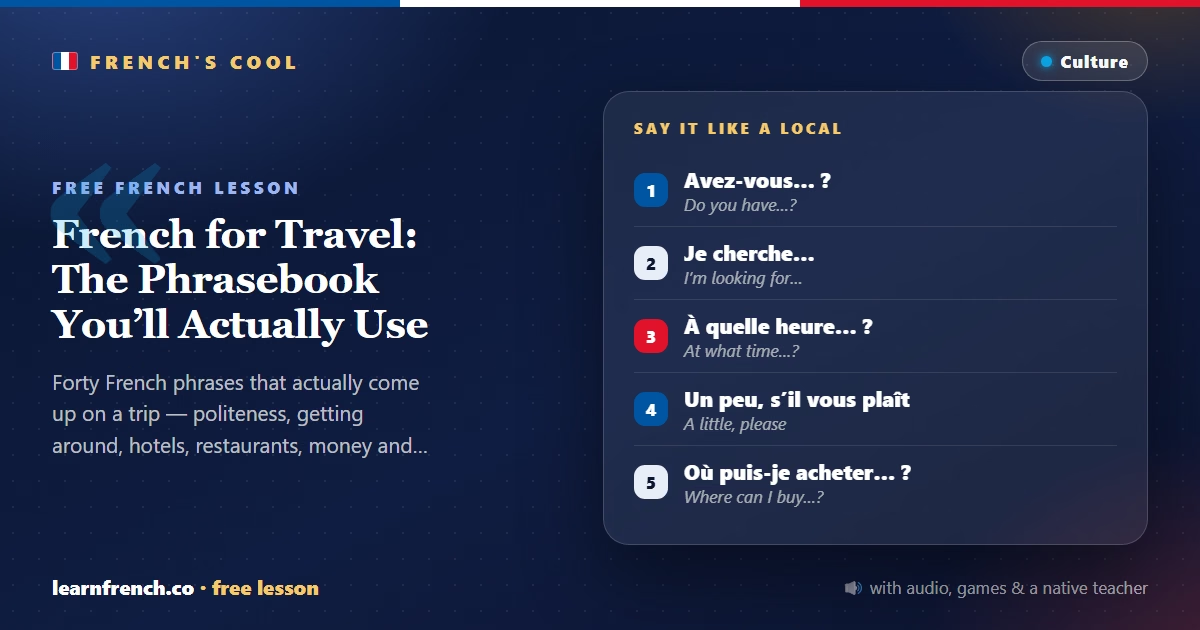
Forty French phrases that actually come up on a trip — politeness, getting around, hotels, restaurants, money and emergencies — each with audio, plus a 3-day pre-trip plan and quiz.
What you'll learn
You’ve booked the trip. You have three weeks. You don’t need fluent French — you need the forty phrases that actually come up, said politely enough that people warm to you. Here they are, grouped by the moment you’ll need them, each with a 🔊 button so you arrive sounding right.
🎬 This lesson in one minute
The quick version — the full lesson is below. More shorts →
🇫🇷 The one rule that changes everything
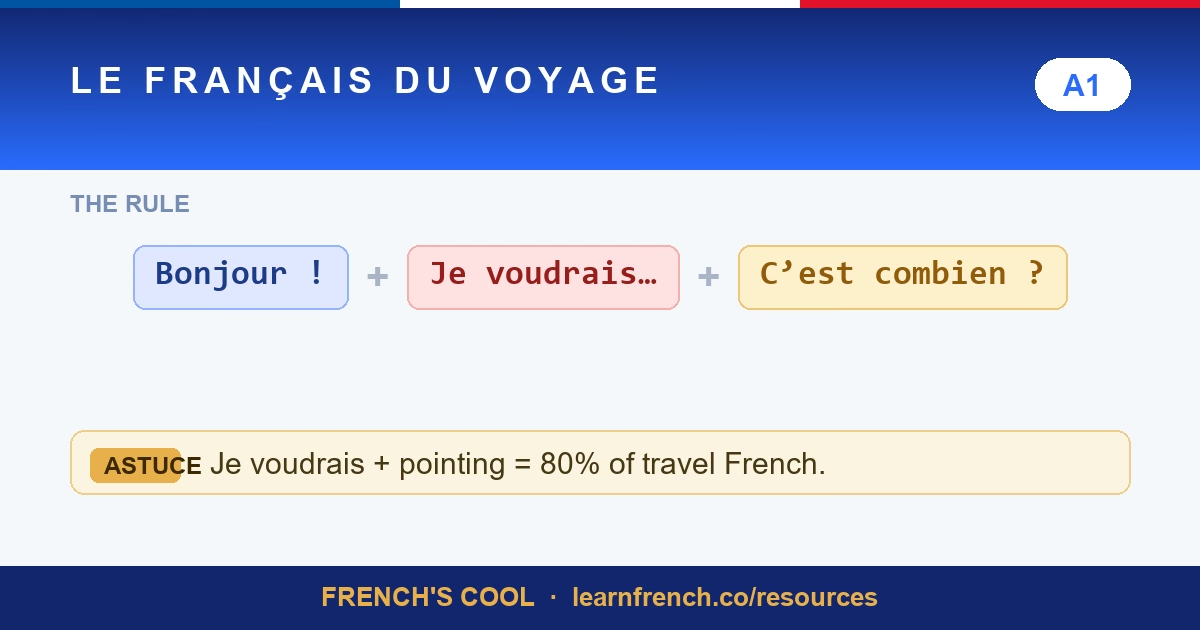
Start every interaction with « Bonjour » (or « Bonsoir » after ~6pm). In France, skipping it is genuinely rude — saying it makes the shopkeeper, waiter or stranger instantly friendlier. « Bonjour » first, then your question.
1. The magic politeness kit
These five carry more goodwill than any grammar. Full politeness guide →
2. Getting around
Directions unlock the whole city — left, right, straight on → and trains, métro & tickets →.
3. At the hotel
Everything for check-in and check-out →
4. Eating out (the best part)
Rare/medium/well-done, carafe d’eau (free tap water!) and service compris — the full restaurant guide →. Buying picnic food? Au marché →.
5. Money & shopping
Prices, cash vs card, and the sales →
6. If something goes wrong
Health words when you need them: le corps & la santé →. On the phone: au téléphone →.
Your 3-day pre-trip plan
- Day 1: Master the politeness kit + numbers (1–100) — tap every 🔊.
- Day 2: Restaurant + shopping phrases, and play the listening game to train your ear.
- Day 3: Directions + emergencies, then run the quiz below.
✍️ Travel-ready quiz
What do you say BEFORE every question in a shop? (the golden rule)
Show answer
Bonjour (or Bonsoir)
« L’addition, s’il vous plaît » means… (restaurant)
Show answer
The bill, please
How do you ask “How much is it?” (shopping)
Show answer
C’est combien ?
Play the Quiztap to start · quick practice from this material
Loading the quiz…
Essential French travel phrases (quick reference)
Planning a trip to France? These common French phrases and French words are the essential French phrases travelers reach for most. You don’t need perfect grammar or pronunciation — even basic French, said with a smile, transforms how you’re treated. Save or screenshot this table, grouped by moment:
| When | French | English |
|---|---|---|
| Basics | Bonjour / Merci / S’il vous plaît | Hello / Thank you / Please |
| Basics | Excusez-moi / Pardon | Excuse me / Sorry |
| Language | Parlez-vous anglais ? | Do you speak English? |
| Language | Je ne comprends pas. | I don’t understand. |
| Ask for directions | Où est… la gare / les toilettes ? | Where is… the station / the toilet? |
| Directions | C’est loin ? | Is it far? |
| Order food | Une table pour deux, s’il vous plaît. | A table for two, please. |
| Restaurant | L’addition, s’il vous plaît. | The bill, please. |
| Shopping | C’est combien ? | How much is it? |
| Hotel | J’ai une réservation. | I have a reservation. |
| Help | Pouvez-vous m’aider ? | Can you help me? |
| Emergency | Appelez un médecin / la police ! | Call a doctor / the police! |
Learn to say the numbers behind the prices on our French numbers 0–100 guide.
Useful French travel phrases FAQ
What is the most important French phrase for tourists?
« Bonjour » — always say it first, before any request. In France, opening with a greeting is expected politeness, and skipping it can make you seem rude. Follow it with « Parlez-vous anglais ? » and most people will happily switch or help.
Do people speak English in France?
In Paris and tourist areas, many people speak some English, especially younger people and hospitality staff. Outside the cities it’s less common. Either way, starting in French with « bonjour » and a few polite phrases gets you far warmer service than assuming English.
How can I learn French travel phrases fast?
Pick 20–30 high-value phrases (the table above), group them by situation, and drill them out loud with audio before your trip. You don’t need grammar — you need reflexes. Practise them on our travel vocabulary charts.
More common French phrases for your trip
Once the essentials feel natural, add these common French phrases to travel with real confidence:
- Je voudrais… — I would like… (the most useful travel French phrase of all).
- Avez-vous… ? — Do you have…?
- Je cherche… — I’m looking for…
- À quelle heure… ? — At what time…?
- Un peu, s’il vous plaît. — A little, please.
- C’est très bon ! — It’s very good! (a waiter loves this)
- Je suis désolé(e), je ne parle pas bien français. — Sorry, I don’t speak French well.
- Pouvez-vous répéter, s’il vous plaît ? — Can you repeat that, please?
- Où puis-je acheter… ? — Where can I buy…?
- Je prends celui-ci. — I’ll take this one.
- Est-ce que je peux payer par carte ? — Can I pay by card?
- Bonne journée ! — Have a good day!
A quick tip on pronunciation: French final consonants are usually silent, so « s’il vous plaît » sounds like « seel-voo-pleh ». Say it softly and link your words — that alone makes your French words far easier to understand.
🧳 Your travel toolkit
Every phrase set from this guide, one tap away:
🎯 More practice — translation — put it into French
Translate into French: « Hello! Excuse me » (translation)
Show answer
Bonjour ! Excusez-moi
Translate into French: « Do you speak English? » (translation)
Show answer
Parlez-vous anglais ?
Translate into French: « I don’t speak French well. » (translation)
Show answer
Je ne parle pas bien français.
Translate into French: « Can you repeat, please? » (translation)
Show answer
Pouvez-vous répéter, s’il vous plaît ?
Translate into French: « Thank you! — You’re welcome. » (translation)
Show answer
Merci beaucoup ! — Je vous en prie.
Want to practise these out loud before you fly? Book a free lesson with Xavier →
🎮 Practise this lesson
Games built from this exact page — turn what you just read into play:
🧩 Sentence Builder rebuild these sentences
🎧 Listening Game which sentence do you hear?