Vouloir — to want | French Verb Chart
On this page
🖨️ Print-friendly: use Ctrl+P (⌘P) or your browser menu to print this chart cleanly.
📚 This is the overview. « vouloir » is taught level by level — pick your CEFR level below for a full lesson (explanation, pronunciation, exercises & games).
Vouloir conjugation made simple: full conjugation charts to conjugate the French verb vouloir (to want) in every major tense — présent, passé composé, imparfait, futur and more — with audio for each form. Vouloir is the verb of desire behind « je voudrais », the most useful phrase in French, so this is a conjugation to master early.
Présent (Indicatif)
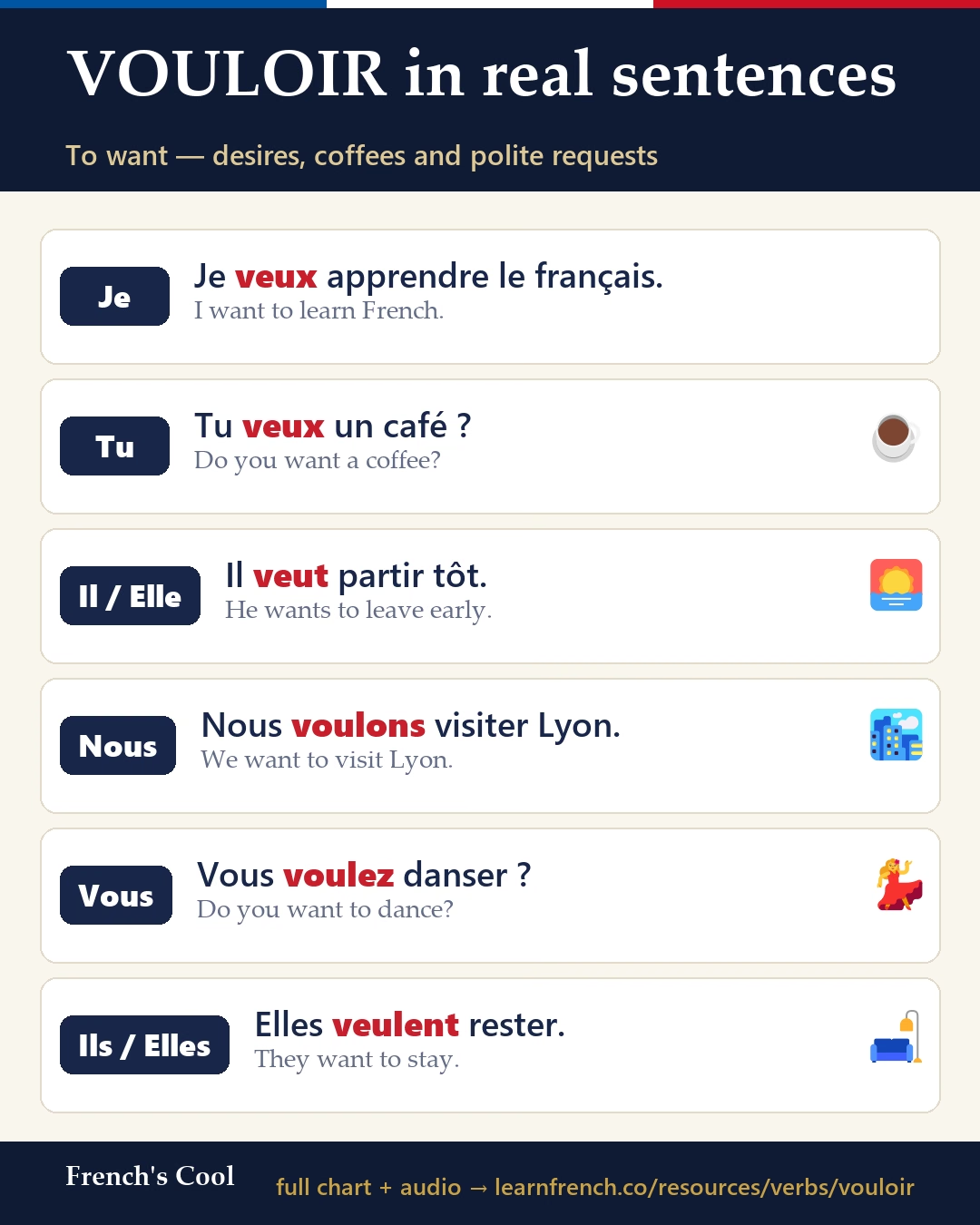
- je veuxI want
- tu veuxyou want
- il / elle veuthe / she wants
- nous voulonswe want
- vous voulezyou want
- ils / elles veulentthey want
Passé composé (Indicatif)
- j’ai vouluI wanted
- tu as vouluyou wanted
- il / elle a vouluhe / she wanted
- nous avons vouluwe wanted
- vous avez vouluyou wanted
- ils / elles ont vouluthey wanted
Imparfait (Indicatif)
- je voulaisI wanted
- tu voulaisyou wanted
- il / elle voulaithe / she wanted
- nous voulionswe wanted
- vous vouliezyou wanted
- ils / elles voulaientthey wanted
Futur simple (Indicatif)
- je voudraiI will want
- tu voudrasyou will want
- il / elle voudrahe / she will want
- nous voudronswe will want
- vous voudrezyou will want
- ils / elles voudrontthey will want
Conditionnel présent
- je voudraisI would like
- tu voudraisyou would like
- il / elle voudraithe / she would like
- nous voudrionswe would like
- vous voudriezyou would like
- ils / elles voudraientthey would like
Subjonctif présent
- que je veuillethat I want
- que tu veuillesthat you want
- qu’il / elle veuillethat he / she want
- que nous voulionsthat we want
- que vous vouliezthat you want
- qu’ils / elles veuillentthat they want
Impératif, Participe & Infinitif
- vouloirinfinitive
- voulantpresent participle
- en voulantgerund (gérondif)
- voulupast participle
- veuille · veuillons · veuillezimperative
- avoirauxiliary in compound tenses
📈 « vouloir » from A1 to native
The same verb grows with your level — from your first words to real native slang.
🎬 The 20-second version
Five phrases with « vouloir » — guess before the reveal. Practise with the free games → Open this short as a page — transcript included →
📘 How to use Vouloir
- To want: je veux un café, elle veut partir (+ noun or infinitive).
- Politeness: je voudrais (I would like) — the single most useful polite form in French.
- Vouloir dire = to mean: Qu’est-ce que ça veut dire ? (What does that mean?)
- Veuillez + infinitive = formal “please”: veuillez patienter.
🔑 Key forms
🔊 Common expressions
💡 Nuances & good to know
- Use je voudrais (conditional) to be polite; je veux can sound blunt or childish: je voudrais un café.
- vouloir dire = to mean: qu’est-ce que ça veut dire ? (what does that mean?).
- en vouloir à quelqu’un = to be angry / hold a grudge: ne m’en veux pas (don’t be mad at me).
🔊 More real-life examples
🇬🇧 Vouloir across tense and mood, in plain English
Vouloir — “to want” — is one of the most common french verbs, and want in French carries more social weight than in English, which is why this irregular verb lives in so many fixed phrases. The verb tables above give every form; here is the map of which tenses actually earn their place in speech.
Three do most of the work. The present (je veux) states the want plainly — direct, sometimes blunt. The conditional (je voudrais) is THE French politeness machine: polite requests from bakeries to emails all run on the conditional tense, because « je voudrais » softens “I want” into “I would like”. And the passé composé (j’ai voulu — vouloir takes avoir, like the verb avoir itself takes avoir) is the past tense of a want that became an attempt: « j’ai voulu appeler » — I tried to call. The imperfect (je voulais) covers wants that lasted; the futur simple (je voudrai — one letter from the conditional!) is rarer but real. French verb conjugation rewards knowing where to spend your effort: master those forms first and detail on vouloir’s remaining moods can wait.
Two more corners complete the meanings of vouloir. The subjunctive (que je veuille) appears mostly in the fossilised courtesy « veuillez patienter » (please wait) — the subjunctive tense as pure politeness. And « en vouloir à quelqu’un » means to hold a grudge — one of those different meanings that makes French vouloir richer than “want”: « ne m’en veux pas » = don’t be mad at me. Note vouloir takes the infinitive directly — « je veux partir », no à or de in between — one less rule to memorize than most verbs of desire.
Vouloir — FAQ
What does “je voudrais” mean?
“I would like” — the present conditional of vouloir, and the single most useful polite form in French. Use it for ordering, asking and requesting anything: « je voudrais un café, s’il vous plaît ».
Is vouloir irregular?
Yes — the stem shifts (veux, voulons, veulent), the future stem is voudr-, and the subjunctive is veuille. It shares this irregular pattern family with pouvoir, so learning the two together halves the effort.
When do I use the conditional instead of the present?
Use the conditional to express any request to another person (je voudrais); keep the present for facts about yourself (je veux apprendre le français). Present to a waiter sounds abrupt; conditional to your diary sounds odd.
🔊 Example sentences
✍️ Practice
Qu’est-ce que tu ___ ? (vouloir, present)
Show answer
veux
Je ___ un café, s’il vous plaît. (vouloir, conditional (polite))
Show answer
voudrais
Ils ___ partir tôt. (vouloir, present)
Show answer
veulent
Polite: je ___ une baguette, s’il vous plaît. (conditional)
Show answer
voudrais
Ça veut ___ quoi ? (expression)
Show answer
dire
🎬 Video lesson
 Vouloir (to want) — Present Tense
🎮 Practise this with games
🎯 More practice — conjugation drill — all six tenses
je ___ (Vouloir — present)
Show answer
veux
tu ___ (Vouloir — passé composé)
Show answer
as voulu
il ___ (Vouloir — imperfect)
Show answer
voulait
nous ___ (Vouloir — future)
Show answer
voudrons
vous ___ (Vouloir — conditional)
Show answer
voudriez
Go further: this chart is one small piece — get the full picture in our guide Master the present tense — the full beginner guide.
The conjugation of vouloir in real sentences
The conjugation of vouloir matters because this irregular French verb covers several everyday jobs:
- wanting things: « Je veux un café. » — I want a coffee.
- polite wishes: « Je voudrais réserver une table. » — I would like to book a table. (conditional)
- willingness: « Tu veux venir avec nous ? » — Do you want to come with us?
- fixed politeness: « Veuillez patienter. » — Please wait. (imperative)
« Je voudrais » — the conditional of vouloir — is arguably the most useful phrase in French. The charts above give the full verb conjugation in every mood — indicative (present tense, passé composé, imperfect, future), conditional, subjunctive and imperative — with audio so you can conjugate vouloir with the right pronunciation.
Vouloir conjugation FAQ
What is the present tense of vouloir?
je veux, tu veux, il / elle veut, nous voulons, vous voulez, ils / elles veulent. Full charts for every tense are above, each form with audio.
What is the past participle of vouloir?
voulu — the passé composé is « j’ai voulu ». Vouloir uses avoir as its auxiliary verb.
How do you say vouloir in the future tense?
« je voudrai » — the future stem never changes across persons, only the endings do.
What does vouloir mean in English?
to want. It is one of the essential French verbs — drill the present first, then the passé composé; those two tenses carry most conversations.
🎮 Practise this lesson
Games built from this exact page — turn what you just read into play:
🧩 Sentence Builder rebuild these sentences
🏁 Conjugation Race type the right form
🎧 Listening Game which sentence do you hear?
🎬 All seven CEFR levels, end to end
« vouloir » at every CEFR level — the tense, its forms and the mechanic that makes it stick. Practise it with the free games →