La Nourriture — French food vocabulary | Vocabulary
On this page
🖨️ Print-friendly: use Ctrl+P (⌘P) or your browser menu to print this chart cleanly.
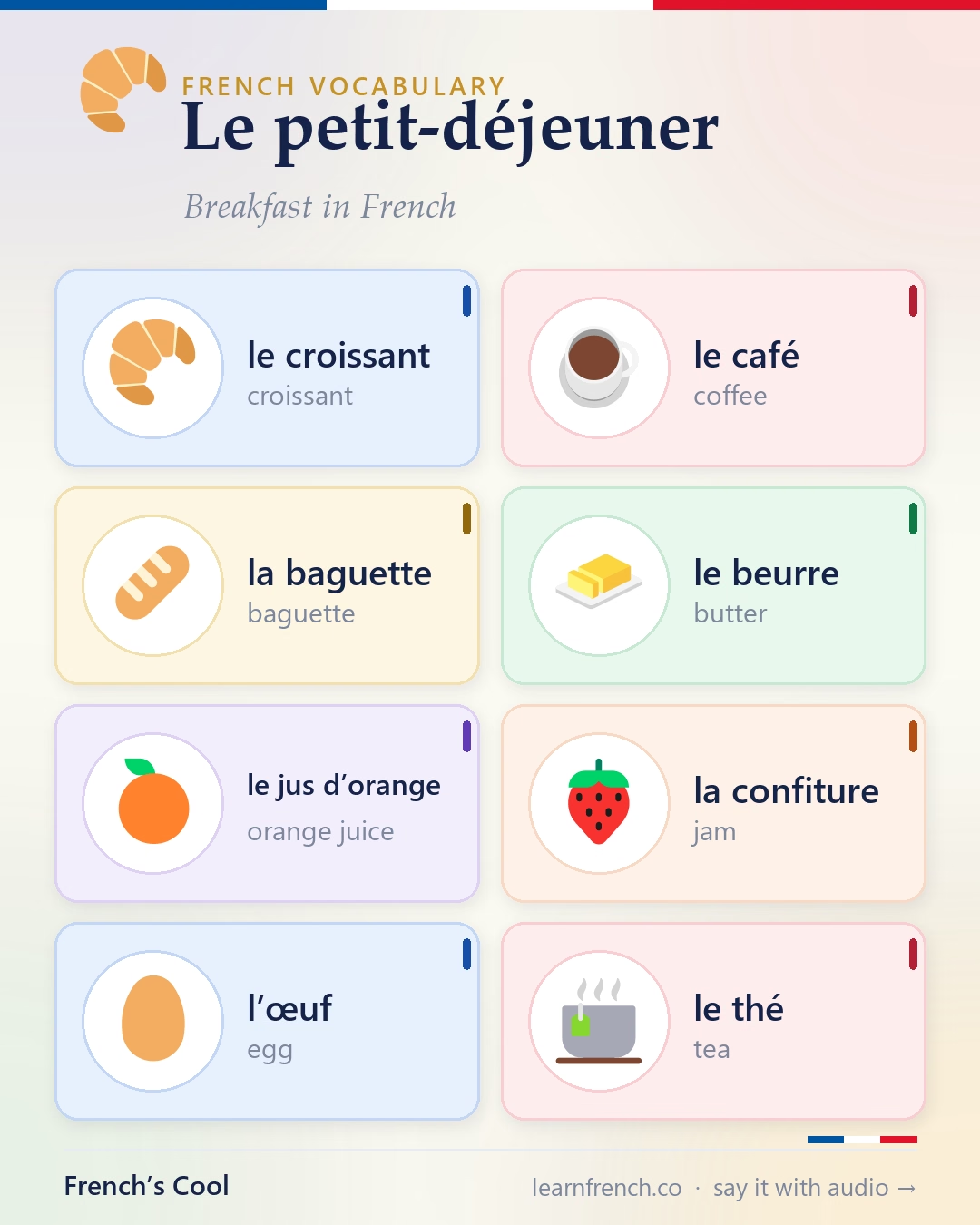
Essential French food vocabulary. This French food vocabulary list gives you 24 essential words — from le petit-déjeuner (breakfast) to le jus d’orange (orange juice) — each with audio and its English translation. Use it to build the French words you need to talk about food, then test yourself with the games below.
La Nourriture
Essential French food vocabulary
Les repas · meals
Les basiques
Fruits & légumes
Les boissons
🎬 The 20-second version
5 quick questions on « La Nourriture » — guess before the reveal. Practise with the free games → Open this short as a page — transcript included →
📘 Food words in real life
- Use the partitive for eating/drinking : je mange du pain, je bois de l’eau (see the partitive articles chart!).
- Ordering : je voudrais… / je vais prendre… — je vais prendre le plat du jour.
- le goûter is the French 4pm snack — a real institution for kids (and adults).
- un menu = a set menu; the printed list is la carte — manger à la carte.
- France eats late : déjeuner ~12h30–14h, dîner rarely before 19h30.
🇬🇧 Decoding a French menu: the words that trip everyone
Food in french comes with a false friend that ruins orders daily: on a french menu, l’entrée is the STARTER — the appetizer — not the main course. American english borrowed the word and moved it one course later; in France the main course is le plat (or le plat principal), and dessert is mercifully the same word. Know those three and any waiter will take you seriously. From there the menu sorts into families worth learning as vocabulary words: la viande (meat — le bœuf, le veau, l’agneau: beef, veal, lamb), les fruits de mer (seafood — le saumon, les crevettes, les huîtres: salmon’s family), and les produits laitiers (dairy products — le lait, le beurre, la crème, and the several hundred cheeses French culture refuses to count). Add le pain — french bread is its own food group, and une baguette bien cuite is a basic food order every french person makes weekly — plus le sel (salt) and le poivre, and you can navigate both market and table.
The etiquette layer costs nothing and buys everything. Bon appétit before eating (though gourmet purists claim fine dining skips it — say it anyway), « c’était délicieux » after, and for an allergy the sentence that matters: « je suis allergique aux fruits à coque » (tree nuts). French cuisine talk is a national sport — typically french dinner conversation is ABOUT the food and wine being eaten, often planning the next meal — so this vocabulary is conversational currency, not just menu-reading. A native french speaker learns these french dishes words at the table, in one’s native language, over years; you can shortcut with the audio list above plus one habit that builds real fluency: narrate your meals in daily french — « ce soir, je mange du poulet avec du riz » — because appetite, it turns out, is the best teacher a learner ever gets. That is how to learn french the way France food culture intends: one plate at a time, whether you speak french at a winery visit in Bourgogne or just order coffee like you mean it.
French food vocabulary — FAQ
What’s the difference between entrée in French and English?
In France l’entrée is the starter (the entry to the meal); the main course is le plat. US menus use “entrée” for the main — the single most confusing false friend in food French.
Do the French really say bon appétit?
Constantly — at home, in canteens, between strangers in a lunch spot. Old etiquette manuals disapproved; the entire country ignored them. Reply « merci, à toi/vous aussi ».
How do I say I’m vegetarian or allergic in French?
« Je suis végétarien(ne) », « je suis allergique à… » (aux arachides — peanuts, au gluten, aux fruits de mer). Waiters handle these daily; clear beats fluent.
How do you say common food words in French?
For example: breakfast is « le petit-déjeuner », lunch is « le déjeuner », dinner is « le dîner ». The full list above has 24 French food words, each with audio so you can hear the pronunciation.
What are the most useful French food words to learn first?
Start with the basics: le petit-déjeuner (breakfast), le déjeuner (lunch), le dîner (dinner), le goûter (afternoon snack), le pain (bread), le fromage (cheese). Master these core French words before moving on to the rest of the list.
How can I memorise French food vocabulary?
Learn the words in small themed groups, say each one out loud with the audio, and use it in a short sentence about your own life. Spaced repetition is what makes new vocabulary stick — see our guide to learning French vocabulary that sticks.
🔊 Useful phrases
🔊 Example sentences
✍️ Practice
breakfast en français ? (meal)
Show answer
le petit-déjeuner
Je bois ___ eau. (partitive before vowel)
Show answer
de l’
The bill, please! → « L’___, s’il vous plaît ! » (restaurant)
Show answer
addition
🎬 Video lesson
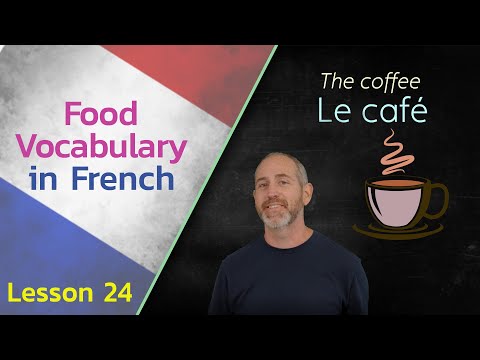 Food Vocabulary in French
🎮 Practise this with games
🎯 More practice — vocabulary recall — both directions
How do you say « breakfast »? (recall)
Show answer
le petit-déjeuner
What does « le goûter » mean? (recall)
Show answer
afternoon snack
How do you say « milk »? (recall)
Show answer
le lait
What does « le poisson » mean? (recall)
Show answer
fish
How do you say « an apple »? (recall)
Show answer
une pomme
What does « un citron » mean? (recall)
Show answer
a lemon
How do you say « a lettuce/salad »? (recall)
Show answer
une salade
What does « le café » mean? (recall)
Show answer
coffee
Go further: this chart is one small piece — get the full picture in our guide 25 survival phrases for your trip to France.
🎮 Practise this lesson
Games built from this exact page — turn what you just read into play:
🧩 Sentence Builder rebuild these sentences
🃏 Memory Match pair FR ↔ EN
⚔️ Un ou Une ? guess the gender
🎧 Listening Game which sentence do you hear?
🎬 The whole word list, level by level
La nourriture from your first words to native speed — the terms you actually need at each level. Practise it with the free games →