25 Survival French Phrases for Your Trip to France
Heading to France? These 25 practical French phrases cover greetings, restaurants, directions and shopping so you can travel with confidence.
What you'll learn
Planning a trip to France? You don’t need fluent French — you need the right handful of essential French phrases, said with confidence. This guide collects the common French phrases every traveler actually uses on vacation: greetings, ordering, directions, shopping and emergencies, each with its English translation and a pronunciation tip. Learn these basic French words and expressions before you fly, and France opens up differently.
🎬 This lesson in one minute
The quick version — the full lesson is below. More shorts →
The one habit that changes everything
Before any request, say Bonjour. Walking into a shop and launching straight into a question (even in French) reads as rude. Bonjour, … first, every time. It’s the single biggest ‘unlock’ for a friendly trip.
Getting around
- Où est… ? — Where is…? (Où est la gare ? — Where’s the station?)
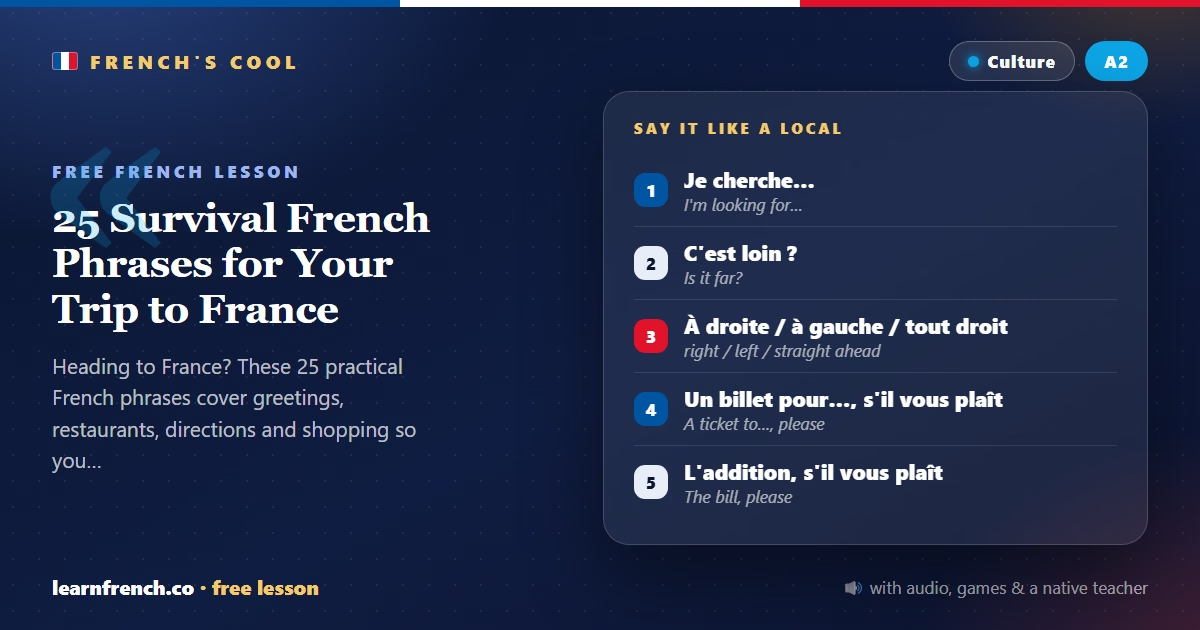
- Je cherche… — I’m looking for…
- C’est loin ? — Is it far?
- À droite / à gauche / tout droit — right / left / straight ahead
- Un billet pour…, s’il vous plaît. — A ticket to…, please.
At a café or restaurant
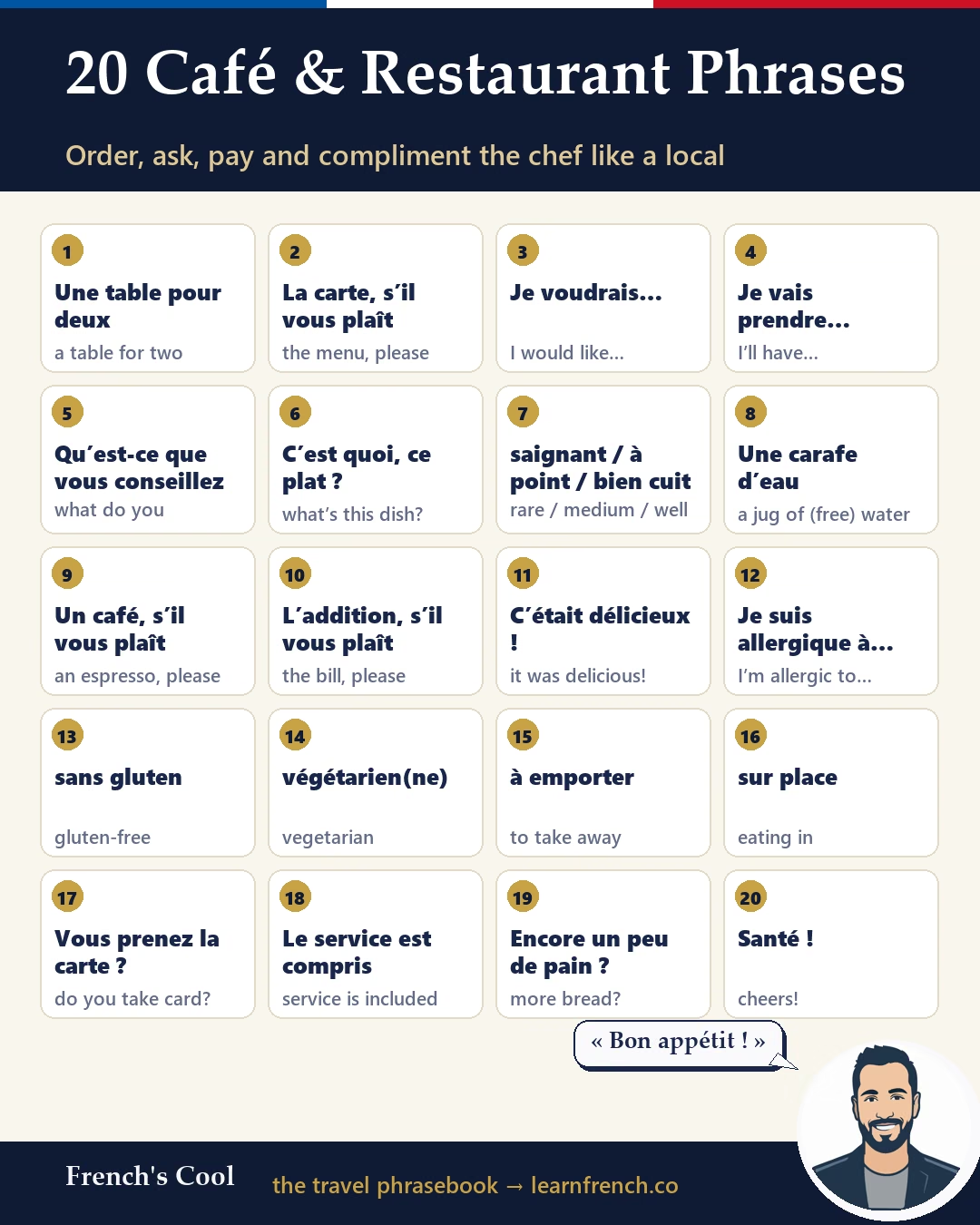
- Une table pour deux, s’il vous plaît. — A table for two, please.
- Je voudrais… — I’d like… (the polite way to order)
- L’addition, s’il vous plaît. — The bill, please.
- C’est délicieux ! — It’s delicious!
- Je suis végétarien(ne). — I’m vegetarian.
- Une carafe d’eau, s’il vous plaît. — A jug of (free) tap water, please.
Shopping and money
- C’est combien ? — How much is it?
- Je regarde, merci. — I’m just looking, thanks.
- Vous acceptez la carte ? — Do you take card?
- Je le prends. — I’ll take it.
Politeness that earns goodwill
- S’il vous plaît — please · Merci (beaucoup) — thank you (very much)
- Excusez-moi — excuse me (to get attention or pass by)
- Désolé(e), je ne parle pas bien français. — Sorry, I don’t speak French well. (said in French, it charms everyone)
- Parlez-vous anglais ? — Do you speak English? (ask after bonjour, not instead of it)
If something goes wrong
- Au secours ! — Help!
- J’ai besoin d’un médecin. — I need a doctor.
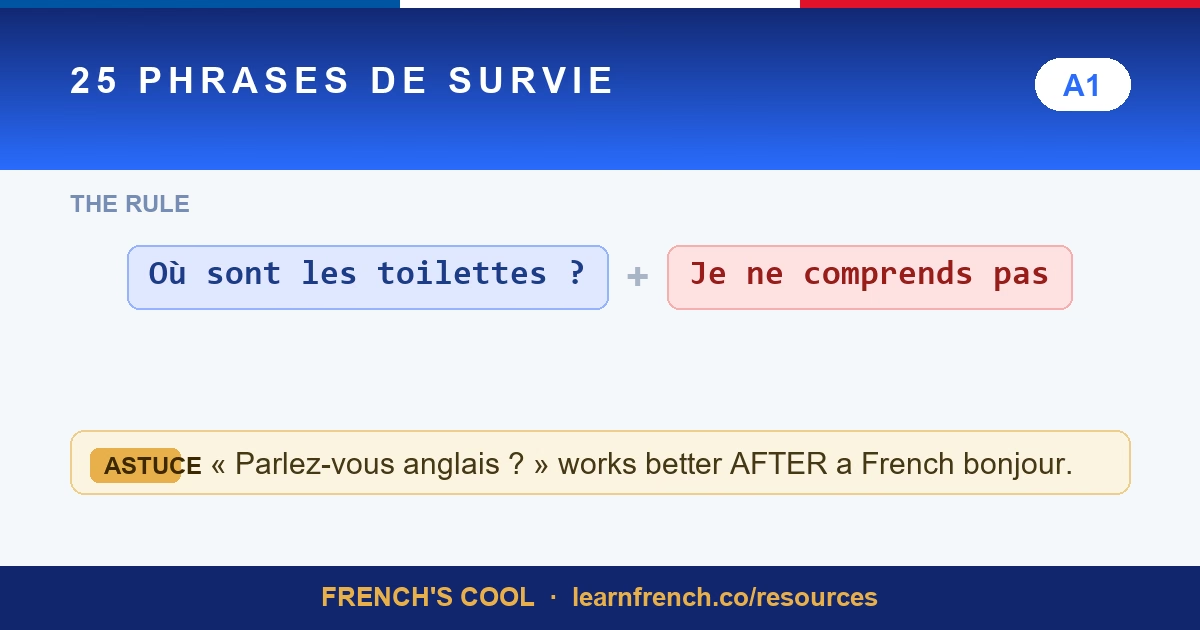
- Où sont les toilettes ? — Where are the toilets?
- J’ai perdu mon passeport. — I’ve lost my passport.
- Pouvez-vous m’aider ? — Can you help me?
A quick pronunciation tip
Don’t sound out final consonants — s’il vous plaît is roughly ‘seel voo PLEH’, and l’addition is ‘la-dee-SYON’. French stresses the end of the word, gently. When in doubt, say it softly and let the last syllable land.
Practise it with a real teacher
Reading about French is one thing — saying it out loud, with someone who corrects you gently and adapts to your level, is what makes it stick. Your first 20-minute lesson with Xavier is free, with no card and no commitment. Book your free lesson and let’s put this into practice.

✍️ Quick quiz — did it stick?
The bill, please → l’___, s’il vous plaît. (restaurant)
Show answer
addition
Where are the toilets? → ___ sont les toilettes ? (question word)
Show answer
Où
I don’t understand → je ne ___ pas. (verb)
Show answer
comprends
Play the Quiztap to start · quick practice from this material
Loading the quiz…
The field test: phrases by situation, from Montmartre to the métro
Visiting France rewards effort disproportionately: make the effort to open in French — even three words of it — and shops, cafés and strangers audibly warm up. So here are the key french phrases sorted the way a trip actually unfolds. Finding your way: « Excusez-moi, où est la station de métro la plus proche ? » (the nearest metro station), « c’est loin à pied ? » (far on foot?), and the answer-decoder pair tout droit (straight ahead) / à droite (right) — one vowel apart, endlessly confused, worth drilling before you ask for directions anywhere. Ordering and paying: « je vais prendre… » to order food, « l’addition, s’il vous plaît » for the bill, and for prices — « c’est combien ? » — the two-word way to ask how much something costs at any market stall from Montmartre to Provence. The waiter’s rituals are covered in our restaurant lesson; the travel-day version is just those three plus « une carafe d’eau ».
When you’re stuck: « pouvez-vous parler plus lentement ? » (speak slower, please), « je parle un petit peu français » (I speak a little — the phrase that buys patience everywhere), and « vous pouvez m’aider ? ». Please and thank you carry more weight in France than in most languages: bonjour before every request, merci after, or the request lands rudely no matter how correct the grammar. That is the real insider rule — a Parisian’s famous frost melts for basic french phrases delivered with the bonjour-first ritual, in the touristy heart of the city as much as anywhere. Your next trip needs perhaps thirty phrases total: greetings, numbers for prices, directions, ordering, and the emergency politeness kit. Say them aloud on the plane, use them on day one — going to Paris (or Bordeaux, or a Versailles day-trip queue) with even survival French upgrades the whole travel experience from spectator to participant, and non-french speakers around you will wonder how you got the smile you got. See Paris once with the phrases and you’ll never travel to France without them — that’s the honest travel inspiration behind this whole lesson.
FAQ
What French phrases should I learn before a trip to France?
The core kit: bonjour/bonsoir, s’il vous plaît, merci, excusez-moi, je voudrais…, c’est combien ?, où sont les toilettes ?, l’addition s’il vous plaît, parlez plus lentement, je ne comprends pas. Ten phrases, whole trip.
How do I ask for directions in French?
« Excusez-moi, où est… ? » plus your target (la gare, le métro, la plage). Decode the answer with: tout droit (straight), à gauche/à droite, puis (then). Repeat it back — locals happily correct.
Do I need French to visit Paris?
You can survive on English — but the bonjour-merci ritual in French changes how every interaction goes. Tourists who open in French consistently report friendlier Paris; the effort, not the fluency, is what’s read.
At the hotel and the airport
The check-in essentials:
- J’ai une réservation au nom de… — I have a reservation under the name…
- À quelle heure est le petit-déjeuner ? — what time is breakfast?
- Est-ce que je peux laisser ma valise ici ? — can I leave my suitcase here?
- Où est la porte d’embarquement ? — where is the boarding gate?
- Mon vol a du retard. — my flight is delayed.
- La chambre est trop bruyante. — the room is too noisy.
Emergencies and the pharmacy
Hopefully never needed — but these are the phrases you want ready, not googled:
- Au secours ! — help!
- Appelez une ambulance / la police ! — call an ambulance / the police!
- J’ai besoin d’un médecin. — I need a doctor.
- J’ai mal ici. — it hurts here.
- Avez-vous quelque chose contre le mal de tête ? — do you have something for a headache? (pharmacies, marked by a green cross, are the first stop for minor issues)
- J’ai perdu mon passeport. — I’ve lost my passport.
Emergency numbers in France: 112 (universal), 15 (medical), 17 (police), 18 (fire).
One habit ties every essential French phrase together: start each interaction in French, even if you switch to English a sentence later. French people consistently warm to travelers who try — and these French words are your key.
French travel phrases FAQ
Do most French people speak English?
In tourist areas and among younger people, often yes — but leading with English can get a cool reception. The magic move: open in French (« Bonjour ! Parlez-vous anglais ? »). That one polite French sentence flips the interaction — people will meet you more than halfway.
What are the 5 phrases I should over-learn before the trip?
« Bonjour », « merci beaucoup », « s’il vous plaît », « je voudrais… » (I’d like…), and « parlez-vous anglais ? ». With those five and a smile you can survive a whole trip to France.
Is the French different in Quebec?
The core phrases are identical — bonjour, merci, je voudrais all work. Quebec has its own accent and some vocabulary (« déjeuner » is breakfast there, not lunch!), but as a traveller you will be understood everywhere French is spoken.
How do I not butcher the pronunciation?
Two rules carry you far: final consonants are usually silent (comment = « commen »), and « qu » sounds like k. Every phrase on this page has audio on our vocabulary charts — listen once, repeat twice.
🧰 Your practice kit
This guide gave you the big picture — now drill the details with these free interactive charts (each with audio examples and exercises):
Prefer a human? Book a free lesson with Xavier →
Keep going: Eat better on the same trip: French food vocabulary & ordering.
📊 Chart it: The travel word-field with audio and games: les voyages vocabulary.