Les Émotions — feelings in French | Vocabulary
On this page
🖨️ Print-friendly: use Ctrl+P (⌘P) or your browser menu to print this chart cleanly.
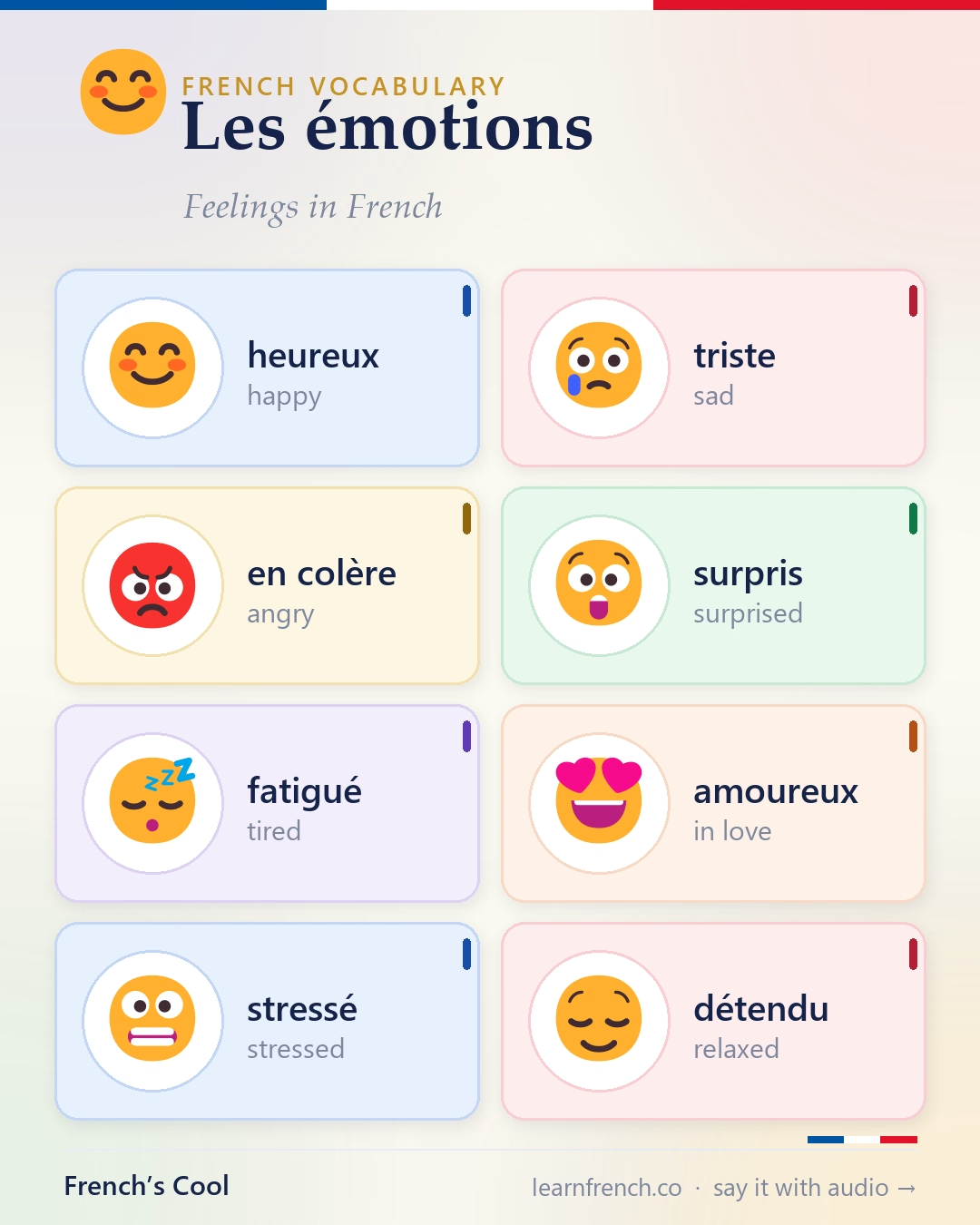
The key emotions in French — heureux, triste, en colère and more — each with audio. Feelings — and how the French express them. This French feelings how express them vocabulary list gives you 14 essential words — from heureux / heureuse (happy) to en avoir marre (to be fed up) — each with audio and its English translation. Use it to build the French words you need to talk about feelings how express them, then test yourself with the games below.
Les Émotions
Feelings — and how the French express them
Être + adjectif
Avoir + nom
🎬 The 20-second version
5 quick questions on « Les Émotions » — guess before the reveal. Practise with the free games → Open this short as a page — transcript included →
📘 Expressing feelings correctly
- Two patterns: être + adjective (je suis fatigué) and avoir + noun (j’ai peur) — English says “I am scared”, French says “I HAVE fear”.
- Adjectives agree: il est heureux → elle est heureuse; fier → fière; inquiet → inquiète.
- Ça va ? covers small emotions; for the real answer: ça va moyen (so-so), ça ne va pas fort (not great).
- Mood idioms: être de bonne / mauvaise humeur (in a good/bad mood), avoir le cafard (to feel blue — literally “to have the cockroach”!).
- After emotion verbs + que → subjunctive: je suis content que tu sois là (see the subjunctive chart).
🇬🇧 Je suis, j’ai or je me sens? The three patterns
French emotions vocabulary is easy to list and tricky to deploy, because emotions are expressed through three different grammars — and choosing the right one is what makes French speakers sound native when they talk about emotions:
- Être + adjective — « je suis triste », « elle est heureuse ». French adjectives agree: the feminine forms add -e (content → contente), plural adds -s. Masculine je suis content vs feminine je suis contente is audible — the final consonant wakes up.
- Avoir + noun — a set of feelings French frames as things you have: « j’ai peur » (fear), « j’ai honte » (shame), « j’ai hâte » (excitement). No article, no agreement — the pattern English speakers forget first.
- Se sentir + adjective/adverb — « je me sens bien », « je me sens fatigué ». Se sentir is the how-are-you-doing verb; sentir without the reflexive means to smell — a one-letter trap with a big smile attached. The noun behind it all is le sentiment — the feeling itself.
To ask and answer: « Qu’est-ce que tu ressens ? » (what do you feel?), « Comment tu te sens ? » — and with vous: « comment vous sentez-vous ? ». These common expressions plus the vocabulary lists above cover the ways to express your emotions in essential french — enough to express feelings precisely, which is exactly the corner of a language where being able to talk about yourself stops feeling like translation. French people reach for understatement — « ça va » hides a lot — so knowing the precise emotion words and feeling words earns you real conversational credit when you do deploy them; it is important to know a dozen well rather than forty vaguely, and learning the right dozen is what the list of French feelings vocabulary above is for — the fastest linguistic shortcut for anyone who wants to learn french online and speak and understand real conversation.
Emotions in French — FAQ
What are the emotion words in French?
Start with the core: heureux (happy), triste (sad), fâché/en colère (angry), surpris (surprised), inquiet (worried), fier (proud), déçu (disappointed), plus the avoir set — peur, honte, hâte. All appear with audio in the list above.
What are 7 basic emotions?
Psychology’s classic seven map neatly: la joie, la tristesse, la colère, la peur, la surprise, le dégoût, le mépris. Useful nouns — but conversation runs on the adjective forms above.
What are the 27 types of emotions?
Research lists 27 shades (admiration, nostalgie, gêne…), and French names them all — but no French speaker uses 27 in conversation. Master the dozen core emotions vocabulary first; nuance comes free with reading.
How do you say common feelings how express them words in French?
For example: happy is « heureux / heureuse », sad is « triste », tired is « fatigué(e) ». The full list above has 14 French feelings how express them words, each with audio so you can hear the pronunciation.
What are the most useful French feelings how express them words to learn first?
Start with the basics: heureux / heureuse (happy), triste (sad), fatigué(e) (tired), énervé(e) (annoyed), stressé(e) (stressed), surpris(e) (surprised). Master these core French words before moving on to the rest of the list.
How can I memorise French feelings how express them vocabulary?
Learn the words in small themed groups, say each one out loud with the audio, and use it in a short sentence about your own life. Spaced repetition is what makes new vocabulary stick — see our guide to learning French vocabulary that sticks.
🔊 Useful phrases
🔊 Example sentences
✍️ Practice
I’m scared → j’___ peur (avoir, not être!)
Show answer
ai
il est fier → elle est ___ (agreement)
Show answer
fière
to be fed up = en avoir ___ (idiom)
Show answer
marre
🎮 Practise this with games
🎯 More practice — vocabulary recall — both directions
How do you say « happy »? (recall)
Show answer
heureux / heureuse
What does « triste » mean? (recall)
Show answer
sad
How do you say « tired »? (recall)
Show answer
fatigué
What does « énervé » mean? (recall)
Show answer
annoyed
How do you say « stressed »? (recall)
Show answer
stressé
What does « surpris » mean? (recall)
Show answer
surprised
How do you say « proud »? (recall)
Show answer
fier / fière
What does « inquiet / inquiète » mean? (recall)
Show answer
worried
Go further: get the full picture in our guide Your first French conversation — the 4 moves.
🎮 Practise this lesson
Games built from this exact page — turn what you just read into play:
🧩 Sentence Builder rebuild these sentences
🃏 Memory Match pair FR ↔ EN
🎧 Listening Game which sentence do you hear?
🔤 Word Scramble unscramble the words
🎬 The whole word list, level by level
Les émotions from your first words to native speed — the terms you actually need at each level. Practise it with the free games →