Your First French Conversation: The 4 Moves That Carry You Through
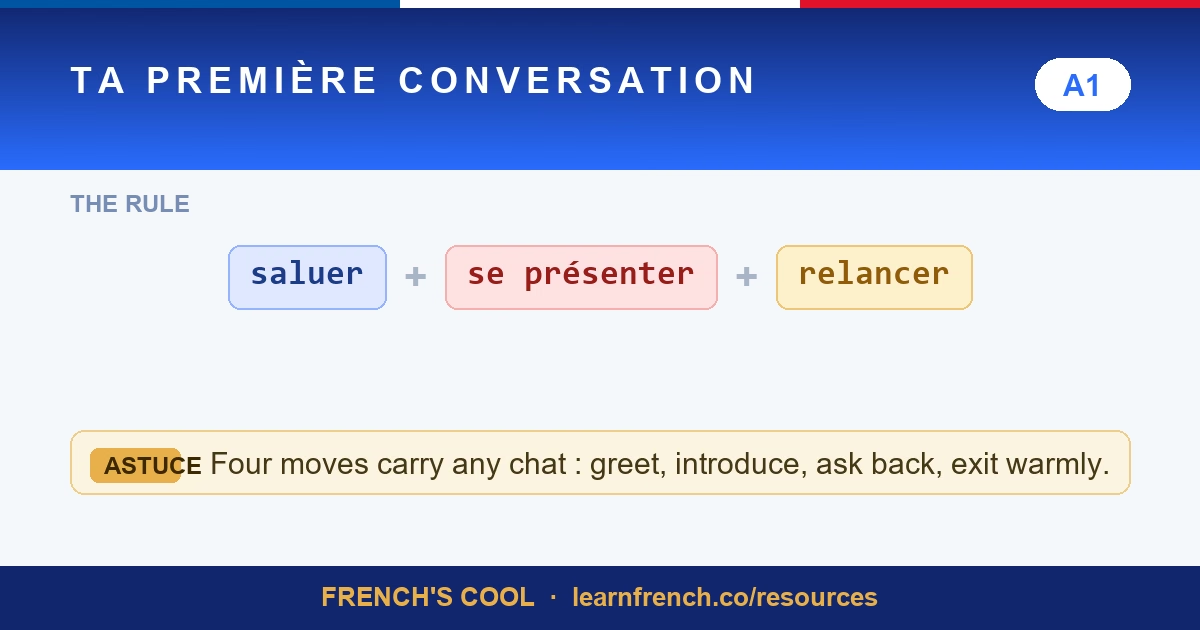
Have your first real French conversation with four reliable moves — greet, introduce yourself, ask back, and exit gracefully — with audio phrases and a 60-second script.
What you'll learn
You don’t need 2,000 words to have your first real French conversation — you need about forty, arranged into four moves you can rely on: greet, introduce, ask, and exit gracefully. This guide walks you through all four, with the exact sentences (and audio) you can use tomorrow.
🎬 This lesson in one minute
The quick version — the full lesson is below. More shorts →
Move 1 — Greet like a local
The golden rule of French politeness: bonjour comes first, always — before a question, before a request, before anything. Skipping it is the fastest way to get a cold reception in France.
After 6 pm, switch to bonsoir. With friends, salut ! Choosing tu or vous? When in doubt, vous — our tu vs vous guide covers every situation, and the greetings chart has the full toolkit with audio.
Move 2 — Introduce yourself in 4 sentences
Four patterns — je m’appelle, je viens de, j’habite à, je travaille — cover 90% of first meetings. Note je viens du Canada but de France: country genders change the preposition (see countries & nationalities).
Move 3 — Ask questions back
A conversation is tennis, not darts: return the ball. The easiest all-purpose form is Et vous ? / Et toi ? For real questions, start with intonation or est-ce que — no inversion needed at this stage:
All the question words — qui, où, quand, combien — are in the question words chart.
Move 4 — React, repair, and exit gracefully
You will not understand everything. Nobody does at first. These four phrases keep the conversation alive instead of killing it:
Reactions (ah bon ? · c’est vrai ? · super !) matter more than grammar: they show you’re listening, and they buy you thinking time.
Put it together — your first 60 seconds
Bonjour ! … Je m’appelle Sarah, je viens du Canada. … J’apprends le français depuis six mois. … Et vous, vous êtes d’ici ? … Ah bon ? … Bon, je dois y aller — merci, bonne journée !
That’s a real conversation. Practise it out loud with the audio buttons, then try it on a real human — a boulangerie is the perfect low-stakes arena (worst case, you leave with a croissant).
🎬 Video lesson
 French basic conversation & greetings
✍️ Quick quiz — did it stick?
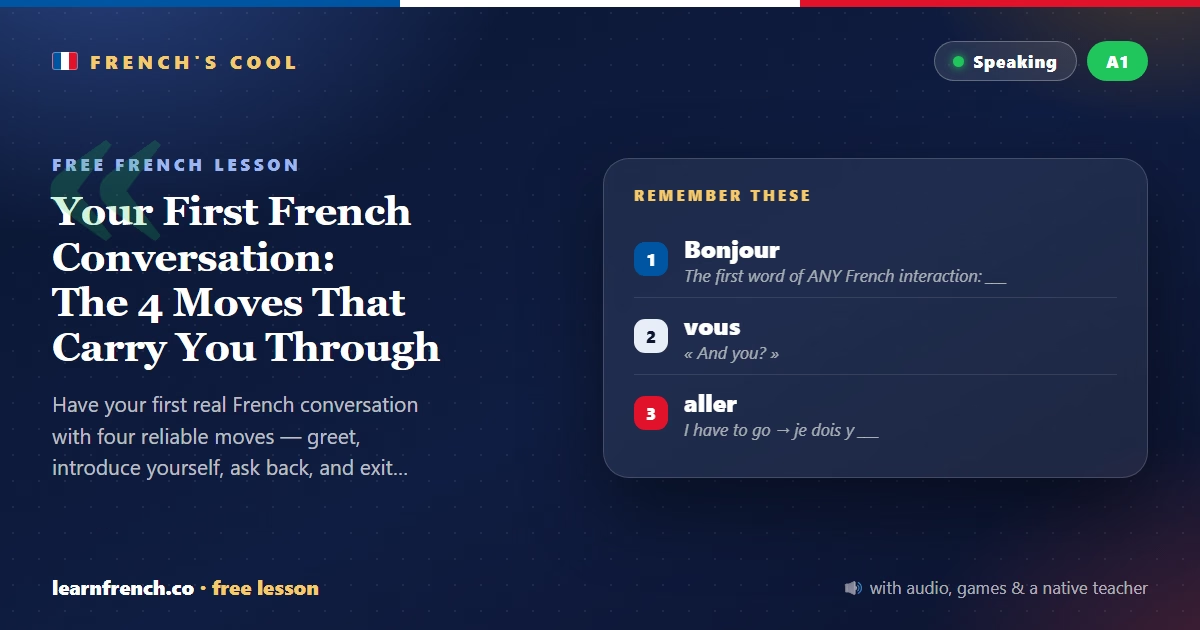
The first word of ANY French interaction: ___ (golden rule)
Show answer
Bonjour
« And you? » (formal) → et ___ ? (pronoun)
Show answer
vous
I have to go → je dois y ___ (verb)
Show answer
aller
Play the Quiztap to start · quick practice from this material
Loading the quiz…
Turning listening into speaking: the transcript method
The gap every beginner knows: you understand more than you can say. The bridge is working each french dialogue three times, with its transcript. Pass one — listen blind: play the slow french audio without text and count what you catch; comprehension under pressure is the skill being built. Pass two — read along: same dialogue with the script in front of you (English subtitles or translation only to CHECK, never to lean on), circling the words that hid from your ear — usually liaisons and swallowed vowels, not vocabulary. Pass three — shadow: speak over the recording a half-second behind, copying rhythm and melody wholesale. Shadowing is the closest thing to real-life conversation practice that needs no partner: your mouth learns the sentences your ear just mapped, and french pronunciation improves as a side effect rather than a project.
Feed the method with the right input and it compounds: the dialogues on this page first, then the slow-and-clear end of YouTube — channels in the Super Easy French style that upload original content with dual transcripts, interviews on the street, daily life scenes of ordering and asking for directions. Authentic but slowed is the sweet spot for beginners; native-speed native french comes later, and advanced french series later still. The daily dose that works is fifteen minutes: one dialogue, three passes, out loud. Do that for a month and the transformation is measurable — real-life french dialogues stop sounding like a stream and start sounding like sentences you could have said. That’s the whole secret of french listening at this level: comprehension and speaking are one skill wearing two hats, and the transcript method trains them together — which is how beginners improve their french fastest without a single grammar table.
FAQ
How should a beginner start French conversation practice?
With scripted dialogues, not improvisation: listen, read, shadow. Memorised exchanges (greeting, ordering, directions) give you rails; improvisation comes once the rails are automatic.
Is shadowing effective for French?
Exceptionally — French rhythm and liaison live between words, exactly where shadowing trains and flashcards can’t reach. A half-second delay behind the audio, ten minutes daily, beats an hour of silent study.
When should I find a conversation partner?
Sooner than feels comfortable — as soon as you can survive the first three exchanges of a dialogue. A patient partner (or tutor) turns your scripted French into flexible French; the free lesson on this site exists precisely for that jump.
French conversation for beginners: what to expect
A first French conversation as a beginner is short, friendly and predictable. You won’t improvise a debate — you’ll greet, introduce yourself, ask a couple of questions and say goodbye. Learn a handful of vocabulary chunks and one clean pronunciation habit (link your words, drop your final consonants) and you can hold your own from day one. The goal isn’t perfect grammar; it’s a real exchange.
A sample beginner dialogue
Here’s a complete dialogue you can learn line by line and reuse in almost any first meeting:
| French | English |
|---|---|
| — Bonjour ! Comment tu t’appelles ? | Hello! What’s your name? |
| — Je m’appelle Léa. Et toi ? | My name is Léa. And you? |
| — Moi, c’est Sam. Enchanté ! | I’m Sam. Nice to meet you! |
| — Tu viens d’où ? | Where are you from? |
| — Je viens du Canada. Et comment va ta famille ? | I’m from Canada. And how’s your family? |
| — Ça va bien, merci ! Bon, à bientôt ! | They’re well, thanks! Right, see you soon! |
Notice the pattern: greet → name → origin → a caring question → exit. Swap the details and it works with anyone. Build more of these on the vocabulary charts and the introduce-yourself lesson.
How to practise French conversation as a beginner
- Shadow the dialogue out loud. Read each line, then say it from memory — that’s how you learn French that comes out fast, not translated word by word.
- Record yourself. Compare your pronunciation to the audio and fix one sound at a time.
- Roleplay both parts. Play the questioner and the answerer so you can speak French on either side of the exchange.
- Add one new question a week. « Tu fais quoi dans la vie ? », « Tu habites où ? » — small additions take you from beginner to intermediate.
French conversation for beginners FAQ
How do I start a basic conversation in French?
Open with « Bonjour ! » then « Comment tu t’appelles ? » (informal) or « Comment vous appelez-vous ? » (formal). Give your name back with « Je m’appelle… », add « Enchanté ! », and you’re in a real French conversation. The full step-by-step is in the moves above.
What should a beginner say to keep a conversation going?
Bounce a question back. After you answer, add « Et toi ? » (and you?) or ask « Tu viens d’où ? ». One returned question turns a dead end into a real dialogue — and buys you time to think.
How can I practise French conversation if I’m learning alone?
Roleplay both sides of the sample dialogue, shadow the audio, and use the interactive drills below. Then push yourself with our guide to practising French speaking alone.
🧰 Your practice kit
Everything in this guide exists as a drill — each chart below has audio examples and exercises:
🎯 More practice — translation — put it into French
Translate into French: « Hello! Sorry to bother you » (translation)
Show answer
Bonjour ! Excusez-moi de vous déranger
Translate into French: « Good evening, how are you? » (translation)
Show answer
Bonsoir, comment allez-vous ?
Translate into French: « My name is Sarah. » (translation)
Show answer
Je m’appelle Sarah.
Translate into French: « I’m from Canada, but I live in Lyon. » (translation)
Show answer
Je viens du Canada, mais j’habite à Lyon.
Translate into French: « I work in marketing. » (translation)
Show answer
Je travaille dans le marketing.
Prefer a human? Book a free lesson with Xavier →
🎮 Practise this lesson
Games built from this exact page — turn what you just read into play:
🧩 Sentence Builder rebuild these sentences
🎧 Listening Game which sentence do you hear?