Faire — to do | French Verb Chart
On this page
🖨️ Print-friendly: use Ctrl+P (⌘P) or your browser menu to print this chart cleanly.
📚 This is the overview. « faire » is taught level by level — pick your CEFR level below for a full lesson (explanation, pronunciation, exercises & games).
Faire conjugation made simple: full conjugation charts to conjugate the French verb faire (to do / to make) in every major tense — présent, passé composé, imparfait, futur and more — with audio for each form. Faire is an everyday irregular used in hundreds of expressions (faire du sport, il fait beau), so this is a conjugation to master early.
Présent (Indicatif)
- je faisI do
- tu faisyou do
- il / elle faithe / she does
- nous faisonswe do
- vous faitesyou do
- ils / elles fontthey do
Passé composé (Indicatif)
- j’ai faitI did
- tu as faityou did
- il / elle a faithe / she did
- nous avons faitwe did
- vous avez faityou did
- ils / elles ont faitthey did
Imparfait (Indicatif)
- je faisaisI was doing
- tu faisaisyou were doing
- il / elle faisaithe / she was doing
- nous faisionswe were doing
- vous faisiezyou were doing
- ils / elles faisaientthey were doing
Futur simple (Indicatif)
- je feraiI will do
- tu ferasyou will do
- il / elle ferahe / she will do
- nous feronswe will do
- vous ferezyou will do
- ils / elles ferontthey will do
Conditionnel présent
- je feraisI would do
- tu feraisyou would do
- il / elle feraithe / she would do
- nous ferionswe would do
- vous feriezyou would do
- ils / elles feraientthey would do
Subjonctif présent
- que je fassethat I do
- que tu fassesthat you do
- qu’il / elle fassethat he / she do
- que nous fassionsthat we do
- que vous fassiezthat you do
- qu’ils / elles fassentthat they do
Impératif, Participe & Infinitif
- faireinfinitive
- faisantpresent participle
- en faisantgerund (gérondif)
- faitpast participle
- fais · faisons · faitesimperative
- avoirauxiliary in compound tenses
📈 « faire » from A1 to native
The same verb grows with your level — from your first words to real native slang.
🎬 The 20-second version
Five phrases with « faire » — guess before the reveal. Practise with the free games → Open this short as a page — transcript included →
📘 How to use Faire
- To do or to make: je fais mes devoirs, elle fait un gâteau.
- Weather: il fait beau / froid / chaud — always with faire.
- Activities & sports: faire du sport, faire de la natation, faire du piano.
- Faire + infinitive = to have something done: je fais réparer ma voiture.
🔑 Key forms
🔊 Common expressions
💡 Nuances & good to know
- faire for weather: il fait beau / froid / 20 degrés.
- faire for activities & chores: faire du sport, faire les courses, faire la cuisine, faire attention.
- faire + infinitive = to have something done (causative): je fais réparer ma voiture. And ça ne fait rien = it doesn’t matter.
🔊 More real-life examples
🇬🇧 Reading the faire tables like a teacher
Faire — to do or to make — completes the big four of irregular verbs (être, avoir, aller, faire), and its conjugaison hides three traps the tables above will show you but not explain. First: vous faites — one of only three -tes forms in the whole french verb conjugation system (with êtes and dites); « vous faisez » is the classic learner invention. Second: pronunciation. Nous faisons is pronounced fə-ZON — on prononce the ai as a muffled “uh”, and the same hidden vowel runs through the whole imperfect: je faisais, tu faisais. Say the forms aloud with the audio buttons — this chart is conjugation with audio precisely because faire’s spelling misleads the eye. Third: the futur simple stem is fer- (je ferai), not fair-.
Beyond the tables, faire is the engine of daily français: weather (il fait beau), activities (faire du sport, faire les courses), and the causative « faire faire » — to have something done: « je fais réparer ma voiture ». Where an English speaker reaches for a dozen verbs, a native french speaker often just conjugates faire and lets les temps — the tenses — carry the nuance. That is why every teacher drills this verbe early, and why the reference verb tables you’d find on Lawless French or in any grammar all give faire its own page: master its phrase patterns across the main tenses and you sound fluent out of proportion to the effort. One learner habit to steal: pick one faire expression per day and run it through present, passé composé (j’ai fait) and futur (je ferai) — three tenses, one context, and the pronoun-by-pronoun music of faire settles in for good.
Faire — FAQ
Why is it « vous faites » and not « vous faisez »?
Faire keeps a Latin-era irregular ending: faites, like êtes (être) and dites (dire) — the only three verbs that do this. Everything else in French takes -ez.
How is « nous faisons » pronounced?
Fə-zon — the ai reduces to a schwa (“uh”), inherited by the whole imperfect: je faisais = fə-zeh. The spelling never shows it; the audio above does.
What is the past participle of faire?
« Fait » — j’ai fait (I did/made), and it appears in set phrases everywhere: c’est fait (done), en fait (actually), tout à fait (exactly).
🔊 Example sentences
✍️ Practice
Que ___ -tu ce week-end ? (faire, present)
Show answer
fais
Hier, j’___ un gâteau. (faire, passé composé)
Show answer
ai fait
Il faut que tu ___ attention. (faire, subjunctive)
Show answer
fasses
Il ___ très chaud aujourd’hui. (weather)
Show answer
fait
Vous ___ du sport ? (present — irregular!)
Show answer
faites
🎬 Video lesson
 Faire (to do/make) — Present Tense
🎮 Practise this with games
🎯 More practice — conjugation drill — all six tenses
je ___ (Faire — present)
Show answer
fais
tu ___ (Faire — passé composé)
Show answer
as fait
il ___ (Faire — imperfect)
Show answer
faisait
nous ___ (Faire — future)
Show answer
ferons
vous ___ (Faire — conditional)
Show answer
feriez
Go further: this chart is one small piece — get the full picture in our guide Master the present tense — the full beginner guide.
The conjugation of faire in real sentences
The conjugation of faire matters because this irregular French verb covers several everyday jobs:
- activities and chores: « Je fais mes devoirs. » — I’m doing my homework.
- weather: « Il fait beau aujourd’hui. » — The weather is nice today.
- sports and hobbies: « Elle fait du yoga. » — She does yoga.
- causing something (faire + infinitive): « Il fait réparer sa voiture. » — He’s having his car repaired.
Faire appears in hundreds of fixed expressions, so its conjugation pays off across the whole language. The charts above give the full verb conjugation in every mood — indicative (present tense, passé composé, imperfect, future), conditional, subjunctive and imperative — with audio so you can conjugate faire with the right pronunciation.
Faire conjugation FAQ
What is the present tense of faire?
je fais, tu fais, il / elle fait, nous faisons, vous faites, ils / elles font. Full charts for every tense are above, each form with audio.
What is the past participle of faire?
fait — the passé composé is « j’ai fait ». Faire uses avoir as its auxiliary verb.
How do you say faire in the future tense?
« je ferai » — the future stem never changes across persons, only the endings do.
What does faire mean in English?
to do. It is one of the essential French verbs — drill the present first, then the passé composé; those two tenses carry most conversations.
🎮 Practise this lesson
Games built from this exact page — turn what you just read into play:
🧩 Sentence Builder rebuild these sentences
🏁 Conjugation Race type the right form
🎧 Listening Game which sentence do you hear?
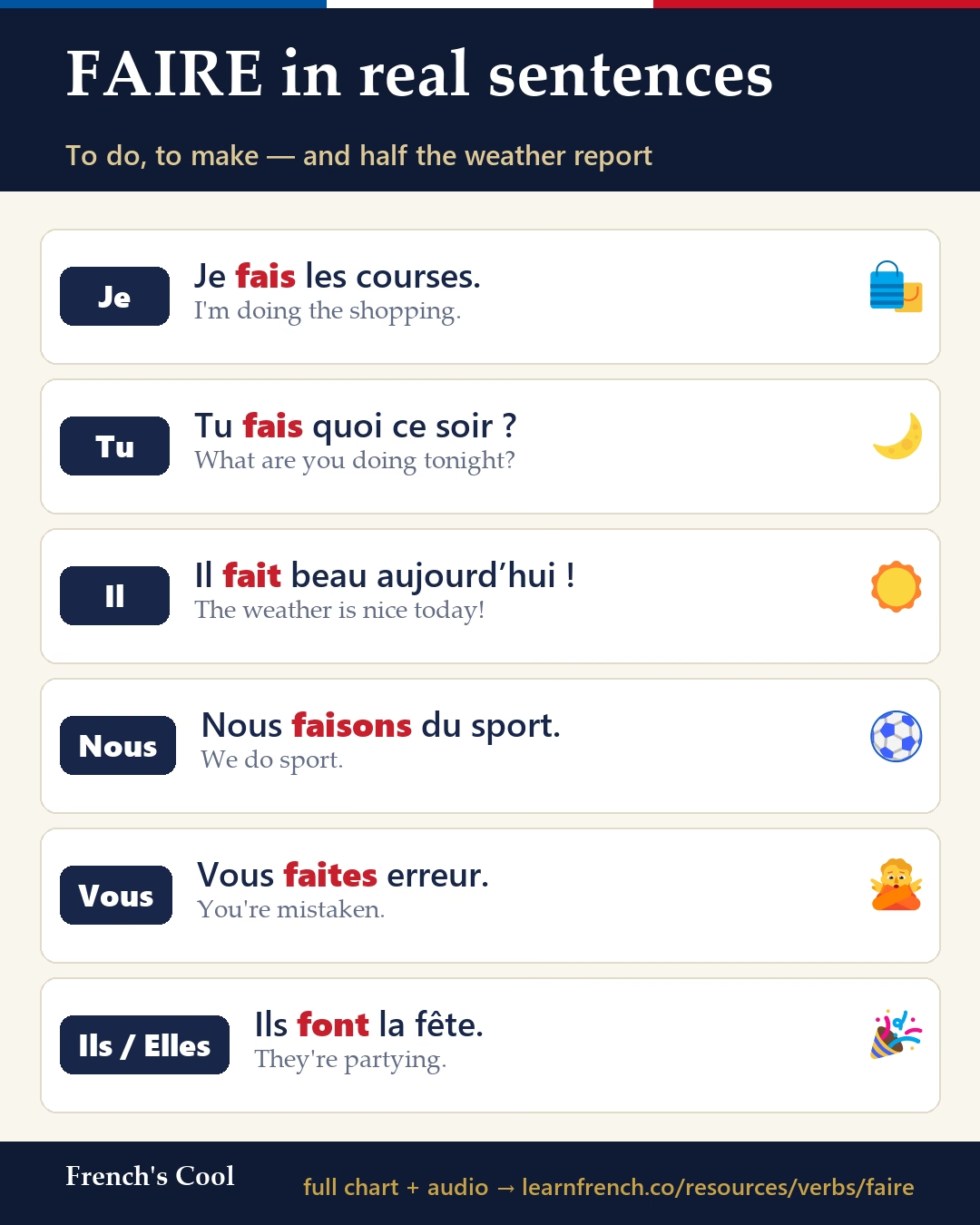
🎬 All seven CEFR levels, end to end
« faire » at every CEFR level — the tense, its forms and the mechanic that makes it stick. Practise it with the free games →