Voir — to see | French Verb Chart
On this page
🖨️ Print-friendly: use Ctrl+P (⌘P) or your browser menu to print this chart cleanly.
📚 This is the overview. « voir » is taught level by level — pick your CEFR level below for a full lesson (explanation, pronunciation, exercises & games).
Présent (Indicatif)
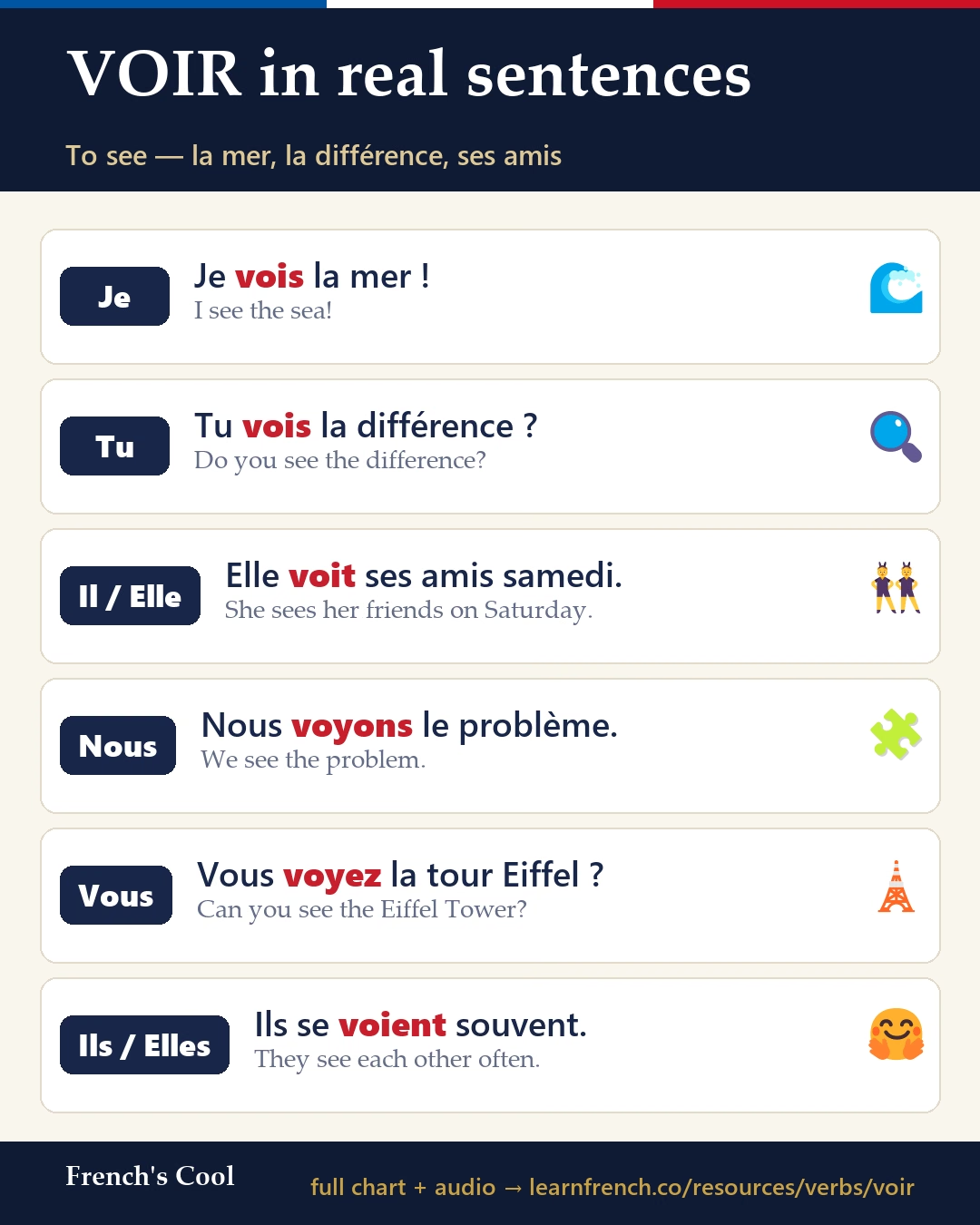
- je voisI see
- tu voisyou see
- il / elle voithe / she sees
- nous voyonswe see
- vous voyezyou see
- ils / elles voientthey see
Passé composé (Indicatif)
- j’ai vuI saw
- tu as vuyou saw
- il / elle a vuhe / she saw
- nous avons vuwe saw
- vous avez vuyou saw
- ils / elles ont vuthey saw
Imparfait (Indicatif)
- je voyaisI was seeing
- tu voyaisyou were seeing
- il / elle voyaithe / she was seeing
- nous voyionswe were seeing
- vous voyiezyou were seeing
- ils / elles voyaientthey were seeing
Futur simple (Indicatif)
- je verraiI will see
- tu verrasyou will see
- il / elle verrahe / she will see
- nous verronswe will see
- vous verrezyou will see
- ils / elles verrontthey will see
Conditionnel présent
- je verraisI would see
- tu verraisyou would see
- il / elle verraithe / she would see
- nous verrionswe would see
- vous verriezyou would see
- ils / elles verraientthey would see
Subjonctif présent
- que je voiethat I see
- que tu voiesthat you see
- qu’il / elle voiethat he / she see
- que nous voyionsthat we see
- que vous voyiezthat you see
- qu’ils / elles voientthat they see
Impératif, Participe & Infinitif
- voirinfinitive
- voyantpresent participle
- en voyantgerund (gérondif)
- vupast participle
- vois · voyons · voyezimperative
- avoirauxiliary in compound tenses
📈 « voir » from A1 to native
The same verb grows with your level — from your first words to real native slang.
🎬 The 20-second version
Five phrases with « voir » — guess before the reveal. Practise with the free games → Open this short as a page — transcript included →
📘 How to use Voir
- To see: je vois la tour Eiffel — and to understand: je vois ! (I see!).
- Aller voir = to visit someone: je vais voir ma grand-mère.
- Se voir = to see each other: on se voit demain ?
- Future is irregular: je verrai.
🔑 Key forms
🔊 Common expressions
🇬🇧 Voir in plain English: seeing, foreseeing and « on verra »
Voir — to see — looks tame in the present (je vois, tu vois, il voit, nous voyons, vous voyez, ils voient) and then scatters irregularity across the other tenses, which is why its verb tables reward a guided read. The futur doubles the r: je verrai (and the conditionnel je verrais — “I would see”); hearing that double r is the difference between seeing and would-be seeing, a pronunciation-as-grammar moment unique to voir and pouvoir/envoyer. The passé composé is j’ai vu — vu being so useful French made it a preposition (vu la situation — given the situation) and a national interjection: « vu ! » (got it). The subjonctif que je voie sounds identical to the indicative je vois — visible only in writing, the sneakiest agreement test in dictées — and à l’indicatif littéraire, the passé simple je vis collides with vivre’s present, a trap every reader of novels meets once. Round the table with the imparfait je voyais (the y returns wherever nous went) and voir’s map is complete — la conjugaison in miniature: stems shift, sounds merge, spelling referees.
Usage is where voir goes from verb to worldview. On verra — “we’ll see” — is the official tense of French planning, deployed wherever commitment is premature. Voyons — “let’s see” or scolding « come now! » — depending entirely on tone. Se voir covers meeting up (on se voit demain ?) and the passive voice by stealth: ça se voit — “that’s obvious”, literally “it sees itself”. The family inherits everything: revoir (see again — as in au revoir, until the re-seeing), prévoir (foresee, plan — the weather verb: la météo prévoit de la pluie), entrevoir (glimpse). And the phrase that ties this chart to the language’s heart: voir la vie en rose — worth learning if only to hear Piaf correctly. Read the table aloud with the audio above, then plan something French and answer every question about it with on verra — grammar and lifestyle, one lesson.
Voir — FAQ
Why does the future of voir have two r’s?
The old stem contracted: voir → verr-. Je verrai (future) vs je verrais (conditional) differ only in the final vowel — and in speech, barely: context and the sentence’s other tenses disambiguate.
What’s the difference between voir and regarder?
Voir is perception (to see — it happens to you); regarder is attention (to watch/look — you do it). Je vois la tour Eiffel; je regarde un film. English’s see/watch, mapped exactly.
What does « on verra » mean?
“We’ll see” — future of voir with on. It postpones decisions with perfect politeness, and answering plans with it is among the most native reflexes French offers a learner.
🔊 Example sentences
✍️ Practice
Elle ___ bien sans lunettes. (voir, present)
Show answer
voit
Hier, j’___ un ami. (voir, passé composé)
Show answer
ai vu
Nous ___ le médecin demain. (voir, future)
Show answer
verrons
Demain, nous ___ le résultat. (future — irregular)
Show answer
verrons
On se ___ ce week-end ? (reciprocal)
Show answer
voit
🎮 Practise this with games
🎯 More practice — conjugation drill — all six tenses
je ___ (Voir — present)
Show answer
vois
tu ___ (Voir — passé composé)
Show answer
as vu
il ___ (Voir — imperfect)
Show answer
voyait
nous ___ (Voir — future)
Show answer
verrons
vous ___ (Voir — conditional)
Show answer
verriez
Go further: this chart is one small piece — get the full picture in our guide Master the present tense — the full beginner guide.
Voir conjugation FAQ
What is the present tense of voir?
je vois, tu vois, il / elle voit, nous voyons, vous voyez, ils / elles voient. Full charts for every tense are above, each form with audio.
What is the past participle of voir?
vu — the passé composé is « j’ai vu ». Voir uses avoir as its auxiliary verb.
How do you say voir in the future tense?
« je verrai » — the future stem never changes across persons, only the endings do.
What does voir mean in English?
to see. It is one of the essential French verbs — drill the present first, then the passé composé; those two tenses carry most conversations.
🎮 Practise this lesson
Games built from this exact page — turn what you just read into play:
🧩 Sentence Builder rebuild these sentences
🏁 Conjugation Race type the right form
🎧 Listening Game which sentence do you hear?
🎬 All seven CEFR levels, end to end
« voir » at every CEFR level — the tense, its forms and the mechanic that makes it stick. Practise it with the free games →