Être — to be | French Verb Chart
On this page
🖨️ Print-friendly: use Ctrl+P (⌘P) or your browser menu to print this chart cleanly.
📚 This is the overview. « être » is taught level by level — pick your CEFR level below for a full lesson (explanation, pronunciation, exercises & games).
Être conjugation made simple: full conjugation charts to conjugate the French verb être (to be) in every major tense — présent, passé composé, imparfait, futur and more — with audio for each form. Also written « etre » without the accent. Être is the most common verb in French — and the auxiliary behind many compound tenses, so this is a conjugation to master early.
Présent (Indicatif)
- je suisI am
- tu esyou are
- il / elle esthe / she is
- nous sommeswe are
- vous êtesyou are
- ils / elles sontthey are
Passé composé (Indicatif)
- j’ai étéI was
- tu as étéyou were
- il / elle a étéhe / she was
- nous avons étéwe were
- vous avez étéyou were
- ils / elles ont ététhey were
Imparfait (Indicatif)
- j’étaisI was
- tu étaisyou were
- il / elle étaithe / she was
- nous étionswe were
- vous étiezyou were
- ils / elles étaientthey were
Futur simple (Indicatif)
- je seraiI will be
- tu serasyou will be
- il / elle serahe / she will be
- nous seronswe will be
- vous serezyou will be
- ils / elles serontthey will be
Conditionnel présent
- je seraisI would be
- tu seraisyou would be
- il / elle seraithe / she would be
- nous serionswe would be
- vous seriezyou would be
- ils / elles seraientthey would be
Subjonctif présent
- que je soisthat I be
- que tu soisthat you be
- qu’il / elle soitthat he / she be
- que nous soyonsthat we be
- que vous soyezthat you be
- qu’ils / elles soientthat they be
Impératif, Participe & Infinitif
- êtreinfinitive
- étantpresent participle
- en étantgerund (gérondif)
- étépast participle
- sois · soyons · soyezimperative
- avoirauxiliary in compound tenses
📈 « être » from A1 to native
The same verb grows with your level — from your first words to real native slang.
🎬 The 20-second version
Five phrases with « être » — guess before the reveal. Practise with the free games → Open this short as a page — transcript included →
📘 How to use Être
- Identity & description: je suis professeur, elle est gentille (no article before professions).
- The auxiliary for movement & reflexive verbs in the passé composé: je suis parti, elle s’est levée.
- Être en train de + infinitive = to be in the middle of doing: je suis en train de manger.
- C’est + noun vs il est + adjective: C’est un ami. Il est sympa.
🔑 Key forms
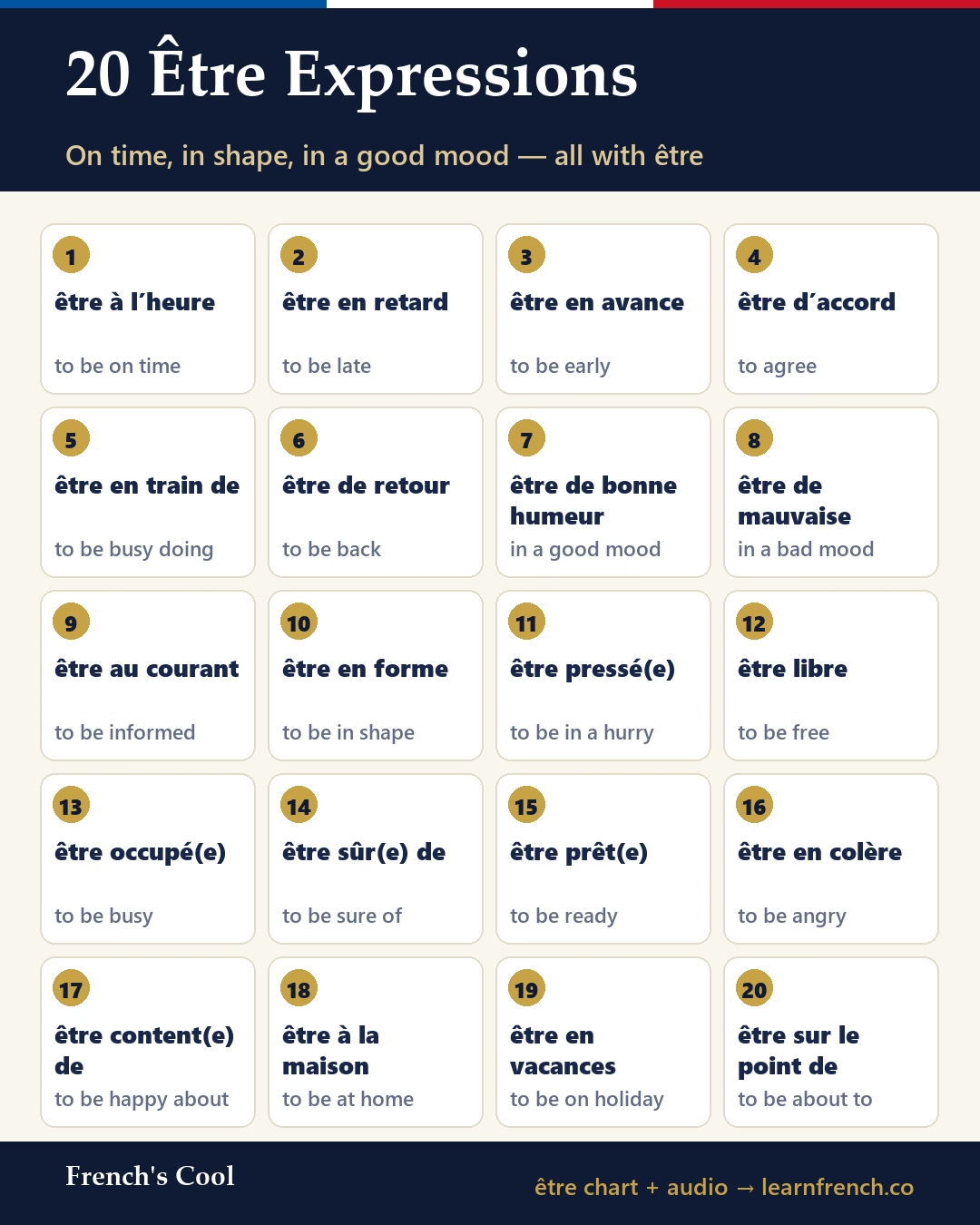
🔊 Common expressions
💡 Nuances & good to know
- être also tells the date & day (where English uses « it is »): nous sommes lundi, on est le 3 juillet.
- être en train de + inf = to be in the middle of doing: je suis en train de travailler.
- Careful: to say your job, drop the article — je suis professeur (not « un professeur »).
🔊 More real-life examples
🇬🇧 Être in plain English: the verb the whole language stands on
Être is the most irregular verb in French — no other verb form family drifts this far from its infinitive — and the one French verb conjugation you cannot postpone, because half of french grammar routes through it. Each subject pronoun takes its own shape in the present indicative: je suis, tu es, il est, nous sommes, vous êtes, ils sont. Six forms of être, six words to memorize outright; every table above builds on them, and french speakers conjugate them below conscious thought.
The twist that matters most: être is also an auxiliary. Every compound past tense in French picks être or avoir as its helper — most verbs in french take the auxiliary verb avoir, but movement and change-of-state verbs (aller, venir, naître…) and all reflexives build their past with être: « je suis allé », « elle s’est levée ». And être itself? It takes avoir: the passé composé is « j’ai été » with the past participle été — the French equivalent of the present perfect “I have been”. Stack the same logic through the tenses and moods and you get the pluperfect « j’avais été » (I had been), the past conditional « j’aurais été » (I would have been), and the rest of the past and future architecture in the tables above.
Two register notes to finish the map. Formal french writing still uses the passé simple (je fus) — recognise it in novels, never speak it. And the word être doubles as a noun: un être humain, a human being. If you want one drill to improve your French this week: read the present tense aloud daily until vous êtes and ils sont come out without translation — the conjugation rules for every other tense conjugation assume these six are reflex, and tense in french generally makes sense only once être is automatic. That is the honest way to speak french past the beginner line: not more verb tables, but this one table made permanent.
Être — FAQ
Is the passé composé of être « j’ai été » or « je suis été »?
« J’ai été » — être takes avoir as its auxiliary, and the past participle is été (invariable). « Je suis été » is never correct.
When do verbs use être instead of avoir in the past?
Movement/change-of-state verbs (aller, venir, arriver, partir, naître, mourir…) and every reflexive verb: « je suis venu », « elle s’est couchée ». Their past participles agree with the subject — the big difference from avoir verbs.
What’s the difference between « j’ai été » and « j’étais »?
« J’étais » (imperfect) describes an ongoing past state — I was, back then. « J’ai été » (passé composé) marks a completed episode — I was, once, and it ended. The passé composé vs imparfait chart covers the full rule.
🔊 Example sentences
✍️ Practice
Tu ___ français ? (être, present)
Show answer
es
Ils ___ contents hier soir. (être, imperfect)
Show answer
étaient
Je suis content que tu ___ là. (être, subjunctive)
Show answer
sois
___ sage ! (imperative (tu))
Show answer
Sois
Ils ___ sur le point de partir. (present)
Show answer
sont
🎬 Video lesson
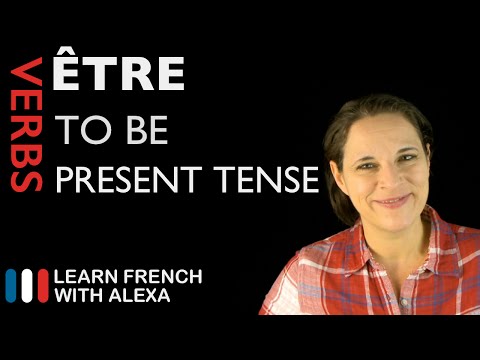 Être (to be) — Present Tense
🎮 Practise this with games
🎯 More practice — conjugation drill — all six tenses
je ___ (Être — present)
Show answer
suis
tu ___ (Être — passé composé)
Show answer
as été
il ___ (Être — imperfect)
Show answer
était
nous ___ (Être — future)
Show answer
serons
vous ___ (Être — conditional)
Show answer
seriez
Go further: this chart is one small piece — get the full picture in our guide Master the present tense — the full beginner guide.
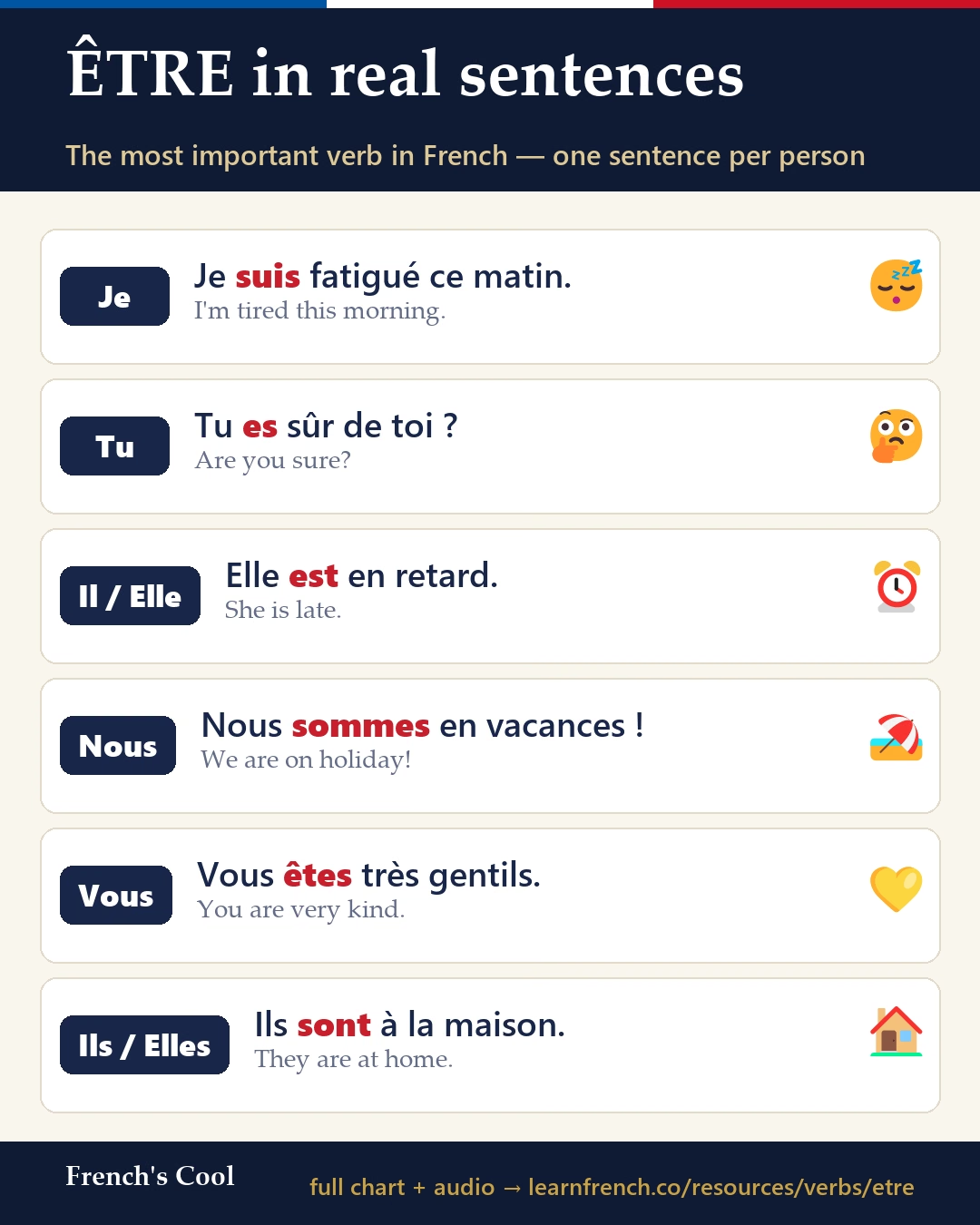
The conjugation of être in real sentences
The conjugation of être matters because this irregular French verb covers several everyday jobs:
- identity and professions: « Je suis professeur de français. » — I am a French teacher.
- descriptions and states: « Nous sommes fatigués. » — We are tired.
- location: « Elle est à Paris. » — She is in Paris.
- as auxiliary verb in the passé composé: « Ils sont arrivés hier. » — They arrived yesterday.
Être is also the auxiliary for movement and reflexive verbs, and the backbone of the passive voice. The charts above give the full verb conjugation in every mood — indicative (present tense, passé composé, imperfect, future), conditional, subjunctive and imperative — with audio so you can conjugate être with the right pronunciation.
Être conjugation FAQ
What is the present tense of être?
je suis, tu es, il / elle est, nous sommes, vous êtes, ils / elles sont. Full charts for every tense are above, each form with audio.
What is the past participle of être?
été — the passé composé is « j’ai été ». Être uses avoir as its auxiliary verb.
How do you say être in the future tense?
« je serai » — the future stem never changes across persons, only the endings do.
What does être mean in English?
to be. It is one of the essential French verbs — drill the present first, then the passé composé; those two tenses carry most conversations.
🎮 Practise this lesson
Games built from this exact page — turn what you just read into play:
🧩 Sentence Builder rebuild these sentences
🏁 Conjugation Race type the right form
🎧 Listening Game which sentence do you hear?
🎬 All seven CEFR levels, end to end
« être » at every CEFR level — the tense, its forms and the mechanic that makes it stick. Practise it with the free games →