Prendre — to take | French Verb Chart
🖨️ Print-friendly: use Ctrl+P (⌘P) or your browser menu to print this chart cleanly.
📚 This is the overview. « prendre » is taught level by level — pick your CEFR level below for a full lesson (explanation, pronunciation, exercises & games).
Présent (Indicatif)
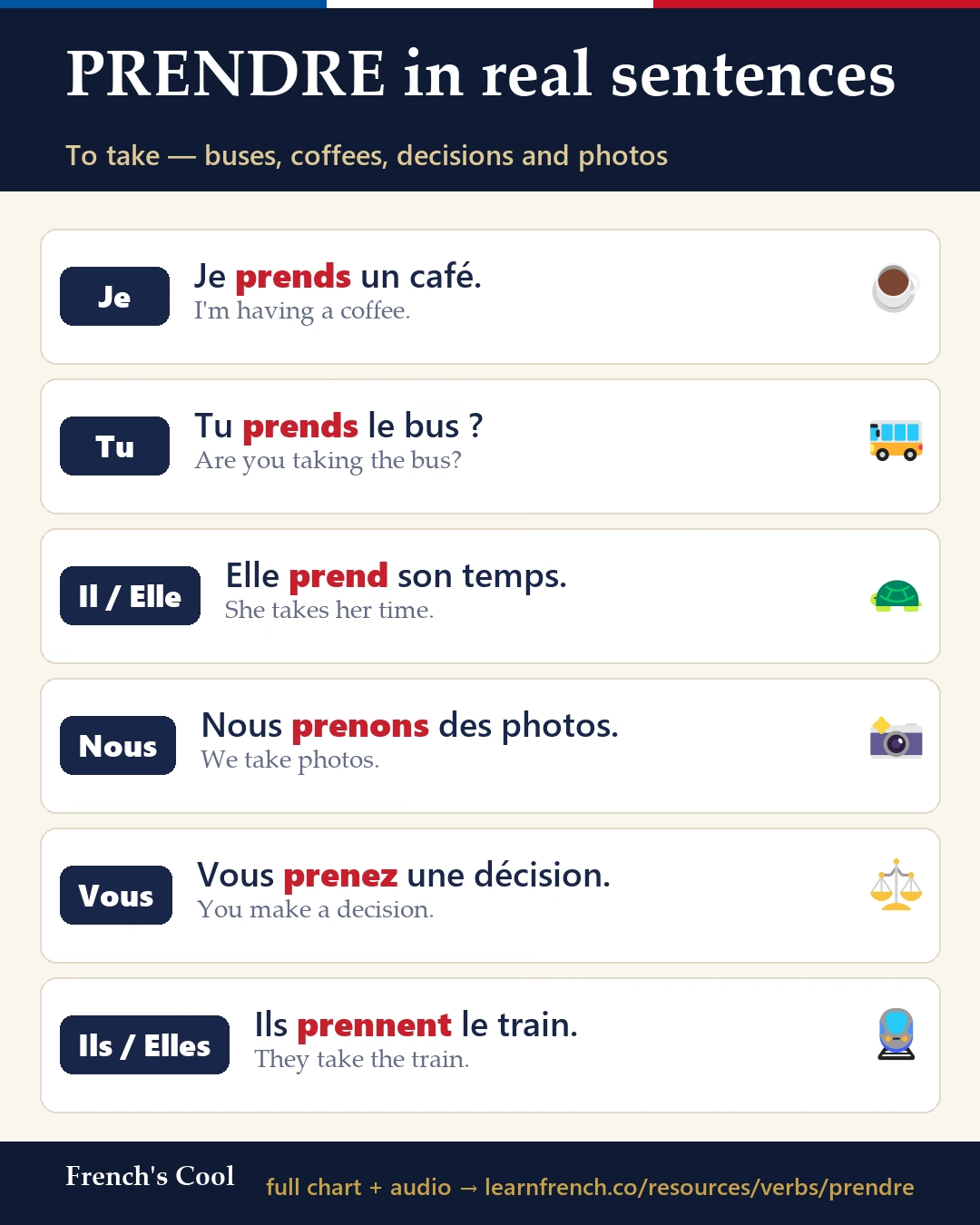
- je prendsI take
- tu prendsyou take
- il / elle prendhe / she takes
- nous prenonswe take
- vous prenezyou take
- ils / elles prennentthey take
Passé composé (Indicatif)
- j’ai prisI took
- tu as prisyou took
- il / elle a prishe / she took
- nous avons priswe took
- vous avez prisyou took
- ils / elles ont pristhey took
Imparfait (Indicatif)
- je prenaisI was taking
- tu prenaisyou were taking
- il / elle prenaithe / she was taking
- nous prenionswe were taking
- vous preniezyou were taking
- ils / elles prenaientthey were taking
Futur simple (Indicatif)
- je prendraiI will take
- tu prendrasyou will take
- il / elle prendrahe / she will take
- nous prendronswe will take
- vous prendrezyou will take
- ils / elles prendrontthey will take
Conditionnel présent
- je prendraisI would take
- tu prendraisyou would take
- il / elle prendraithe / she would take
- nous prendrionswe would take
- vous prendriezyou would take
- ils / elles prendraientthey would take
Subjonctif présent
- que je prennethat I take
- que tu prennesthat you take
- qu’il / elle prennethat he / she take
- que nous prenionsthat we take
- que vous preniezthat you take
- qu’ils / elles prennentthat they take
Impératif, Participe & Infinitif
- prendreinfinitive
- prenantpresent participle
- en prenantgerund (gérondif)
- prispast participle
- prends · prenons · prenezimperative
- avoirauxiliary in compound tenses
📈 « prendre » from A1 to native
The same verb grows with your level — from your first words to real native slang.
🎬 The 20-second version
Five phrases with « prendre » — guess before the reveal. Practise with the free games → Open this short as a page — transcript included →
📘 How to use Prendre
- To take: je prends mes clés — and transport: je prends le bus / le train / l’avion.
- Ordering food & drink: je prends un café (I’ll have a coffee).
- Time: ça prend du temps (it takes time).
- The plural doubles the n: ils prennent.
🔑 Key forms
🔊 Common expressions
💡 Nuances & good to know
- prendre for transport: prendre le bus / le métro / l’avion; and food/drink: qu’est-ce que tu prends ? (what are you having?).
- prendre son temps = to take one’s time; prendre un café = to have a coffee.
- Family (same conjugation): comprendre, apprendre, surprendre.
🔊 More real-life examples
🇬🇧 Reading the prendre tables: one verb, a whole family
Prendre — to take — anchors one of the great irregular verbs of French, and le verbe prendre hides its trap in the plural: je prends, tu prends, il prend (regular-looking so far), then nous prenons, vous prenez, ils prennent — one n, one n, two n’s, with three different vowel sounds. To conjugate prendre correctly is mostly to master that three-way split; say the present aloud down the column and the pattern installs itself faster than any rule. The rest of la conjugaison is friendlier: passé composé j’ai pris (avoir + the short participle pris), imparfait je prenais from the nous-stem, futur je prendrai on the intact infinitive, conditionnel je prendrais, and the subjonctif que je prenne doubling the n like the ils-form — exactly the ils-stem rule from our subjunctive guide. À l’indicatif comme au subjonctif, prendre rewards pattern-reading over memorising: every irregularity above repeats across its family.
And what a family: apprendre (learn), comprendre (understand), entreprendre (undertake), reprendre (take back / resume), surprendre, and the delicious se méprendre (to be mistaken) all conjugate identically — j’apprends, nous comprenons, ils surprennent, j’ai entrepris. In french grammar terms you’re not learning a verb, you’re learning a conjugator that outputs seven. Prendre also runs daily-life French the way faire runs weather: prendre le train, prendre une décision, prendre le temps — the phrase engine of transport, meals (je vais prendre…) and plans. Master this one table with the audio above, check yourself with the games below, and an outsized slice of everyday communication conjugates itself — no online language courses subscription required, just the nous/ils vowel drill and a week of saying what you take, learn and understand.
Prendre — FAQ
Why is it « ils prennent » with two n’s?
The plural stem doubles the n and opens the vowel: prenne/prennent rhyme with « renne ». Same doubling appears in the subjunctive (que je prenne) — French marks the stressed stem with the double letter.
What is the past participle of prendre?
« Pris » — j’ai pris, and the family follows: appris, compris, entrepris, repris. « Compris ! » alone means “understood!” — the participle as a whole conversation.
Which verbs conjugate like prendre?
Everything ending in -prendre: apprendre, comprendre, surprendre, reprendre, entreprendre, se méprendre. But NOT other -endre verbs — vendre, attendre are regular and keep their single n.
🔊 Example sentences
✍️ Practice
Elle ___ le bus tous les jours. (prendre, present)
Show answer
prend
Hier, nous ___ un taxi. (prendre, passé composé)
Show answer
avons pris
___ ton manteau ! (prendre, imperative (tu))
Show answer
Prends
Ils ___ le métro chaque matin. (present — double n)
Show answer
prennent
Même famille : « comprendre » au passé composé → j’ai ___ (past participle)
Show answer
compris
🎬 Video lesson
 Prendre (to take) — Present Tense
🎮 Practise this with games
🎯 More practice — conjugation drill — all six tenses
je ___ (Prendre — present)
Show answer
prends
tu ___ (Prendre — passé composé)
Show answer
as pris
il ___ (Prendre — imperfect)
Show answer
prenait
nous ___ (Prendre — future)
Show answer
prendrons
vous ___ (Prendre — conditional)
Show answer
prendriez
Go further: this chart is one small piece — get the full picture in our guide Master the present tense — the full beginner guide.
Prendre conjugation FAQ
What is the present tense of prendre?
je prends, tu prends, il / elle prend, nous prenons, vous prenez, ils / elles prennent. Full charts for every tense are above, each form with audio.
What is the past participle of prendre?
pris — the passé composé is « j’ai pris ». Prendre uses avoir as its auxiliary verb.
How do you say prendre in the future tense?
« je prendrai » — the future stem never changes across persons, only the endings do.
What does prendre mean in English?
to take. It is one of the essential French verbs — drill the present first, then the passé composé; those two tenses carry most conversations.
🎮 Practise this lesson
Games built from this exact page — turn what you just read into play:
🧩 Sentence Builder rebuild these sentences
🏁 Conjugation Race type the right form
🎧 Listening Game which sentence do you hear?
🎬 All seven CEFR levels, end to end
« prendre » at every CEFR level — the tense, its forms and the mechanic that makes it stick. Practise it with the free games →