Savoir — to know (a fact) | French Verb Chart
On this page
🖨️ Print-friendly: use Ctrl+P (⌘P) or your browser menu to print this chart cleanly.
📚 This is the overview. « savoir » is taught level by level — pick your CEFR level below for a full lesson (explanation, pronunciation, exercises & games).
Présent (Indicatif)
- je saisI know
- tu saisyou know
- il / elle saithe / she knows
- nous savonswe know
- vous savezyou know
- ils / elles saventthey know
Passé composé (Indicatif)
- j’ai suI knew
- tu as suyou knew
- il / elle a suhe / she knew
- nous avons suwe knew
- vous avez suyou knew
- ils / elles ont suthey knew
Imparfait (Indicatif)
- je savaisI knew
- tu savaisyou knew
- il / elle savaithe / she knew
- nous savionswe knew
- vous saviezyou knew
- ils / elles savaientthey knew
Futur simple (Indicatif)
- je sauraiI will know
- tu saurasyou will know
- il / elle saurahe / she will know
- nous sauronswe will know
- vous saurezyou will know
- ils / elles saurontthey will know
Conditionnel présent
- je sauraisI would know
- tu sauraisyou would know
- il / elle sauraithe / she would know
- nous saurionswe would know
- vous sauriezyou would know
- ils / elles sauraientthey would know
Subjonctif présent
- que je sachethat I know
- que tu sachesthat you know
- qu’il / elle sachethat he / she know
- que nous sachionsthat we know
- que vous sachiezthat you know
- qu’ils / elles sachentthat they know
Impératif, Participe & Infinitif
- savoirinfinitive
- sachantpresent participle
- en sachantgerund (gérondif)
- supast participle
- sache · sachons · sachezimperative
- avoirauxiliary in compound tenses
📈 « savoir » from A1 to native
The same verb grows with your level — from your first words to real native slang.
🎬 The 20-second version
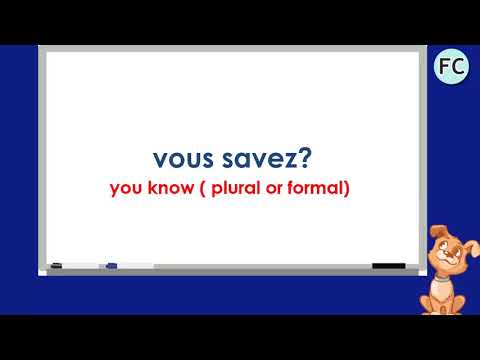
Five phrases with « savoir » — guess before the reveal. Practise with the free games → Open this short as a page — transcript included →
📘 How to use Savoir
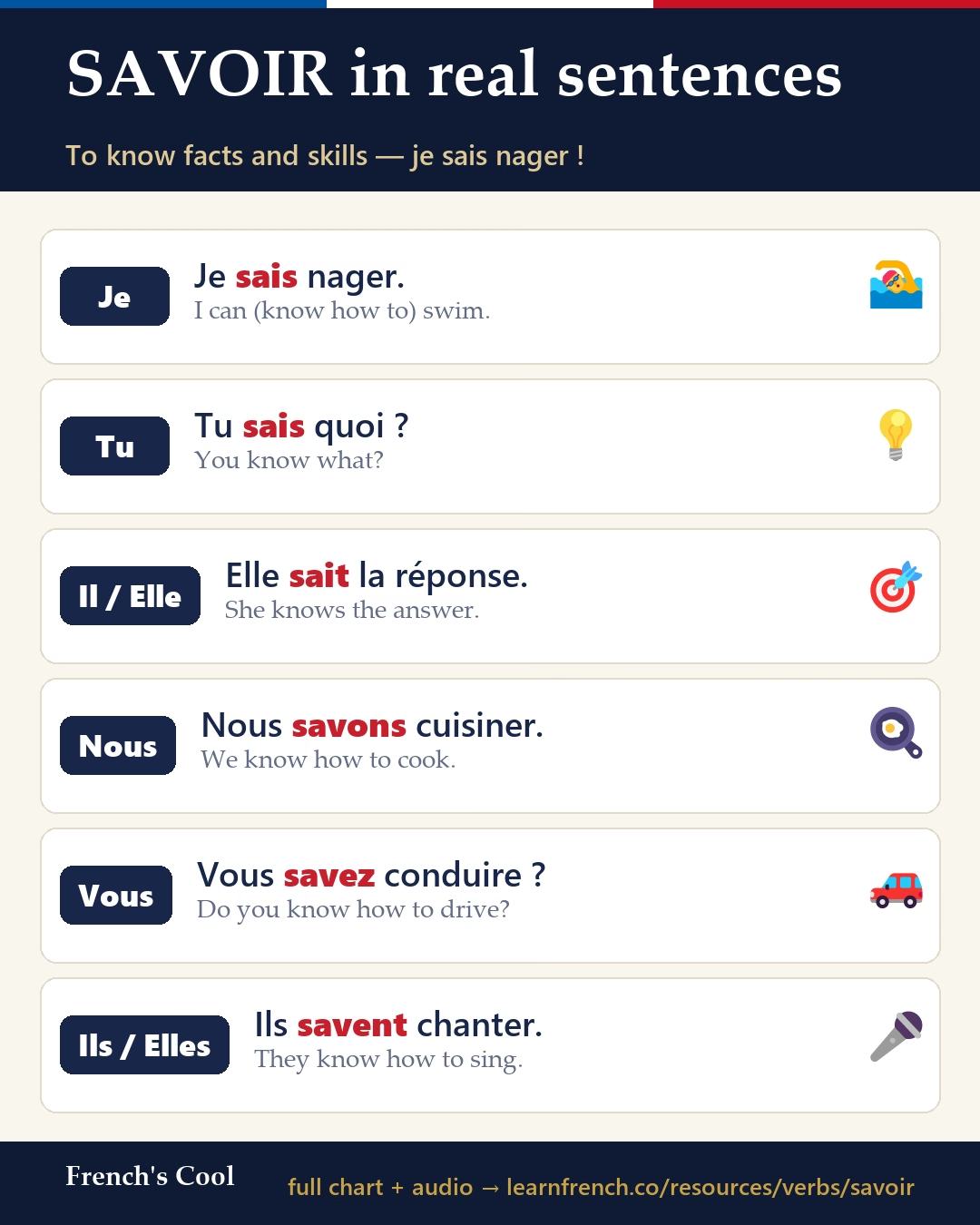
- To know facts & information: je sais qu’il vient, je sais où c’est.
- Savoir + infinitive = to know how to: je sais nager (I can swim — learned skill).
- People & places use connaître instead: je connais Marie.
- Irregular gérondif: en sachant — and subjunctive que je sache.
🔑 Key forms
🔊 Common expressions
🇬🇧 Savoir in plain English — and the connaître question
French splits “to know” between two verbs, and choosing correctly matters more than any single form in the tables above. Savoir is knowledge of facts and skills: je sais que… (I know that…), je sais nager (I know how to swim — savoir + infinitive needs no “how”). Connaître is familiarity: people, places, works — je connais Marie, je connais Paris. The rule that decides every case: if you can know it by heart or by doing, savoir; if you know someone or know OF something through acquaintance, connaître. « Je sais Marie » is impossible; « je connais que… » equally so — two verbs, zero overlap, and the difference is the first thing French teachers test because English hides it inside one word.
The conjugation of this irregular verb rewards attention at four spots. Present: je sais, tu sais, il sait — but nous savons, ils savent (the stem flips mid-table). Futur and conditionnel run on saur-: je saurai, je saurais. The subjunctive is sache — que je sache — and uniquely, savoir keeps subjunctive forms as imperatives: sache / sachez (« sachez que… » — know that… — the formal announcement-opener of every French administration letter). And the passé composé « j’ai su » shifts meaning: not “I knew” but “I found out” — j’ai su la vérité hier = the truth reached me yesterday; for ongoing past knowledge French uses the imperfect je savais. That aspect shift (compound tenses turning states into events) is one of the french language’s neatest structures, and savoir is where learners meet it first. In context, drill the pair: je savais (I knew) vs j’ai su (I learned of) — plus one polite gem for conversation: « je ne saurais pas vous dire » — I couldn’t say — the conditional as courtesy.
Savoir — FAQ
What is the difference between savoir and connaître?
Savoir = facts and skills (je sais que, je sais + infinitive); connaître = people, places, familiarity (je connais + noun, always). English merges them; French never does.
What does « j’ai su » mean?
“I found out” — the passé composé of savoir marks the moment knowledge arrived. “I knew (all along)” is the imperfect: je savais.
Is « sachez » a real form?
Yes — the imperative of savoir borrows its subjunctive: sache (tu), sachons, sachez (vous). « Sachez que » opens formal letters the way “please be advised” does in English.
🔊 Example sentences
✍️ Practice
Vous ___ où il est ? (savoir, present)
Show answer
savez
Je ne ___ pas quoi dire. (savoir, present)
Show answer
sais
Elle ___ parler trois langues. (savoir, present)
Show answer
sait
___ que c’est important. (imperative (tu) — irregular)
Show answer
Sache
Je ne ___ pas encore. (present)
Show answer
sais
🎮 Practise this with games
🎯 More practice — conjugation drill — all six tenses
je ___ (Savoir — present)
Show answer
sais
tu ___ (Savoir — passé composé)
Show answer
as su
il ___ (Savoir — imperfect)
Show answer
savait
nous ___ (Savoir — future)
Show answer
saurons
vous ___ (Savoir — conditional)
Show answer
sauriez
Go further: this chart is one small piece — get the full picture in our guide Master the present tense — the full beginner guide.
Savoir conjugation FAQ
What is the present tense of savoir?
je sais, tu sais, il / elle sait, nous savons, vous savez, ils / elles savent. Full charts for every tense are above, each form with audio.
What is the past participle of savoir?
su — the passé composé is « j’ai su ». Savoir uses avoir as its auxiliary verb.
How do you say savoir in the future tense?
« je saurai » — the future stem never changes across persons, only the endings do.
What does savoir mean in English?
to know (a fact). It is one of the essential French verbs — drill the present first, then the passé composé; those two tenses carry most conversations.
🎮 Practise this lesson
Games built from this exact page — turn what you just read into play:
🧩 Sentence Builder rebuild these sentences
🏁 Conjugation Race type the right form
🎧 Listening Game which sentence do you hear?
🎬 All seven CEFR levels, end to end
« savoir » at every CEFR level — the tense, its forms and the mechanic that makes it stick. Practise it with the free games →