French for Work: Sound Professional in Meetings, Emails and Calls
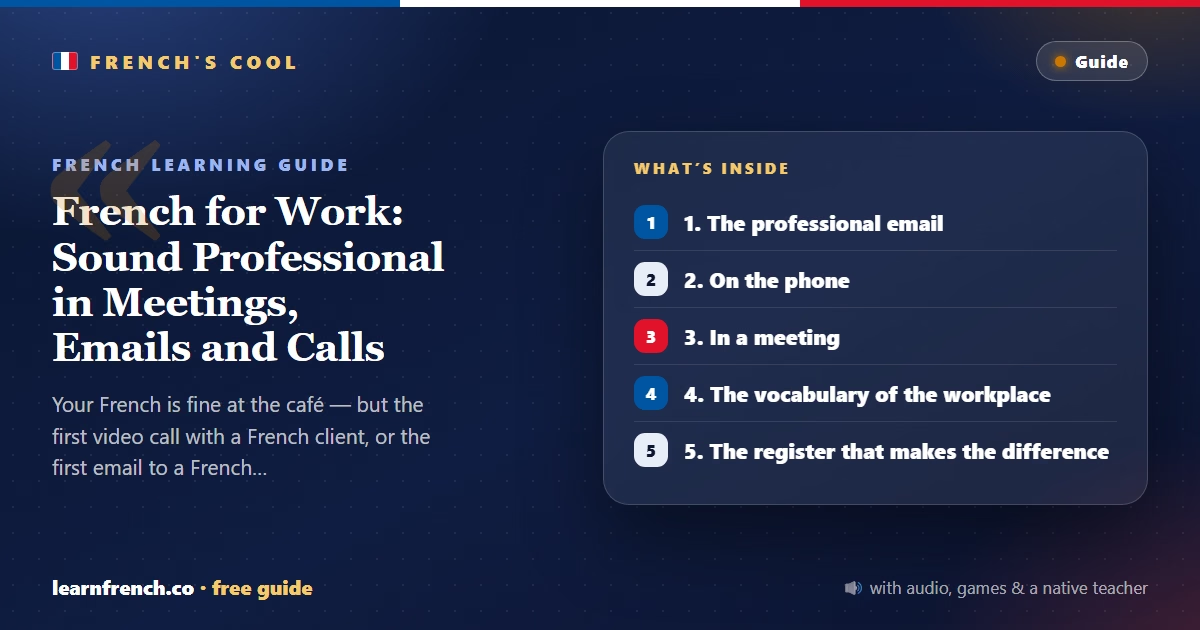
Your French is fine at the café — but the first video call with a French client, or the first email to a French colleague, is a different game. Professional French has its own register: more formal, more vous , more fixed phrases. The good news is that it’s largely formulaic — learn the templates…
What you'll learn
Your French is fine at the café — but the first video call with a French client, or the first email to a French colleague, is a different game. Professional French has its own register: more formal, more vous, more fixed phrases. The good news is that it’s largely formulaic — learn the templates and you’ll sound polished fast. Here’s the professional toolkit.
👔 The one habit that signals professionalism
Default to vous, and use conditionnel de politesse: « je voudrais », « pourriez-vous », « il faudrait ». It’s the difference between sounding blunt and sounding courteous.
1. The professional email
French business emails are more formal than English ones. The skeleton:
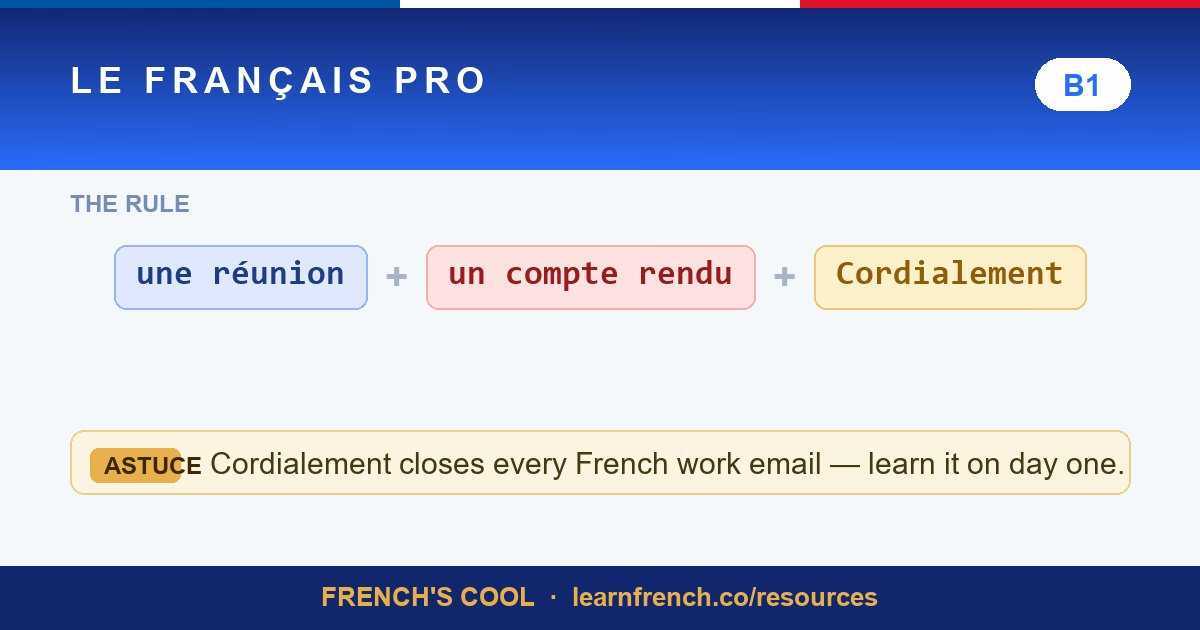
« Cordialement » is the safe default sign-off; « Bien à vous » is warmer; « Veuillez agréer… » is very formal (letters).
2. On the phone
Full set on the au téléphone page — ne quittez pas, je rappelle, la messagerie.
3. In a meeting
To disagree politely, lean on concession connectors: « je comprends votre point de vue, cependant… », « certes, mais… ».
4. The vocabulary of the workplace
Build the base first: le travail (jobs, office, job-hunting), the tech words for tools and calls, and banking & finance if money is part of your role.
5. The register that makes the difference
Professional French runs on a few grammar habits worth drilling:
- Vous everywhere, plus polite conditional (le conditionnel): pourriez-vous, je souhaiterais.
- Nominal style for reports and emails (la nominalisation): « suite à l’augmentation… ».
- Softeners: « il me semble que… », « ne serait-il pas possible de… », « je me permets de… ».
✍️ Office-ready quiz
The safe default email sign-off is… (professional)
Show answer
Cordialement
« Pourriez-vous… » is more polite than « Pouvez-vous… » because it uses the… (register)
Show answer
conditional (conditionnel de politesse)
« C’est de la part de qui ? » on the phone means… (calls)
Show answer
Who’s calling?
Play the Quiztap to start · quick practice from this material
Loading the quiz…
Choosing professional French that fits your field
Generic French takes you to the café; professional french courses need to take you to YOUR meetings, so the first filter when choosing is field-fit. The vocabulary of commerce (négociation, chiffre d’affaires, devis) barely overlaps with tourism’s (accueil, réservation, satisfaction client) or logistics’ — this site’s founder taught french for logistics and operations precisely because industry French is its own dialect. A good business french course tailors scenarios to your professional field: your emails, your calls, your industry’s polite expressions — and a private native teacher can personalize further than any fixed programme, building sessions from documents you actually work with. That tailoring is what separates learn business french outcomes from generic language school ones: the executive who can negotiate un délai in their own industry’s terms after three months versus the one who knows restaurant vocabulary perfectly and freezes on a client call.
Credentials, for careers that need proof: the Diplôme de Français Professionnel (DFP, by field: affaires, tourisme, santé…), the DELF/DALF ladder for general proficiency (B2 is the employer-legible line; DALF C1 reads as fully operational), and France’s official language tests for relocation tracks. French remains an official language of international institutions from the UN to the Olympic movement and the working language of economies across Europe and Africa — the career math on french language skills is better than the anglosphere assumes, and employers in la francophonie read even a B1-with-effort as commitment. The practical plan for a working professional: two tailored sessions a week (early morning or lunch — consistency beats heroics), your industry’s French media in the commute slot, and every real work artifact — an email to answer, a call to debrief — recycled as lesson material so the course and the career improve each other; that loop is how you communicate confidently in French while still using French at the level your calendar allows, and how language skills turn from CV line into daily tool. Paris headquarters or remote client base, the professional register — vous, structure, the courtesy formulas from our business French lesson — is the actual product; vocabulary is just its delivery mechanism, and a learner who drills both inside their own field’s scenarios speaks français that sounds like their job, not like their textbook. That fit is the whole secret of french for business — and the reason tailor-made beats off-the-shelf for anyone whose economy of hours is tight and whose industry has its own linguist’s-worth of terms to master.
FAQ
What is the word for professional in French?
« Professionnel / professionnelle » — and « un pro » in casual speech. Your profession is « le métier » or « la profession »; the professional world, « le monde professionnel ».
How do you greet someone professionally in French?
« Bonjour Madame / Monsieur » + handshake; on email, « Bonjour Monsieur Martin, » then vous throughout. First names arrive only by invitation — the greeting IS the register test.
What is the slang word for work in French?
« Le boulot » (universal), « le taf » (younger). « Aller au boulot » is how colleagues actually talk — recognize it, but keep it out of client emails.
What is the French word for expert?
« Un expert / une experte » — identical friend rather than false one. « Spécialiste » and « référent » cover adjacent meanings in org-chart French.
Professional French email formulas
Business French for work lives and dies by its formulas. A professional email in French is more formal than in English — get the opening and closing right and the rest is easy:
- Opening: « Madame, Monsieur, » (unknown recipient) or « Bonjour Madame Dupont, » (known).
- Getting to the point: « Je me permets de vous contacter au sujet de… » (I’m writing to you regarding…).
- Asking: « Pourriez-vous m’indiquer… ? » (Could you let me know…?).
- Closing: « Cordialement, » (standard) or « Je vous prie d’agréer, Madame, Monsieur, mes salutations distinguées. » (very formal).
Notice the vous throughout — at work you almost always vouvoyer (use the formal « vous ») until invited otherwise.
French for meetings and phone calls
Meetings (les réunions) and calls reward a few reliable phrases:
- Opening a call: « Bonjour, [name] à l’appareil. » (…speaking).
- Buying time: « Je vous mets en attente un instant. » (I’ll put you on hold a moment).
- In a meeting: « Si je peux me permettre… » (if I may…) and « Je suis d’accord avec ce point. ».
- Wrapping up: « On fait le point la semaine prochaine ? » (shall we review next week?).
Formal vs informal register at work
The register is what marks you as professional. Default to vous, full sentences and polite conditionals (pourriez-vous, je voudrais) with clients, managers and new colleagues. With a close team you may slip into tu — but let the French speaker offer it first (« on peut se tutoyer ? »). Getting this formal/informal line right matters more than perfect grammar.
French for work FAQ
How can I learn French for work quickly?
Focus on professional chunks, not the whole language: email formulas, meeting phrases, your own job’s vocabulary, and the polite vous register. Learn the 100 phrases you’ll actually use at work and drill them until automatic. Our business French phrases guide is the perfect companion.
Is French for work very formal?
Yes, noticeably more than English. Emails use fixed opening and closing formulas, and you vouvoyer (use « vous ») by default. Once you know the formulas, though, French workplace communication is highly predictable — which makes it easy to master.
What French vocabulary do I need for the office?
Core workplace vocabulary: une réunion (meeting), un dossier (file/case), un délai (deadline), un collègue (colleague), le service (department), un rendez-vous (appointment). Build the full set on the vocabulary charts.
💼 Your professional toolkit
Everything to sound polished at work:
🎯 More practice — translation — put it into French
Translate into French: « Hello Mrs Dubois, » (translation)
Show answer
Bonjour Madame Dubois,
Translate into French: « I am writing to you regarding » (translation)
Show answer
Je me permets de vous contacter au sujet de
Translate into French: « Could you send me the document? » (translation)
Show answer
Pourriez-vous me faire parvenir le document ?
Translate into French: « Thank you in advance. » (translation)
Show answer
Je vous remercie par avance.
Translate into French: « Could I speak to Mr Martin? » (translation)
Show answer
Pourrais-je parler à Monsieur Martin ?
Preparing for a French-speaking role or client? Book a free lesson — we’ll build a plan →
🎮 Practise this lesson
Games built from this exact page — turn what you just read into play:
🧩 Sentence Builder rebuild these sentences
🎧 Listening Game which sentence do you hear?
Keep going: The most-used written skill gets its own lesson: writing emails in French.
🎬 This article in 20 seconds
The quick version — the full detail is below. More shorts → Open this short as a page — transcript included →