French Accent Marks Explained: é, è, ê, ë, ç Made Simple
Those little marks above French letters aren’t decoration — the French accent marks change how a word sounds, and sometimes what it means.
What you'll learn
Those little marks above French letters aren’t decoration — the French accent marks change how a word sounds, and sometimes what it means. The good news: there are only five, and each has one clear job. Here’s the whole system in one lesson.
🎬 This lesson in one minute
The quick version — the full lesson is below. More shorts →
The five French accents
| Accent | Name | What it does | Example |
|---|---|---|---|
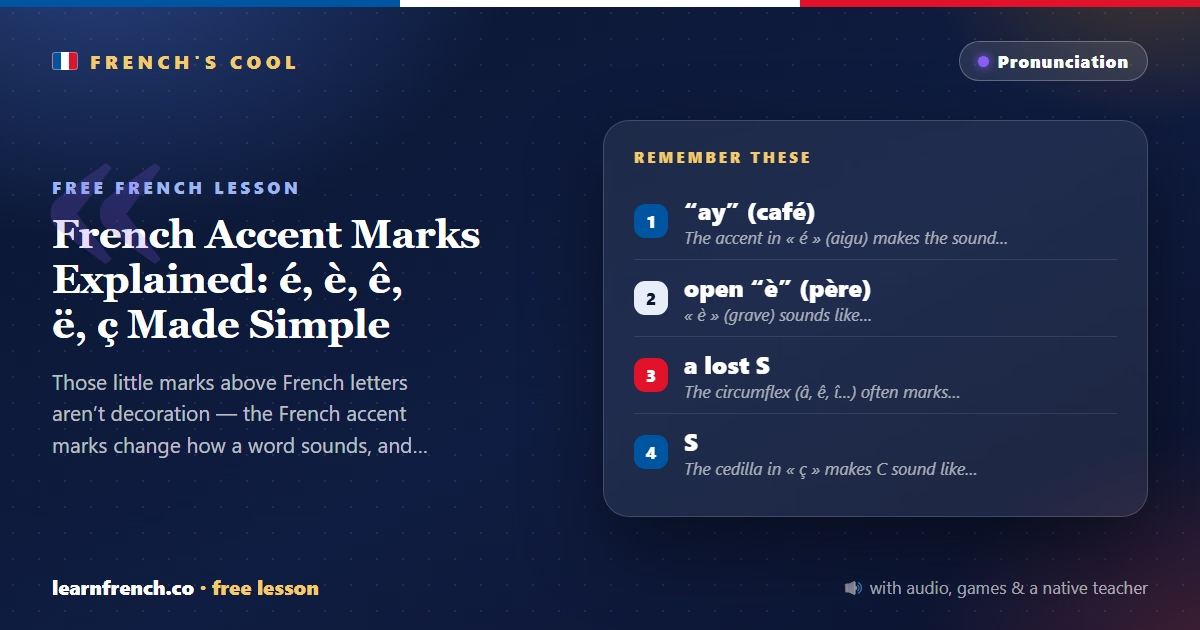
| é | accent aigu | closes the sound: « ay » as in café | l’été (summer) |
| è | accent grave | opens the sound: « eh » as in bed | la mère (mother) |
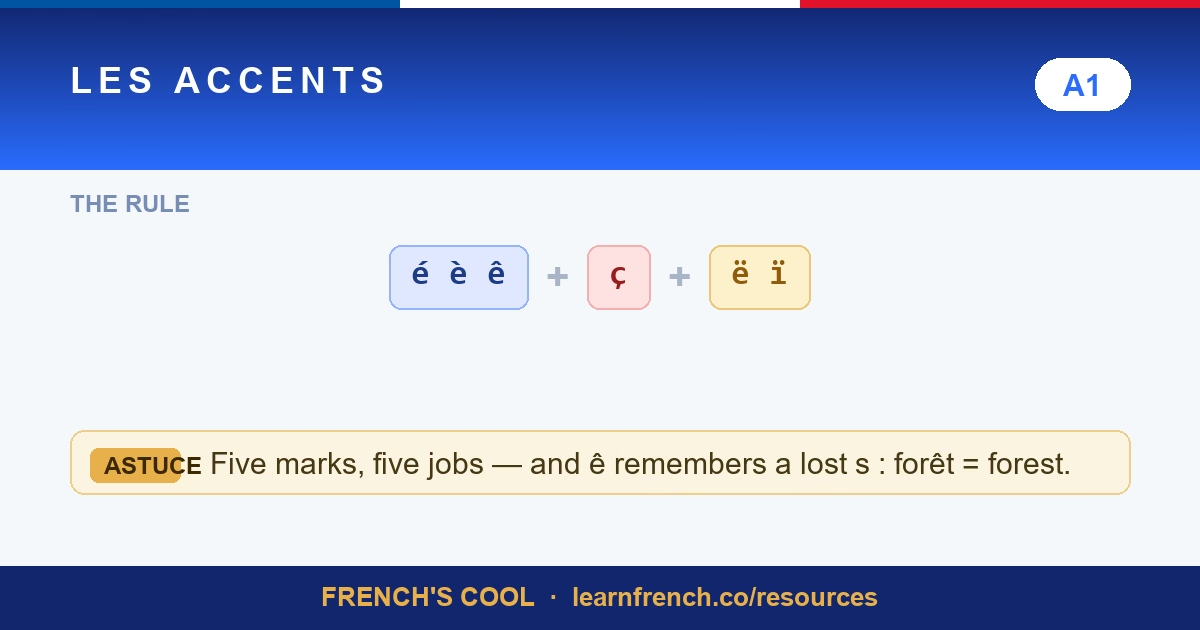
| ê î ô û â | accent circonflexe | often marks a lost old « s » | la forêt (forest ← forest!) |
| ë ï ü | tréma | says: pronounce this vowel separately | Noël (no-EL) |
| ç | cédille | makes c soft (« s ») before a, o, u | le garçon (boy) |
Accents that change meaning
Sometimes the accent is the only difference between two words — miss it and you write a different word entirely:
- ou (or) vs où (where)
- a (has) vs à (to/at)
- sur (on) vs sûr (sure)
- la (the) vs là (there)
- du (some) vs dû (owed/due)
These pairs behave exactly like the sound-alike words in our French homophones guide — context plus spelling tells them apart.
é vs è: the pair that matters most
The two e-accents carry most of the workload. é (accent aigu) is the closed « ay » sound — parlé, été, café. è (accent grave) is the open « eh » sound — père, très, après. Say « café » then « très » and feel your mouth open wider on the second. Train the difference with the audio on our pronunciation guide.
The circumflex: a little hat with history
The circonflexe (ê, â, î, ô, û) usually marks a letter — most often an s — that French dropped centuries ago. Knowing this unlocks free vocabulary: forêt = forest, hôpital = hospital, île = isle, château = castle (castel), pâte = paste. When you see the hat, try adding an s after the vowel and an English cousin often appears.
Accents inside verbs: where they really earn their keep
Accents aren’t just for nouns — they run the verb system:
- Every -er verb’s past participle ends in é: parlé, mangé, aimé — miss the accent and you’ve written the infinitive sound wrong.
- Stem-changing verbs swap e → è when the ending is silent: acheter → j’achète, j’achèterai; préférer → je préfère.
- The circumflex survives in a few verb forms worth recognising: naître, connaître (il connaît), and the literary fût/eût.
So when your spelling checker flags a verb, check the accent first — it’s usually that. Practice sets live on the verb charts.
FAQ
Do French accent marks matter on capital letters?
Officially yes — the Académie française recommends keeping accents on capitals (École, État). In casual writing the French often drop them, but keyboards and formal writing keep them. When in doubt, keep the accent.
How do I type French accents?
On Windows, use the international keyboard or Alt codes (é = Alt+0233); on Mac, hold the letter key and pick the accent; on phones, long-press the letter. Typing them from day one builds the reflex.
What is the most common French accent?
The accent aigu (é) by far — it appears in thousands of words and every -er verb’s past participle (parlé, mangé, fini… well, the -er ones!). Master é and è first; the others follow quickly.
Keep building your foundations with the French alphabet chart and the grammar library.
Quick practice
Play the Quiztap to start · quick practice from this material