French Pronunciation: How to Actually Sound French
Pronunciation is the fastest way to sound more French — and it's a set of learnable habits. The vowels English lacks (tu, deux), the nasals (un bon vin blanc), the throaty R, liaisons, silent letters (CaReFuL), and a 10-minute daily practice routine. With audio throughout.
What you'll learn
You know the words. You’ve done the grammar. But when you speak, it still sounds… English. Pronunciation is the fastest way to sound more French — and it’s a set of specific, learnable habits, not a mystery. Here are the ones that matter most, each with a 🔊 button so you can hear and copy.
🎬 This lesson in one minute
The quick version — the full lesson is below. More shorts →
🗣️ The golden habit
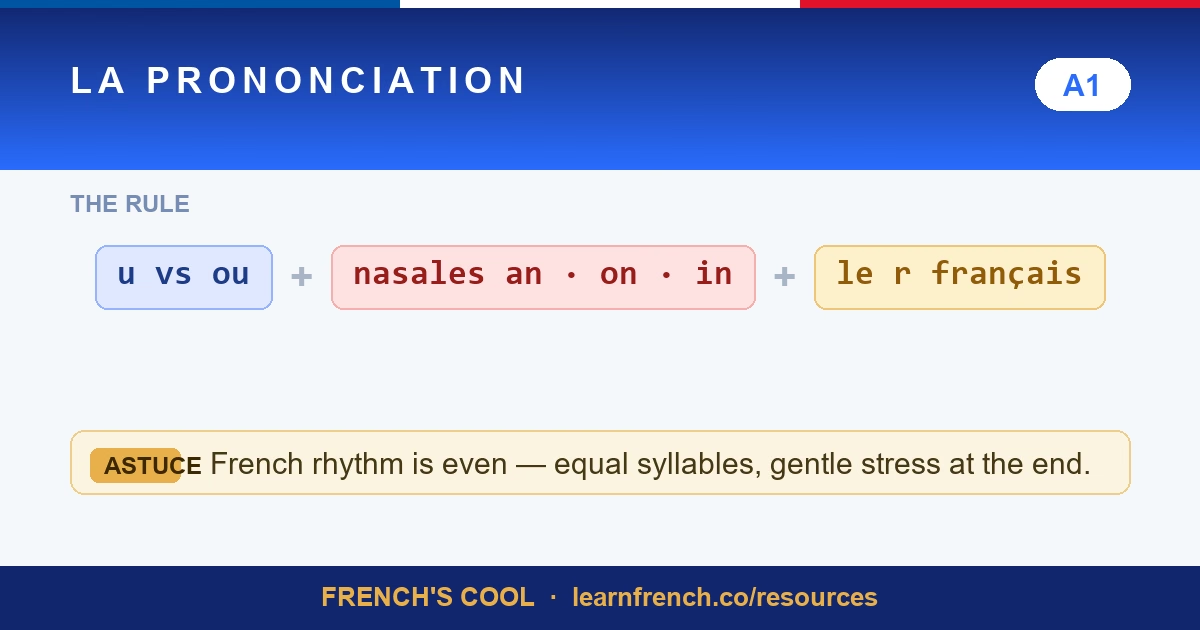
French is even and forward: equal stress on each syllable (no heavy English stress), lips pushed forward, and sounds pronounced at the front of the mouth. Ba-na-ne, not ba-NA-na.
1. The vowels English doesn’t have
These are the giveaways. Round your lips hard:
The classic pair to drill: tu / tout and dessus / dessous — master these and your accent jumps.
2. The nasal vowels
Air through the nose, and DON’T pronounce the n/m:
3. The French R
Not rolled, not English — it’s a soft sound from the back of the throat, like a gentle gargle. Practise with:
4. Liaisons — where words link
French glues words together: a normally-silent final consonant links to the next word’s vowel.
Full rules — obligatory, forbidden, the h aspiré — on the liaison & pronunciation page.
5. The silent letters
French loves silent endings. The rule of thumb — CaReFuL: c, r, f, l are often the ONLY final consonants pronounced:
6. How to practise (10 min a day)
- Shadowing: play a 🔊 sentence, then say it OVER the audio, copying the melody. Any resource page works.
- Minimal pairs: drill tu/tout, dessus/dessous, poisson/poison with the listening game.
- Record yourself and compare — the gap you hear is the lesson.
✍️ Pronunciation quiz
The vowel in « tu » is made by saying « ee » with… (lips)
Show answer
rounded lips (the [y] sound)
In « un bon vin blanc », you pronounce the n and m at the end of each word: true or false? (nasals)
Show answer
False — the n/m are silent, the vowel is nasal
The silent-letter rule of thumb is the word… (final consonants)
Show answer
CaReFuL (c, r, f, l often pronounced)
Play the Quiztap to start · quick practice from this material
Loading the quiz…
The five sounds that mark an accent — and the drills that fix them
Correct pronunciation in French is 20% mouth gymnastics and 80% knowing which sounds actually matter. Prioritize these five. The French “R” — gargled at the back of the throat, not rolled: drill it by saying “ga” and holding the throat position while dropping the g. The U/OU split — tu vs tout: say “ee” and round your lips without moving your tongue; that alien whistle is the French u, and it separates dessus from dessous. The nasal sounds — un/on/an: air through the nose, no final n pronounced; the trio « un bon vin blanc » is the classic four-nasal drill. The three E’s — the pronunciation of “e” splits into é (clipped “ay”), è (open “eh”), and the swallowed schwa that often disappears entirely (samedi = sam’di); accents on French letters are pronunciation instructions, not decoration. Silent finals — most consonants at the end of words go unpronounced (the CaReFuL rule: c, r, f, l usually survive), which is why grand, grands and the verb endings -e/-es/-ent all vanish into the same sound — and why liaison resurrects them before vowels: les‿amis.
The drills that move the needle, in order of payoff: shadowing native audio a half-second behind (rhythm and melody transfer wholesale — French is a syllable-timed language, evenly machine-gunned, unlike English’s stress swings); minimal pairs aloud (tu/tout, dessus/dessous, poisson/poison) until your ear splits them; and the humble habit of checking any new word in a french pronunciation dictionary — Forvo’s native recordings beat any pronunciation generator, and the audio buttons across this site’s lessons exist precisely so you hear french as you read french text. Perfection isn’t the goal — charming and clear beats native-identical, and native french speakers forgive everything except the sounds that change meaning. Master the five families above with ten minutes of pronunciation practice a day, and in a month the sounds of french that felt impossible become the part of the french language you show off — the elegant french pronunciation everyone thinks is talent is nearly always this list, drilled until the vowels sound natural and the french consonants stay politely silent at the ends where the pronunciation rules of french words demand it. Every learner who wants to improve their french accent starts here; the ones who succeed just kept the ten-minute appointment as language learning routine, and let the french “e” family and french vowel pairs teach the ear that pronounced like and pronounced in french are different worlds.
FAQ
What is the hardest French sound for English speakers?
The u/ou distinction, narrowly ahead of the R — because English has neither the sound nor the contrast. The lip-rounding drill above cracks it in days once you feel the mechanism.
Why are so many French letters silent?
Spelling froze centuries before pronunciation did. The final letters aren’t dead, though — liaison revives them before vowels, which is why French spelling is best read as a liaison map.
How can I practice French pronunciation alone?
Shadow slow native audio daily, record yourself weekly and compare, and drill one minimal pair per session. Ears improve first, mouth follows — in that order, reliably.
Elision: why « je ai » becomes « j’ai »
Liaison’s twin — the second pillar of French pronunciation. When little words like je, le, la, ne, de, que, ce meet a vowel, they drop their own vowel and glue on with an apostrophe: j’ai, l’école, il n’arrive pas, qu’est-ce que c’est. It is not optional or casual — written and spoken French both require it. If you have been saying « je aime », this is the one-second fix that makes you sound instantly more natural.
What the accent marks actually do
French accents are pronunciation instructions, not decoration:
- é (accent aigu) — closed « ay-ish » sound: été, parlé
- è / ê (grave / circonflexe) — open « eh » sound: père, fête
- ç (cédille) — makes c soft before a/o/u: français, garçon
- ï / ë (tréma) — pronounce the vowels separately: naïf, Noël
- à / ù — usually just distinguish words (a/à, ou/où), no sound change
So parle, parlé, parlè(rent) are different mouths, not typos. When you read a new word, the accents tell you which « e » to say.
Rhythm and stress: the flat music of French
English words carry a stressed syllable (PHO-to-graph, pho-TO-gra-phy). French does not — every syllable gets even weight, with a light lift on the last syllable of the phrase: « Je vais au cinéma. » This is why a native speaker sounds like a smooth stream and why English speakers sound « choppy » in French: they import word stress. Practise by saying sentences with robot-even syllables — it feels strange and sounds right.
Why French spelling doesn’t match the sound
French spelling froze centuries ago while pronunciation kept moving — so eau spells one sound (o), ent in « ils parlent » spells nothing at all, and oi says « wa ». The good news: unlike English, French spelling-to-sound is regular. Once you know the ~30 letter combinations of French pronunciation, you can pronounce almost any written word correctly — the rules are consistent, there are just more of them.
French pronunciation FAQ
What should a beginner focus on first?
Three things, in order: the u / ou contrast (tu vs tout), the four nasal vowels, and silent final consonants. Those carry the most misunderstandings. The French R can wait — a soft one is perfectly understood.
Can I fix my accent without a teacher?
You can get far: shadow short native-speaker audio daily (repeat half a second behind the speaker), record yourself weekly, and use the 🔊 audio on every vocabulary chart here. A teacher accelerates it because they hear what you can’t — that is exactly what a free lesson is for.
Why do French words run together when natives speak?
Liaison + elision + even rhythm = words fuse into breath groups. « Il est arrivé à l’école » sounds like i-lè-ta-ri-vé-a-lé-cole. Train your ear on slow native audio first, then normal speed — the fusion starts to parse itself.
🗣️ Train your accent
The resources that drill pronunciation directly:
🎯 More practice — translation — put it into French
Translate into French: « the [y] sound — say « ee » with rounded lips » (translation)
Show answer
tu · une · rue
Translate into French: « the [ø] sound » (translation)
Show answer
deux · peu · bleu
Translate into French: « the [u] sound — deep « oo » » (translation)
Show answer
beaucoup · nous · vous
Translate into French: « the four nasals in one phrase! » (translation)
Show answer
un bon vin blanc
Translate into French: « the [ɛ̃] nasal » (translation)
Show answer
pain · main · demain
Want your accent shaped by a native teacher? Book a free lesson with Xavier →
🎮 Practise this lesson
Games built from this exact page — turn what you just read into play:
🧩 Sentence Builder rebuild these sentences
🎧 Listening Game which sentence do you hear?
Keep going: The one sound everyone asks about first: how to actually make the French R.