French Numbers 0 to 100 (and How to Actually Remember Them)
Counting in French is easy until you hit 70 — here's the full map, including the famous quatre-vingt-dix.
What you'll learn
You’ll use numbers constantly — prices, times, phone numbers, your age. French counting is logical and quick to learn… right up until the seventies, where it gets gloriously strange. Here’s the whole picture.
🎬 This lesson in one minute
The quick version — the full lesson is below. More shorts →
0 to 20: the building blocks
These you simply learn: zéro, un, deux, trois, quatre, cinq, six, sept, huit, neuf, dix, then onze, douze, treize, quatorze, quinze, seize, and from 17 it becomes regular: dix-sept, dix-huit, dix-neuf, vingt.
The tens (and their pattern)
vingt (20), trente (30), quarante (40), cinquante (50), soixante (60). Build the in-betweens by adding: vingt et un (21), vingt-deux (22)… Note the et only appears for the ‘1’: trente et un, but trente-deux.
The famous 70, 80, 90
Here’s where French does maths out loud:
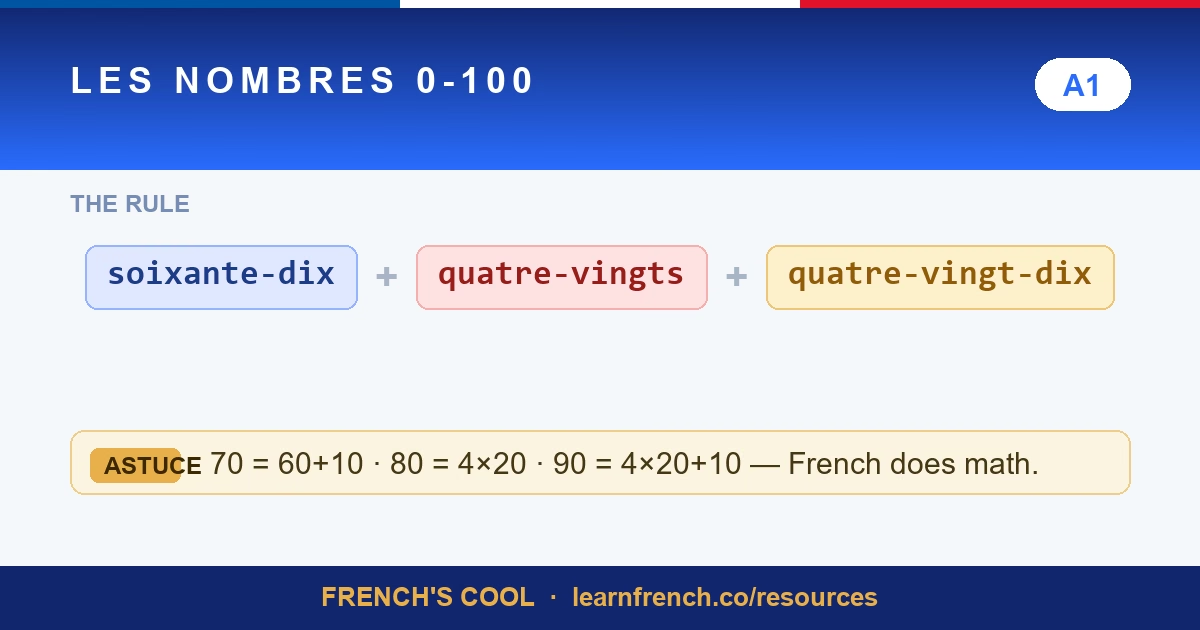
- 70 = soixante-dix — literally ‘sixty-ten’. So 71 is soixante et onze (60+11), 72 is soixante-douze (60+12).
- 80 = quatre-vingts — literally ‘four-twenties’ (4×20). 81 is quatre-vingt-un.
- 90 = quatre-vingt-dix — ‘four-twenties-ten’ (80+10). 99 is quatre-vingt-dix-neuf (80+19)!
It looks fearsome but it’s pure addition. Once you see the logic, you stop translating and just hear the sum.
100 and beyond
cent (100), deux cents (200), mille (1000). Simple again — the chaos is only in the 70s–90s.
Where you’ll actually use them
- Prices: C’est combien ? — Douze euros cinquante. (€12.50)
- Age: J’ai trente-cinq ans.
- Phone numbers: French reads them in pairs — 06 12 34 56 78 is ‘zéro-six, douze, trente-quatre…’
How to remember them
Drill the 0–20 and the tens until they’re instant, then practise only the 70s–90s — that’s the 10% that needs real work. Count everyday things in your head: stairs, change, the clock. Numbers stick through use, not lists.
Practise it with a real teacher
Reading about French is one thing — saying it out loud, with someone who corrects you gently and adapts to your level, is what makes it stick. Your first 20-minute lesson with Xavier is free, with no card and no commitment. Book your free lesson and let’s put this into practice.
🎬 Video lesson
 French numbers 1–100
✍️ Quick quiz — did it stick?
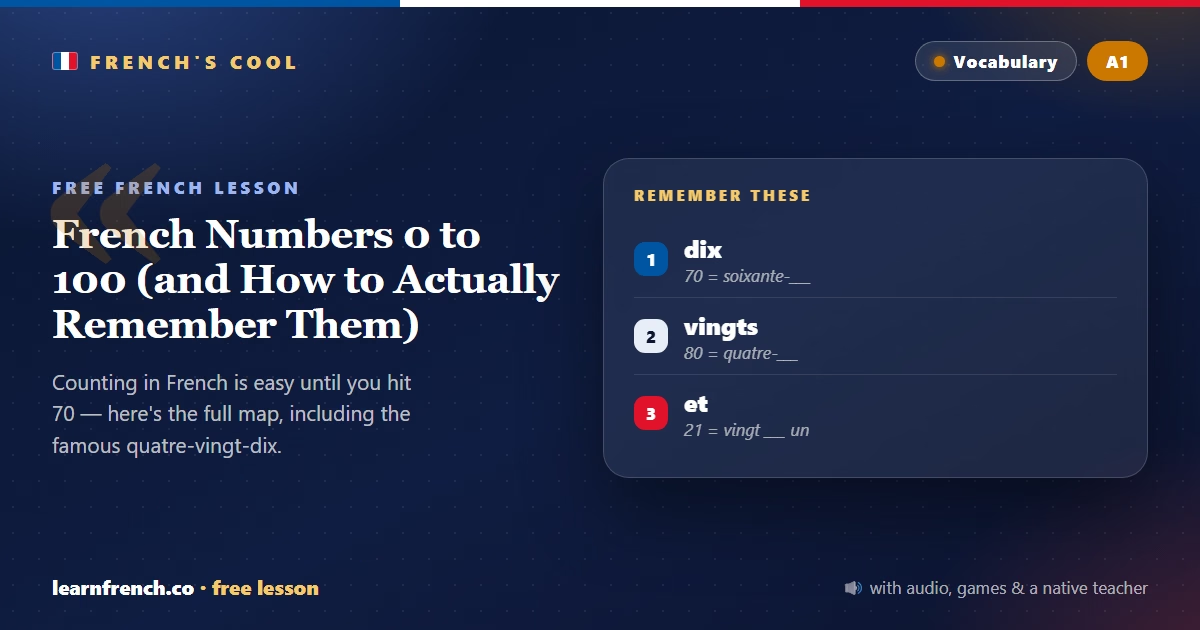
70 = soixante-___ (60+10)
Show answer
dix
80 = quatre-___ (4×20)
Show answer
vingts
21 = vingt ___ un (the special connector)
Show answer
et
Play the Quiztap to start · quick practice from this material
Loading the quiz…
The system behind the madness: how the numbers combine
French numbers 1-100 are three easy patterns and one historical prank. Numbers 1-20 are vocabulary — with 17 to 19 already showing the combine-and-conquer logic: dix-sept, dix-huit, dix-neuf (ten-seven, ten-eight…). Note sixteen is seize, the last of the fused forms. From 20 to 60 everything is regular: tens word + digit, joined by a dash — vingt-trois, quarante-huit, and every number ending in 1 takes et: vingt et un, trente et un. If you can count in french to 69, you own two thirds of the system for free.
Then the prank. There is no dedicated word for 70: French says soixante-dix (sixty-ten), and counts on through soixante-quinze (60+15) to 79. Eighty is quatre-vingts — four twenties, a leftover of the base-20 counting Celtic Gaul used — and 90 stacks both tricks: quatre-vingt-dix, four-twenties-ten, up to the magnificent quatre-vingt-dix-neuf (99 = 4×20+10+9). Belgium and Switzerland quietly fixed it — septante, huitante/octante, nonante — so if the words for 70 feel like a conspiracy, the French-speaking neighbours agree. Written in french, all compound numbers now take the dash throughout (post-1990 spelling): soixante-dix-huit.
Pronunciation runs on three rules: the final consonant of six, huit and dix falls silent before a consonant (six livres = “si livres”), liaison resurrects it before a vowel (six ans = “si-zan”), and the nasal vowels of un, vingt, cent need the through-the-nose quality — English and french share the digits, not the sounds. Strategy to learn to count for real: don’t recite — read every price, phone number and page number you see aloud in French for a week. Numbers are the rare vocabulary the world drills for you free, and learning french numbers this way moves them from translation to reflex — exactly the language skills phone numbers at native speed demand.
FAQ
Why is there no word for 70 in French?
Medieval French counted in twenties (a Celtic inheritance); academic French later standardised tens — but stopped at 60. The result: 70/80/90 kept the old vigesimal math. Belgium and Switzerland adopted septante and nonante instead.
How do you count from 1 to 100 in French?
Learn 1-20 as words, then tens + digits with hyphens (vingt-deux…), et un for 21/31/41/51/61, the sixty-ten system for 70-99, and cent for 100. The full audio table is above.
How do you pronounce 10, 20, 30, 40, 50, 60, 70, 80, 90, 100?
Dis, vin (nasal), trente, quarante, cinquante, soixante, soixante-dis, katre-vin, katre-vin-dis, son (cent — nasal). The audio buttons give each at native speed.
How do you say 1 to 10 in French?
Un, deux, trois, quatre, cinq, six, sept, huit, neuf, dix — the ten words every French child chants and every learner should be able to say backwards.
The « et » rule: vingt-et-un, trente-et-un
One small quirk: for 21, 31, 41, 51 and 61, French links the ten and the « un » with et (and) plus hyphens: vingt-et-un (21), trente-et-un (31), quarante-et-un (41). But the pattern stops there — 71 is soixante-et-onze, while 81 and 101 drop the « et »: quatre-vingt-un, cent un.
Belgian and Swiss French: septante, huitante, nonante
Good news if the 70–90 maths feels heavy: in Belgium and much of Switzerland they simply say septante (70) and nonante (90) — and Switzerland even uses huitante (80). So quatre-vingt-onze (91) becomes an easy nonante-et-un. You will be understood everywhere with the standard forms, but these are handy to recognise.
French ordinal numbers (1st, 2nd, 3rd…)
To say first, second, third, add -ième to the number: deux → deuxième, trois → troisième, dix → dixième. The one irregular is premier / première (first). Note the small spelling shifts: cinq → cinquième, neuf → neuvième.
French numbers FAQ
How do you count from 1 to 100 in French?
Learn 1–20 by heart, then the tens (vingt, trente, quarante…). Every number in between is just tens + units — vingt-trois (23), quarante-six (46) — until you hit the famous 70/80/90 maths. Practise the full set with audio on the Les Nombres chart.
Why is there no single word for 70 in French?
Standard French counts 70 as « sixty-ten » (soixante-dix) and 80 as « four-twenties » (quatre-vingts) — a leftover of an old base-20 (vigesimal) system. It feels odd at first, then becomes automatic.
How do you say the numbers 1 to 10 in French?
Un, deux, trois, quatre, cinq, six, sept, huit, neuf, dix. These ten are worth over-learning — you will use them constantly.
What is the best way to memorise French numbers?
Say them out loud in chunks (1–10, then 11–20, then the tens), count everyday objects in French, and drill 70/80/90 separately since they are the tricky ones.
🧰 Your practice kit
This guide gave you the big picture — now drill the details with these free interactive charts (each with audio examples and exercises):
Prefer a human? Book a free lesson with Xavier →
📊 Chart it: Numbers down? Now the words you’ll meet most: the 100 most common French words.