French Numbers 100 to 1000 (and Beyond) Without Tears
You’ve survived soixante-dix and quatre-vingt-dix — good news: French numbers above 100 are actually easier. A few crisp rules and you can say any number up to the millions.
What you'll learn
You’ve survived soixante-dix and quatre-vingt-dix — good news: French numbers above 100 are actually easier. A few crisp rules and you can say any number up to the millions.
🎬 This lesson in one minute
The quick version — the full lesson is below. More shorts →
The building blocks
| Number | French | Watch out |
|---|---|---|
| 100 | cent | no « un » before it — just cent |
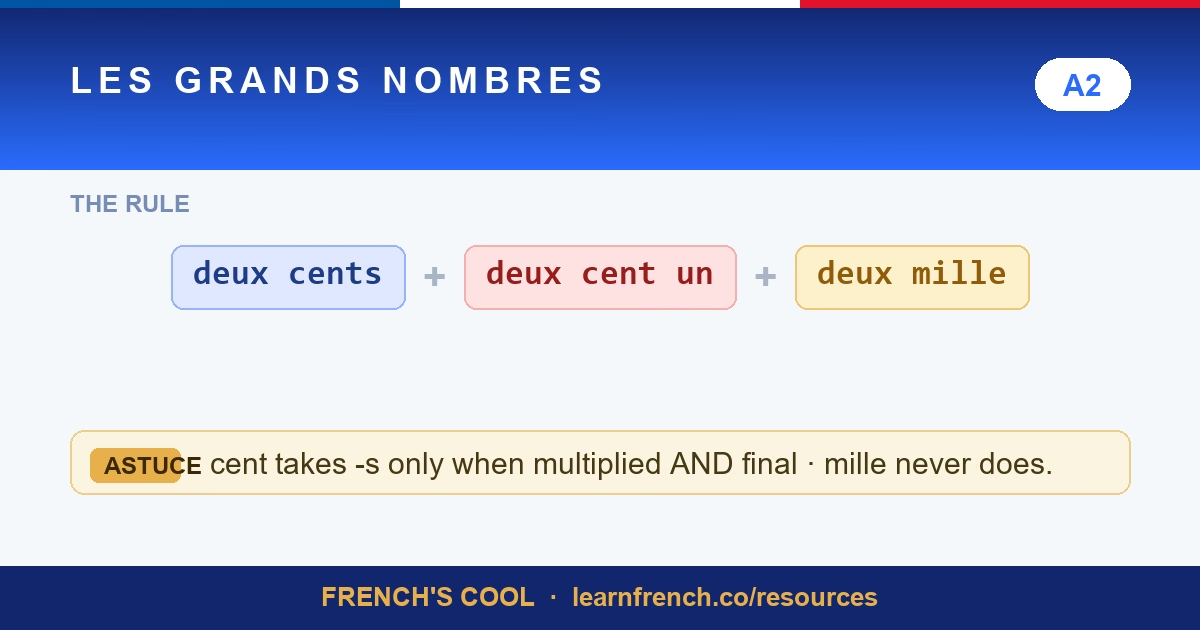
| 200 | deux cents | cent takes -s when multiplied… |
| 201 | deux cent un | …but loses it when followed by a number |
| 1 000 | mille | never takes -s: deux mille |
| 10 000 | dix mille | French groups digits with spaces, not commas |
| 1 000 000 | un million | needs « de » before a noun: un million d’euros |
Reading real numbers
- 365 — trois cent soixante-cinq
- 1 789 — mille sept cent quatre-vingt-neuf
- 2 026 — deux mille vingt-six (years read as plain numbers)
- 99 € — quatre-vingt-dix-neuf euros (the under-100 madness never fully leaves!)
Decimals and prices: the comma flip
French swaps the roles of comma and period: 3,5 = three and a half (« trois virgule cinq »), while 3.500 or 3 500 is three thousand five hundred. Prices are spoken with the currency in the middle: « 4,50 € » = « quatre euros cinquante ».
Real life: phone numbers and prices
French phone numbers are read in pairs: 06 12 34 56 78 = « zéro six, douze, trente-quatre, cinquante-six, soixante-dix-huit ». That last pair is why the 70/90 system never stops mattering! Prices put the currency inside: 12,50 € = « douze euros cinquante », and years of experience beat any rule — listen for numbers in our video lessons.
Approximates: the -aine family
French has lovely “about” numbers: une dizaine (~10), une vingtaine (~20), une centaine (~100), un millier (~1000) — « une trentaine de personnes » = around thirty people. They take de before a noun, like million.
Ordinals, fractions and percentages: the number add-ons
Ordinals are painless: number + -ième — deuxième, dixième, centième. Only « first » is special: premier / première. (The full list with audio: ordinal numbers.)
- Fractions: la moitié (half), un tiers (a third), un quart (a quarter) — « les trois quarts du temps » (most of the time).
- Percentages: pour cent — « cinquante pour cent » (50 %). Note the space before % in French typography.
- Doubling up: le double, le triple — « c’est le double du prix ! »
With cent, mille, the -aine family and these add-ons, you can now say virtually any quantity French throws at you.
Counting done? Ranking is its own small system — premier, deuxième, troisième: French ordinal numbers.
FAQ
Does cent take an s in French?
Only when multiplied AND final: deux cents, but deux cent un. Mille never takes -s; million and milliard are nouns and always do after 2+: deux millions.
How do the Swiss and Belgians count?
More sensibly! Septante (70), huitante/octante (80, Switzerland), nonante (90). France alone clings to soixante-dix and quatre-vingt-dix.
How do I say years in French?
As plain numbers: 1995 = mille neuf cent quatre-vingt-quinze (or dix-neuf cent…), 2026 = deux mille vingt-six. « En quelle année ? » asks the year.
Drill 0–100 first on the numbers chart, and hear ordinals on the ordinal numbers page.
Quick practice
Play the Quiztap to start · quick practice from this material
Keep going: Prices need bigger numbers — spend them in clothes & shopping French.