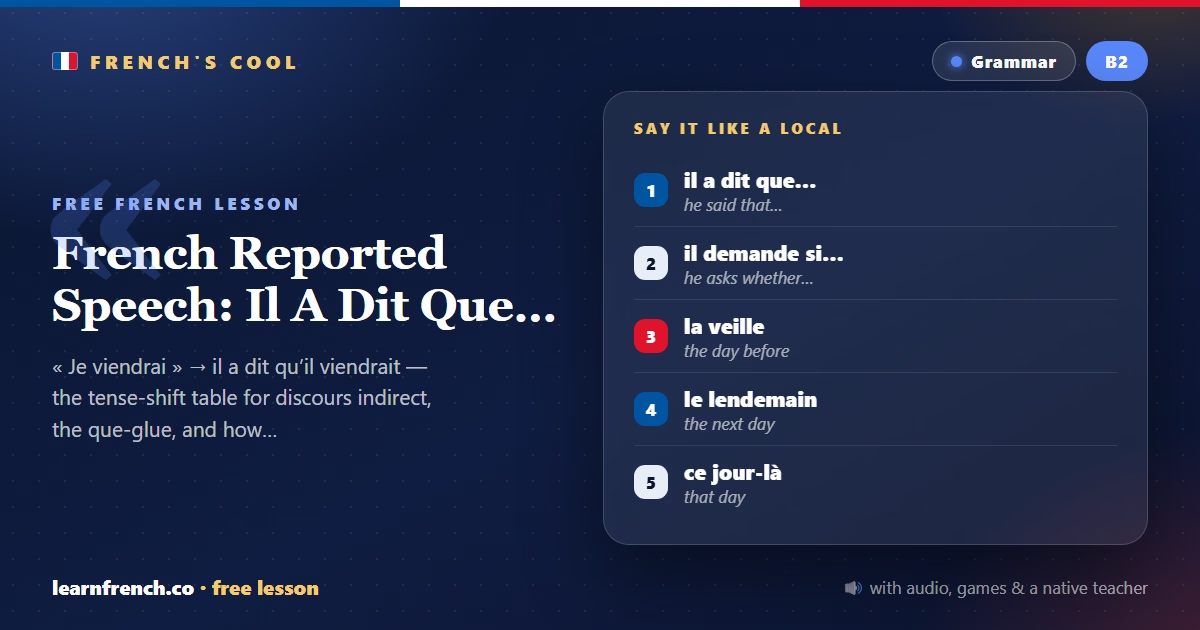
French Reported Speech: Il A Dit Que…
« Je viendrai » → il a dit qu’il viendrait — the tense-shift table for discours indirect, the que-glue, and how questions and commands transform.
What you'll learn
Quoting people directly is easy; French conversation prefers reporting: « Il a dit que… » The price is a systematic tense shift — one table, learned once.
🎬 This lesson in one minute
The quick version — the full lesson is below. More shorts →
The que-glue
Every reported statement needs que: « Elle dit qu’elle est fatiguée. » With a PRESENT reporting verb, nothing shifts. The machinery only starts when the reporting verb is past.
The shift table (after il a dit…)
- Présent → imparfait: « Je suis là » → il a dit qu’il était là
- Passé composé → plus-que-parfait: « J’ai fini » → qu’il avait fini
- Futur → conditionnel: « Je viendrai » → qu’il viendrait
- Imparfait → stays imparfait; conditionnel → stays conditionnel
Questions: est-ce que becomes si
- « Tu viens ? » → Il demande si je viens.
- « Où habites-tu ? » → Il demande où j’habite. (question word stays, inversion disappears)
- « Qu’est-ce que tu fais ? » → Il demande ce que je fais.
Commands: de + infinitive
« Ferme la porte ! » → Il m’a dit de fermer la porte. No tense gymnastics — the imperative flattens to de + infinitive (negative: de ne pas fermer).
Don’t forget the little words
Pronouns and time markers shift with the viewpoint: « Je viendrai demain » reported a week later → il a dit qu’il viendrait le lendemain (the next day). Aujourd’hui → ce jour-là, hier → la veille.
Upgrade your reporting verbs
Il a dit que… il a dit que… — grammatically fine, stylistically beige. French swaps in a more precise verb, and the shift machinery stays exactly the same:
- répondre que: elle a répondu qu’elle était d’accord — she answered that
- ajouter que: il a ajouté qu’il viendrait plus tard — he added that
- avouer que: il a avoué qu’il avait menti — he admitted that
- prévenir que: elle m’a prévenu qu’elle serait en retard — she warned me that
- promettre de + infinitive: il a promis de venir — like commands, promising TO DO something takes de
Common mistakes
- He said « Je suis fatigué ». ✗ « Il a dit que je suis fatigué » → ✓ il a dit qu’il était fatigué — the je was his, so it travels with him.
- ✗ « Elle a dit que elle était là » → ✓ elle a dit qu’elle était là — que always elides before a vowel, no exceptions.
- ✗ « Il m’a dit de ne fermez pas la porte » → ✓ il m’a dit de ne pas fermer la porte — reported commands take the infinitive, and both negation words sit in front of it.
- ✗ « Il a demandé si où j’habitais » → ✓ il a demandé où j’habitais — si replaces est-ce que in yes/no questions only; a question word does the job alone.
Overheard, then reported: a real exchange
— Tu as vu Paul hier ?
— Oui. Il m’a dit qu’il avait trouvé un boulot à Lyon et qu’il partirait en septembre.
— Sérieux ? Et la fête de samedi ?
— Il a demandé si tu venais. Et il m’a dit de ne pas oublier le gâteau.
One tiny bit of gossip, the whole system: passé composé → plus-que-parfait (avait trouvé), futur → conditionnel (partirait), a yes/no question → si, an order → de + infinitive. When you can relay news like this without pausing, the lesson has done its job.
In real life: the shift relaxes
Now a secret natives won’t volunteer: in casual speech, when the statement is still true right now, the shift often stays home. « Il m’a dit qu’il vient ce soir » — technically présent where the table wants imparfait, but nobody blinks, because tonight hasn’t happened yet. In writing, in exams, and whenever the information is no longer current, apply the table. Speak relaxed, write strict — very French, really.
FAQ
Why does the futur become the conditionnel?
The conditional IS the future-of-the-past — same stem, imparfait endings. Meet it properly in the French conditional.
Where does the plus-que-parfait come from?
It’s the designated “past before the past”: the plus-que-parfait — reported speech is its natural habitat.
« Il a dit que » or « il a dit de »?
Que + conjugated clause for statements; de + infinitive for reported COMMANDS. If someone was told TO DO something, it’s de. Question mechanics: asking questions in French.
Quick practice
Play the Quiztap to start · quick practice from this material