Qui, Que, Dont: French Relative Pronouns Finally Clear
The moment you want to say « the film that I saw » or « the friend who called », you need relative pronouns — and French hands you three main ones: qui, que, dont.
What you'll learn
The moment you want to say « the film that I saw » or « the friend who called », you need relative pronouns — and French hands you three main ones: qui, que, dont. The choice follows one mechanical test. No guessing required.
🧵 Look at what follows the relative
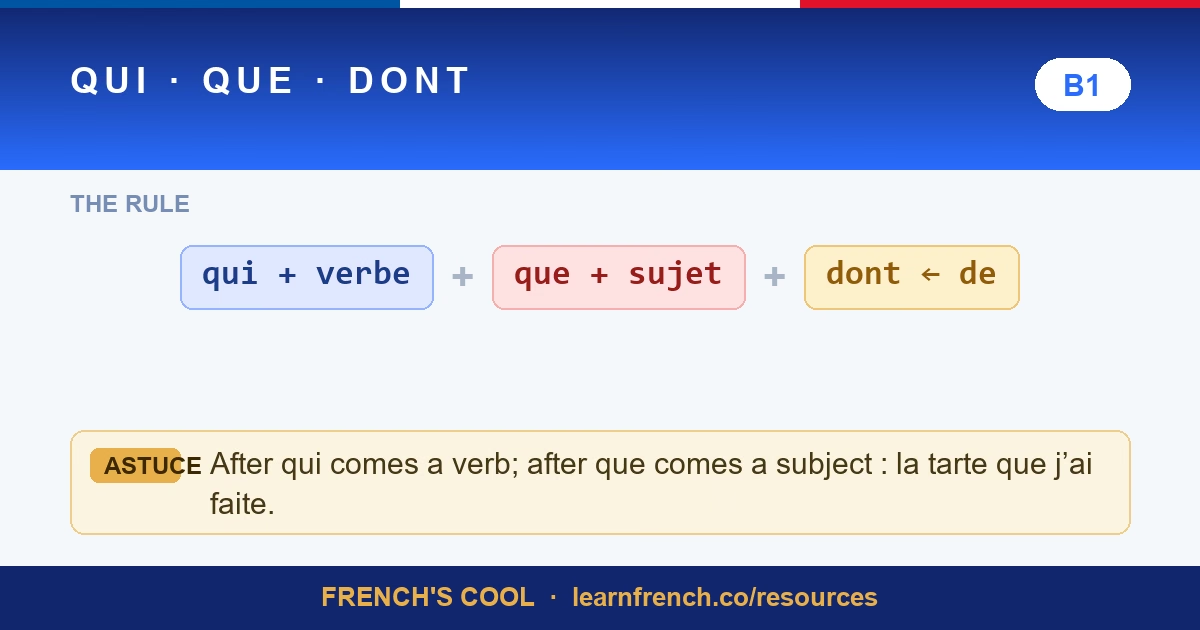
If the next word is a VERB missing its subject, use qui (la femme qui parle). If a subject is already there, use que (le film que je regarde). If the verb wants de, use dont (le livre dont je parle — parler DE). One glance settles it.
🎬 This lesson in one minute
The quick version — the full lesson is below. More shorts →
The test: what’s missing after it?
| Pronoun | Replaces the… | Example |
|---|---|---|
| qui | SUBJECT — a verb follows | la femme qui parle (the woman who speaks) |
| que | OBJECT — a subject follows | le film que j’ai vu (the film that I saw) |
| dont | a DE-phrase | le livre dont je parle (the book I’m talking about) |
Quick check: right after qui comes a verb; right after que comes a subject. « La tarte qui est sur la table » vs « la tarte que j’ai faite ».
Dont: the elegant one
Whenever the verb or noun wants de, dont steps in: parler de → le projet dont je parle; avoir besoin de → l’outil dont j’ai besoin; and possession: une amie dont le père est médecin (whose father…). Using dont well is one of the fastest ways to sound genuinely fluent.
And où — the fourth musketeer
For places AND times: la ville où j’habite (where I live), le jour où on s’est rencontrés (the day we met — English says “when”, French says où).
Watch the agreement trap
With que + passé composé, the participle agrees with the noun in front: la lettre que j’ai écrite, les photos que j’ai prises. Silent in speech (mostly), graded in writing — details in the past tenses guide.
In real sentences
Read each one aloud, then tap 🔊 and shadow the audio — rhythm first, speed later.
Drill it: lequel, auquel, duquel · object pronouns · quel vs qu’est-ce que
✍️ Your turn: qui, que or dont?
L’homme ___ habite ici est médecin. (verb needs a subject)
Show answer
qui — habite has no subject yet, so qui supplies it.
La série ___ je préfère passe le jeudi. (subject already there)
Show answer
que — je is already the subject; que is the object.
Le projet ___ j’ai besoin est en retard. (avoir besoin DE)
Show answer
dont — the de of avoir besoin de folds into dont.
« whose » : l’ami ___ le frère travaille ici. (possession)
Show answer
dont — l’ami dont le frère… = whose brother.
Which one elides before a vowel — qui or que? (sneaky)
Show answer
Only que: l’ami qu’elle invite. Qui NEVER loses its i: la femme qui arrive.
FAQ
Does qui always mean “who”?
No — that’s the trap. Qui = whatever is the SUBJECT, human or not: le train qui arrive (the train that’s arriving). Que can refer to people too: l’ami que j’ai appelé.
Can I shorten que before a vowel?
Que elides: l’homme qu’elle aime. Qui NEVER does: la femme qui arrive — writing « qu’arrive » for qui is a classic error.
What are ce qui and ce que?
The “what” versions when there’s no noun to attach to: Je sais ce qui te plaît (what pleases you), Dis-moi ce que tu veux (what you want). Same subject/object logic, with ce as the dummy noun.
Practise on the relative pronouns chart, then level up to lequel/auquel on the compound relatives chart.
Where does où fit in?
It is the relative of place AND time: la ville où je suis né, le jour où tout a changé. English says « the day WHEN »; French says le jour OÙ — never le jour quand.
What are ce qui and ce que?
The same pair with a built-in antecedent = « what »: ce qui compte (what matters — subject), ce que je veux (what I want — object), ce dont j’ai besoin (what I need — with de). Perfect for elegant sentences: c’est exactement ce que je voulais dire.
Quick practice
Play the Quiztap to start · quick practice from this material