How to Ask a Question in French (3 Ways, One Simple Rule)
French has three ways to ask a question — intonation, est-ce que, and inversion — but for most situations you only need one. The est-ce que shortcut, the question words, the euphonic -t-, and a one-week plan. With audio and a quiz.
What you'll learn
Asking questions is where a lot of learners freeze — there seem to be so many ways to do it. Here’s the freeing truth: French has three ways to ask, and for 90% of situations you only need one. Learn that one, add the others later, and you’ll never be stuck for a question again.
🎬 This lesson in one minute
The quick version — the full lesson is below. More shorts →
🗝 The shortcut
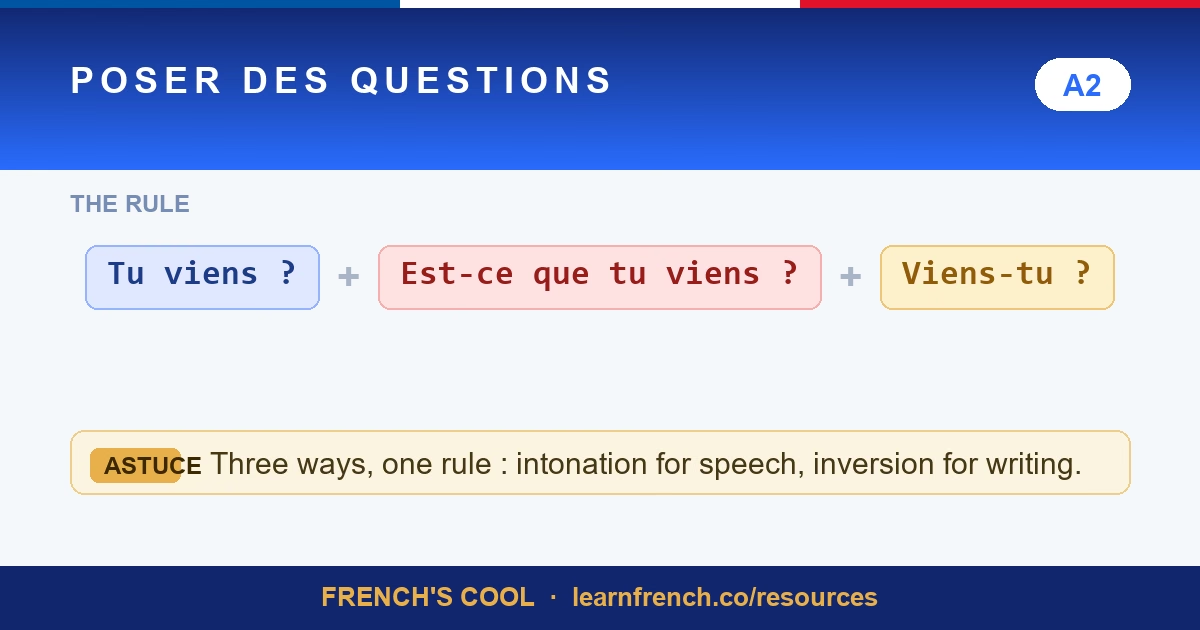
When in doubt, use est-ce que. Stick it in front of any statement and you have a correct question. « Tu parles anglais » → « Est-ce que tu parles anglais ? »
Way 1 — Intonation (the easiest)
Take a normal sentence and raise your voice at the end. That’s it. This is how people ask most questions in daily speech.
Way 2 — Est-ce que (the safe default)
Add est-ce que to the front of a statement. Always correct, neutral in tone, and it works with every question word.
Way 3 — Inversion (the formal one)
Flip the verb and subject. More formal, common in writing and polite speech. Add a -t- when two vowels meet.
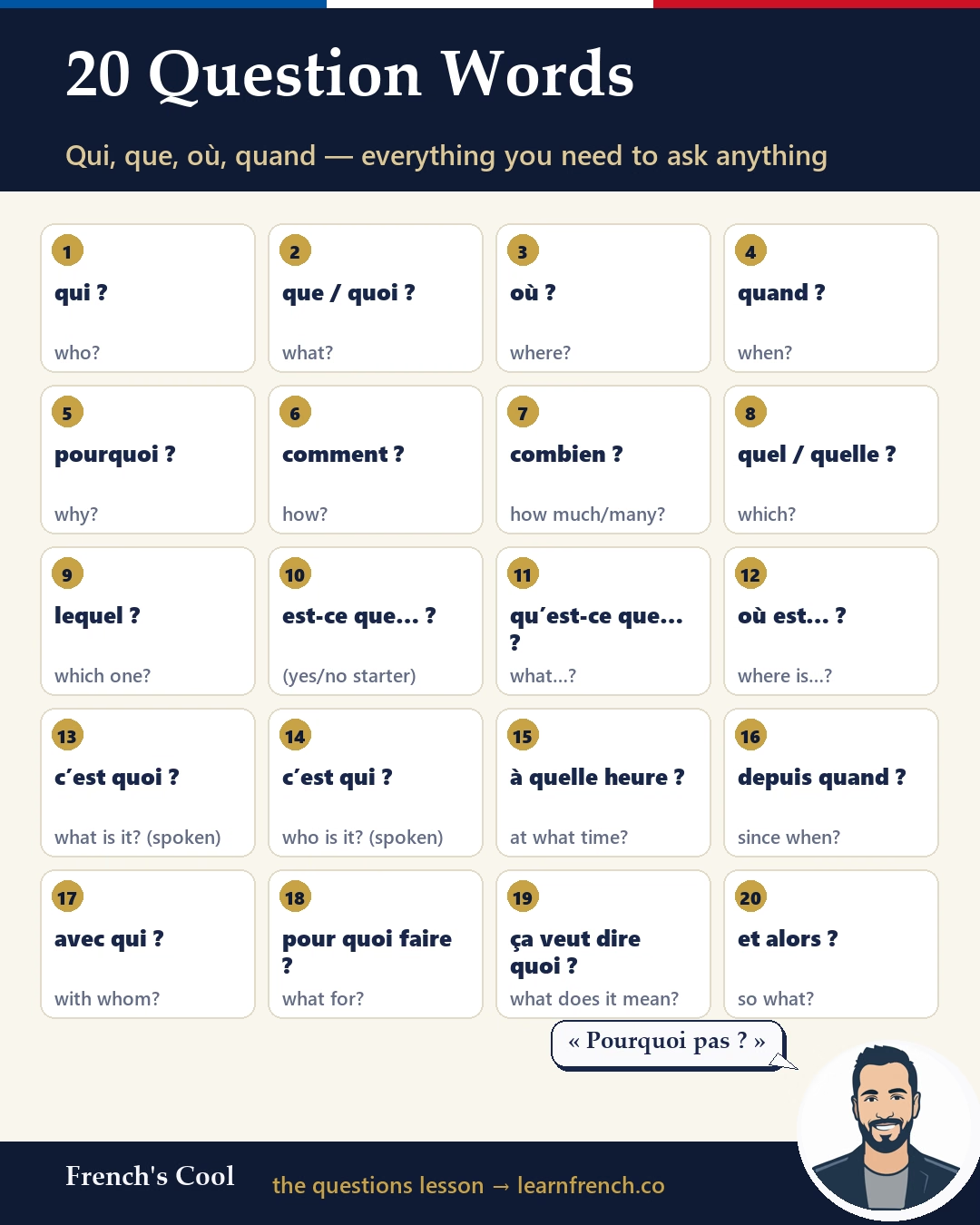
The question words
Put these at the front, then use any of the three structures:
The full set with examples is on mots interrogatifs, and all three structures side-by-side on poser des questions.
Your one-week plan
- Days 1–3: master est-ce que + the question words. You can now ask anything.
- Days 4–5: get comfortable with pure intonation for casual chat.
- Days 6–7: add inversion for polite/written French (Pourriez-vous… ?).
✍️ Question check
The safe, all-purpose way to ask is… (shortcut)
Show answer
est-ce que
Make it a question by intonation: « Tu as faim ___ » (punctuation + tone)
Show answer
?
Add the missing letter: « A-___-il fini ? » (euphonic)
Show answer
t
Play the Quiztap to start · quick practice from this material
Loading the quiz…
The French question words in full
Master these and you can ask almost anything. Each works with all three methods above:
- qui — who: « Qui est-ce ? »
- que / quoi — what: « Que veux-tu ? » / « Tu veux quoi ? » (quoi goes at the end in speech)
- où — where · quand — when · pourquoi — why
- comment — how · combien (de) — how much / how many
- quel / quelle / quels / quelles — which (agrees with the noun): « Quelle heure est-il ? »
Word order in speech is flexible: « Où tu vas ? », « Tu vas où ? » and the formal « Où vas-tu ? » all mean « where are you going? ».
Prepositions stick to the question word
Unlike English, French can’t leave a preposition dangling at the end. « Who are you talking to? » becomes « À qui parles-tu ? » — the à moves to the front with qui. Likewise « Avec qui ? » (with whom), « De quoi tu parles ? » (what are you talking about).
The euphonic -t- in inversion
When you invert and the verb ends in a vowel before il/elle/on, French inserts a -t- for pronunciation: « A-t-il compris ? » (not « a-il »), « Mange-t-elle ? », « Où va-t-on ? ». It means nothing — it just stops two vowels colliding.
Asking questions in French FAQ
What is the easiest way to ask a question in French?
Intonation — keep the sentence exactly as a statement and lift your voice at the end: « Tu viens ? ». It’s 100% correct in speech and the fastest way to start asking questions from day one. « Est-ce que » is the safe written/spoken default; inversion is the formal, written register.
How do you answer a negative question?
Here French has a special word: to contradict a negative question you say « si », not « oui ». « Tu n’aimes pas le café ? — Si ! » (« Don’t you like coffee? — Yes I do! »). Using « oui » there sounds off to French ears.
Where does « quoi » go?
In casual speech, « quoi » lands at the end: « Tu fais quoi ? » (what are you doing?). In writing or formal speech you’d use « que » at the front: « Que fais-tu ? ». Same meaning, different register — full drills from A1 to native.
🧰 Ask anything in French
Everything to build and answer questions:
🎯 More practice — translation — put it into French
Translate into French: « Are you coming tonight? » (translation)
Show answer
Tu viens ce soir ?
Translate into French: « Are you hungry? » (translation)
Show answer
Vous avez faim ?
Translate into French: « Do you speak French? » (translation)
Show answer
Est-ce que tu parles français ?
Translate into French: « Where do you live? » (translation)
Show answer
Où est-ce que vous habitez ?
Translate into French: « Do you speak English? » (translation)
Show answer
Parlez-vous anglais ?
Want to practise asking & answering out loud? Book a free lesson with Xavier →
🎮 Practise this lesson
Games built from this exact page — turn what you just read into play:
🧩 Sentence Builder rebuild these sentences
🎧 Listening Game which sentence do you hear?