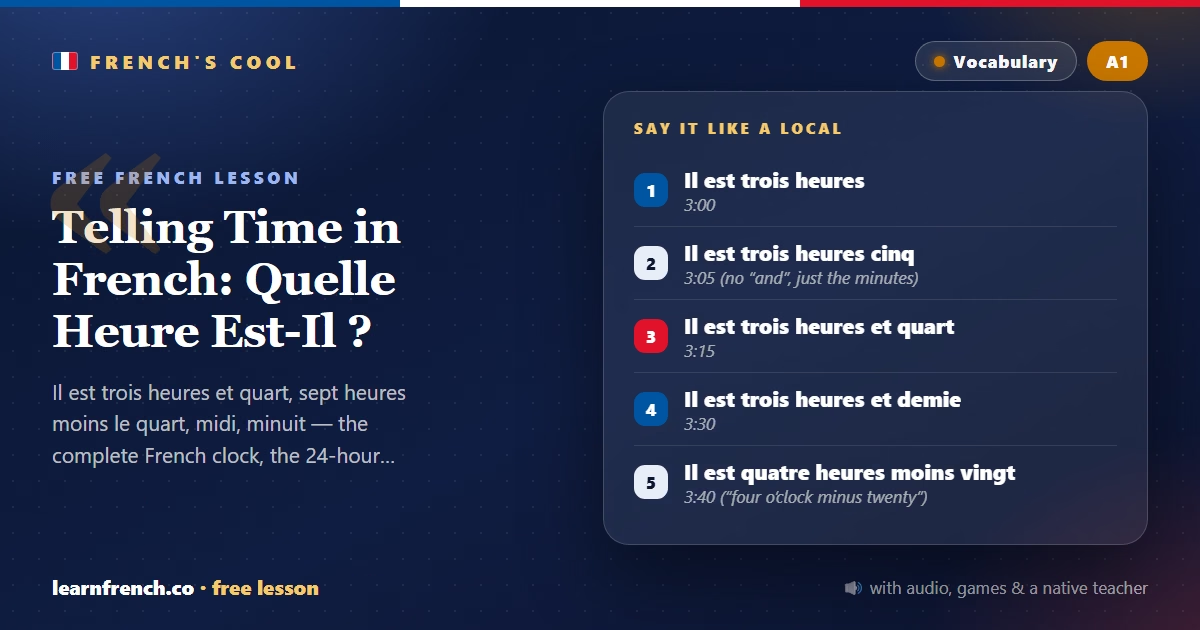
Telling Time in French: Quelle Heure Est-Il ?
Il est trois heures et quart, sept heures moins le quart, midi, minuit — the complete French clock, the 24-hour system, and the traps (13h ≠ 13 heures du soir).
What you'll learn
« Quelle heure est-il ? » is the first question strangers will ever ask you in France. The answer system is beautifully regular — with one twist: after the half hour, French counts backwards from the next hour.
🎬 This lesson in one minute
The quick version — the full lesson is below. More shorts →
The forward half (:00 → :30)
- Il est trois heures. — 3:00
- Il est trois heures cinq. — 3:05 (no “and”, just the minutes)
- Il est trois heures et quart. — 3:15
- Il est trois heures et demie. — 3:30
The backward half (:31 → :59)
- Il est quatre heures moins vingt. — 3:40 (“four o’clock minus twenty”)
- Il est quatre heures moins le quart. — 3:45 (note: moins LE quart, but et quart)
- Il est quatre heures moins cinq. — 3:55
Midi, minuit and the 24-hour clock
Noon = midi, midnight = minuit — no “douze heures”. And official France runs on the 24-hour clock: trains, cinemas, rendez-vous all say « quinze heures trente » (15h30). In that system the quart/demie shortcuts disappear — you read the numbers straight: 18h45 = dix-huit heures quarante-cinq.
Morning or evening?
Conversational French adds the time of day instead of AM/PM: « sept heures du matin » (7 AM), « trois heures de l’après-midi » (3 PM), « neuf heures du soir » (9 PM). Never mix systems: « treize heures du soir » earns a gentle laugh.
In the street: asking a stranger
— Excusez-moi, vous avez l’heure, s’il vous plaît ?
— Oui, il est quatre heures moins dix.
— Merci ! Et le bus de quatre heures et quart part bien d’ici ?
— Oui, juste là. Vous avez le temps.
Notice the question: Vous avez l’heure ? — literally “do you have the time?”. It’s what French people actually say in the street; « Quelle heure est-il ? » is grammatically perfect but sounds like a classroom. When they answer your merci with je vous en prie, you’ve just held a complete French conversation.
Common mistakes
- ✗ Il est un heure → ✓ Il est une heure — heure is feminine, so it’s une at 1:00 and still une at 1:30: une heure et demie.
- ✗ Il est trois. → ✓ Il est trois heures. — English happily drops “o’clock”; French never drops heures.
- ✗ Il est demie quatre → ✓ Il est quatre heures et demie — if British “half four” lives in your head, evict it: in French the hour always comes first.
- ✗ sept heures dans le matin → ✓ sept heures du matin — the time of day takes du or de l’, never dans le.
Pile, vers and the art of being late
Three small words upgrade every time you give:
- pile — on the dot: Il est huit heures pile. (8:00, not a minute more)
- vers — around: On se retrouve vers midi ? (that soft French vagueness, perfect for plans)
- en avance / à l’heure / en retard — early / on time / late: Le train est à l’heure. Désolé, je suis en retard !
Cultural note: invited to dinner at someone’s home, arriving at huit heures pile is almost rude — guests drift in ten or fifteen minutes late, and everyone finds that perfectly polite. For a train at 8 h 07, though, be pile. The SNCF does not do vers.
The answers everyone searches for, in one cheat sheet
Telling time in French clicks when you see the same few patterns answer every question. The word heure is the hinge of every phrase — plural with an -s from deux heures onward, and pronounced with a liaison (deu-zeur) that is half the pronunciation battle. Here are the exact times learners ask about most, in both the 12-hour clock and what English speakers call military time — in France the 24-hour clock is simply how schedules are written:
- 9:45 — « dix heures moins le quart » (quarter to ten) or, reading a screen, « neuf heures quarante-cinq ».
- 5:30 — « cinq heures et demie » — “it’s half past five” is « il est cinq heures et demie »; half past is always et demie.
- 3:30 pm — « quinze heures trente » officially, « trois heures et demie de l’après-midi » in conversation. There is no “pm” in French — pm in French IS the 24-hour clock, or the tags de l’après-midi / du soir.
- 14:00 / 2 pm — « quatorze heures ». Any timetable, cinema listing or rendez-vous in French time runs this way.
- 6 p.m. — « dix-huit heures » — the hour French switches from bonjour to bonsoir.
Two rules do all the work. First: say the hour, then the number of minutes — « il est deux heures dix ». Second: past the half hour, subtract — moins vingt, moins le quart. The fraction words (et quart, et demie, moins le quart) only work with the 12-hour clock; with quatorze heures you must say the plain minutes. That is the entire French grammar of the clock — the rest is numbers in French, which is why this topic doubles as number practice and belongs in every list of French essentials. Add the temporal prepositions à (« à trois heures » — at three) and vers (around), plus asking the time — « quelle heure est-il ? », « vous avez l’heure ? » — and saying what time it is in French time becomes automatic. Ten minutes a day of reading clocks aloud will improve your French faster here than any vocab drill: it is the rare corner of french vocabulary you can practise on every phone screen and station board around you — in English first, then French, until the French wins. Many French learners report this as the first topic where they stop translating time in English and start thinking in French — say the hour you see, every time you check your phone, and it will happen to you in a French-speaking country or at home alike.
FAQ
How do you say 9:45 in French?
« Dix heures moins le quart » in conversation (quarter to ten), or « neuf heures quarante-cinq » reading a timetable.
How do you say 5:30 in French?
« Cinq heures et demie » — and 17:30 on a schedule is « dix-sept heures trente ».
How do you say 3:30pm in French?
« Quinze heures trente » (schedules) or « trois heures et demie de l’après-midi » (speech).
How do you say 14:00 in French?
« Quatorze heures » — two in the afternoon. The 24-hour clock is the default in writing everywhere in France.
Why is it « et demiE » but « midi et demi »?
Demie agrees with heure (feminine). Midi and minuit are masculine, so: midi et demi, minuit et demi — no e.
Do I say « il est » or « c’est » for time?
Always il est: il est trois heures. This impersonal il is fixed — the same one as in « il pleut ».
Where do I learn the numbers I need?
Zero to fifty-nine covers every clock: French numbers 0-100. And the three French words for “time” untangle here: temps vs fois vs heure.
Quick practice
Play the Quiztap to start · quick practice from this material