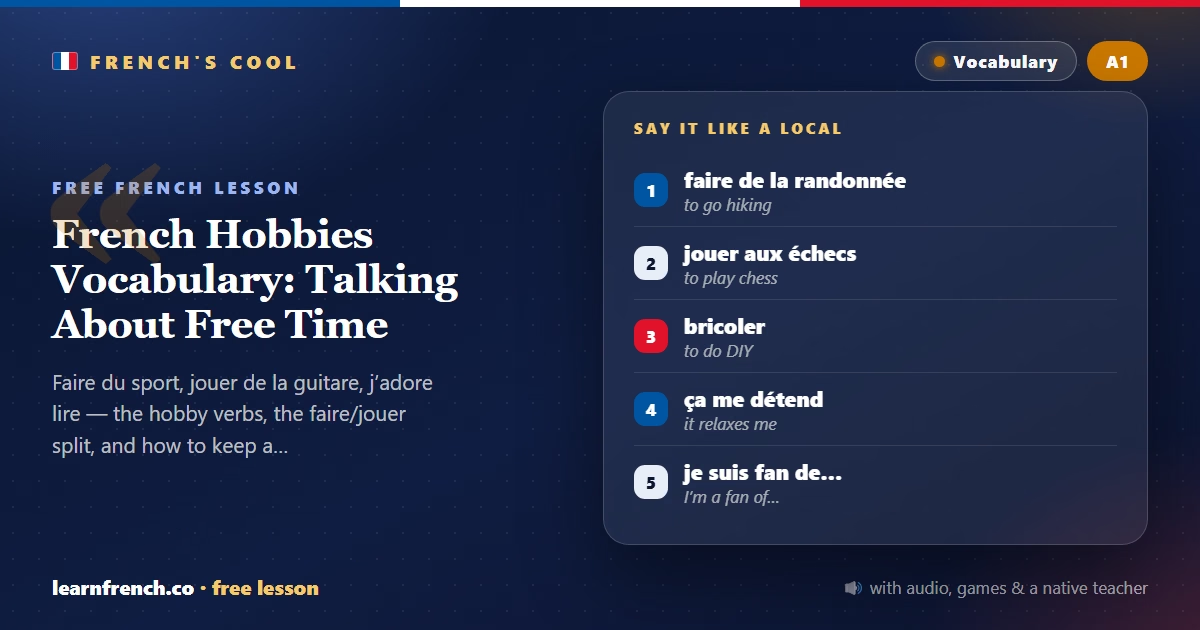
French Hobbies Vocabulary: Talking About Free Time
Faire du sport, jouer de la guitare, j’adore lire — the hobby verbs, the faire/jouer split, and how to keep a conversation going about les loisirs.
What you'll learn
« Qu’est-ce que tu fais pendant ton temps libre ? » After family and work, hobbies are the third pillar of small talk. The vocabulary is easy — the trick is picking the right verb.
🎾 Three prepositions run every hobby
jouer à + sport or game (je joue au foot), jouer de + instrument (je joue du piano), faire de + almost any activity (je fais de la natation). Pick the right one and the whole sentence falls into place.
🎬 This lesson in one minute
The quick version — the full lesson is below. More shorts →
The three hobby verbs
- faire de — activities and sports: faire du sport, de la natation, du yoga, de la randonnée
- jouer à — games and team sports: jouer au foot, aux échecs, aux jeux vidéo
- jouer de — instruments: jouer du piano, de la guitare
The verb-only hobbies
Some pleasures need no preposition at all — just the verb:
- lire — to read · cuisiner — to cook · dessiner — to draw
- voyager — to travel · jardiner — to garden · bricoler — to DIY
- regarder des séries — everyone’s honest answer
Saying how much you like it
Stack your enthusiasm — all take the infinitive or a noun:
- J’adore lire. → J’aime beaucoup → J’aime bien (mild!) → Je n’aime pas trop → Je déteste
- Je suis fan de jazz. · Ça me détend. — it relaxes me.
- Je m’y suis mis(e) l’année dernière. — I took it up last year.
Keep the conversation going
- « Tu en fais souvent ? » — Do you do it often?
- « Depuis quand ? » — Since when? (answer with depuis + present!)
- « On pourrait essayer ensemble ! » — We could try it together.
In real sentences
Read each one aloud, then tap 🔊 and shadow the audio — rhythm first, speed later.
Drill it: faire vs jouer · vocabulary charts · food vocabulary
✍️ Your turn: à, de or faire de?
Football: je joue ___ foot. (sport)
Show answer
au — jouer à + le foot contracts to au.
Piano: elle joue ___ piano. (instrument)
Show answer
du — jouer de + le piano contracts to du.
Swimming: je fais ___ natation. (activity)
Show answer
de la — faire de + la natation.
Why is it « elle joue du violon depuis dix ans » in the PRESENT? (depuis)
Show answer
French uses the present with depuis for something still going on — she still plays.
« I love reading » — two ways? (verb or noun)
Show answer
J’aime lire (verb) or j’aime la lecture (noun with its article — never drop the article).
FAQ
Faire du sport or jouer au sport?
Faire du sport = to do sport in general. Individual named team games take jouer à: jouer au foot, au tennis. Solo activities take faire de: faire de la natation. Full split: faire vs jouer.
Why « j’aime bien » is LESS than « j’aime »?
A famous French paradox: bien softens aimer. « Je t’aime bien » = I like you (as a friend). With hobbies same nuance: j’aime bien = it’s OK.
How do I say I’ve done it for 3 years?
« J’en fais depuis trois ans » — depuis + present tense: depuis, pendant, il y a.
How do I say I’m really into something?
Être fan de (je suis fan de jazz), être passionné de (informal to formal), or se mettre à for taking something up: je me suis mis à la guitare (I’ve taken up the guitar).
Is « faire du sport » a real phrase?
The most common one in French life — it means to exercise in general: je fais du sport trois fois par semaine. Name the sport only when it matters.
Quick practice
Play the Quiztap to start · quick practice from this material