Temps, Fois, Heure: Three French Words for “Time”
“What time is it?”, “three times”, “I don’t have time” — English recycles one word; French insists on three. Pick by asking WHAT KIND of time you mean: substance, occasion, or clock.
What you'll learn
“What time is it?”, “three times”, “I don’t have time” — English recycles one word; French insists on three. Pick by asking WHAT KIND of time you mean: substance, occasion, or clock.
⏳ English « time » splits three ways
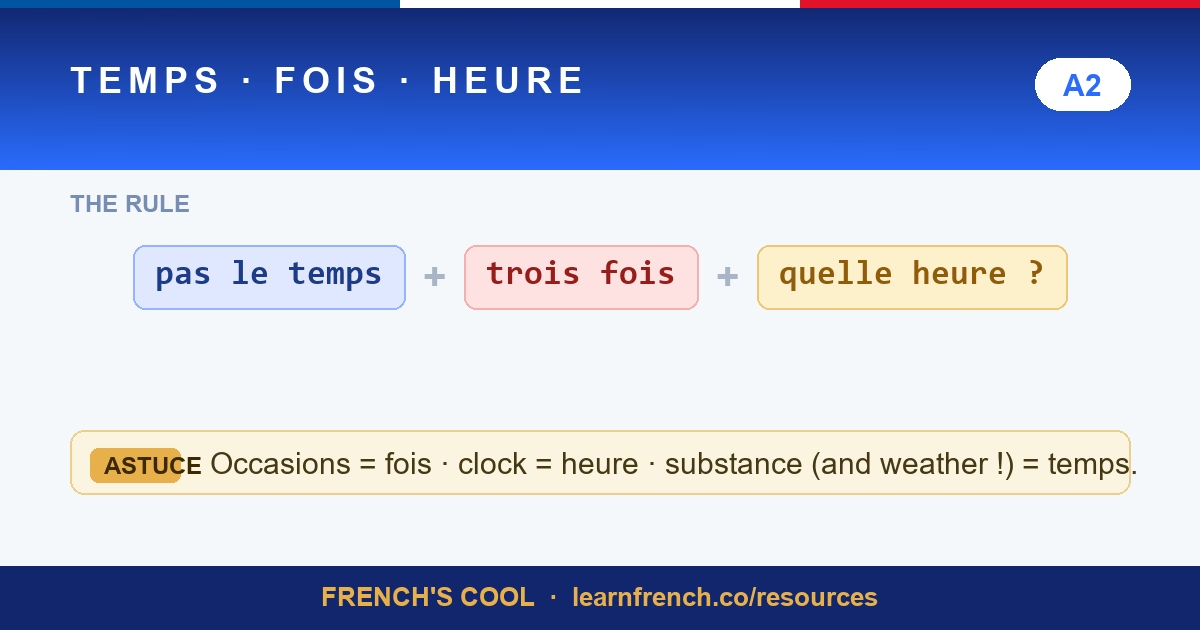
Le temps = time as substance you have or lack (j’ai le temps). Une fois = a countable occasion (trois fois). L’heure = clock time (quelle heure est-il ?). Choose by asking: substance, occasion, or clock?
🎬 This lesson in one minute
The quick version — the full lesson is below. More shorts →
Le temps — time as substance (and weather!)
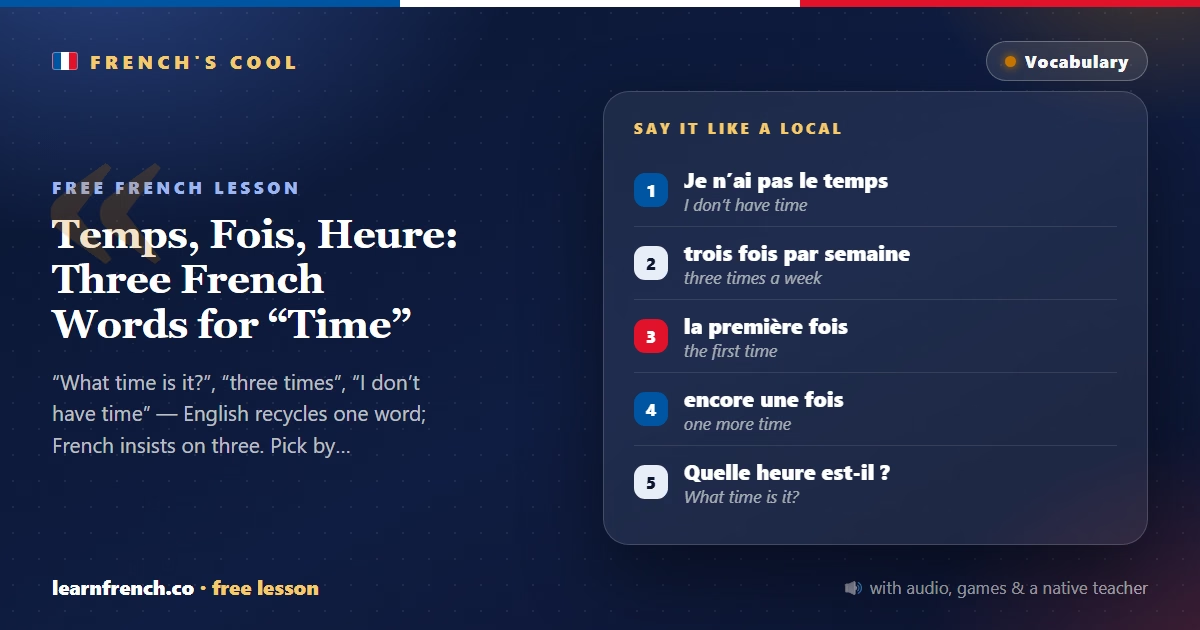
- Je n’ai pas le temps. — I don’t have time.
- Ça prend du temps. — It takes time. (Yes, time is partitive — you consume it like bread.)
- Quel temps fait-il ? — What’s the WEATHER like? French uses the same word for both.
Une fois — countable occasions
- trois fois par semaine — three times a week
- la première fois — the first time
- encore une fois — one more time
- Il était une fois… — once upon a time (every French fairy tale starts here)
Rule: if you could count it on your fingers, it’s fois. « Trois temps » is a waltz, not a repetition.
L’heure — clock time
- Quelle heure est-il ? — What time is it?
- à trois heures — at three o’clock
- être à l’heure — to be ON time (vs en retard, en avance)
- C’est l’heure ! — It’s time! (the bell has rung)
The sorter
| English | French | Why |
|---|---|---|
| I don’t have time | Je n’ai pas le temps | substance |
| three times | trois fois | countable occasion |
| What time is it? | Quelle heure est-il ? | clock |
| a long time | longtemps | one welded word! |
| at that time (era) | à cette époque(-là) | a fourth word for eras |
In real sentences
Read each one aloud, then tap 🔊 and shadow the audio — rhythm first, speed later.
Drill it: dates in French · telling the time · quel vs qu’est-ce que
✍️ Your turn: temps, fois or heure?
« I’ve seen it three times » = ? (occasions)
Show answer
Je l’ai vu trois fois.
« We had a great time » = ? (not temps!)
Show answer
On a passé un bon moment — a good time is un bon moment, never un bon temps.
« on time » vs « in time » = ? (à / à temps)
Show answer
À l’heure = on schedule; à temps = before it was too late (juste à temps !).
Il est temps de partir vs il est l’heure de partir — different? (deadline vs clock)
Show answer
Il est l’heure = the scheduled clock moment has come; il est temps = it’s high time, urgency regardless of the clock.
What ELSE does le temps mean? (look outside)
Show answer
The weather: quel temps fait-il ? Context always separates the two — and both are le temps.
FAQ
Why does French use the same word for time and weather?
Both descend from Latin tempus — the state of the moment. Context always disambiguates: avoir le temps vs quel temps fait-il.
How do I say « on time » vs « in time »?
À l’heure = on time (punctual); à temps = in time (before it’s too late): je suis arrivé juste à temps.
Is « fois » related to « une fois que »?
Yes — une fois que + clause = once (something happens): une fois que tu comprends, c’est facile.
Tell the time properly with the l’heure chart, browse more time words on les temps, and split day/année pairs in jour vs journée.
How do I say « once, twice, sometimes »?
Une fois, deux fois — and note parfois / des fois (informal) for sometimes, plus the classic story opener il était une fois : once upon a time.
Which one is in « longtemps » and « de temps en temps »?
Both build on temps the substance: longtemps = a long while, de temps en temps = from time to time. Learn them as single words — they never change form.
Quick practice
Play the Quiztap to start · quick practice from this material