French for Teenagers: Learn Through Music, Games and Group Chats
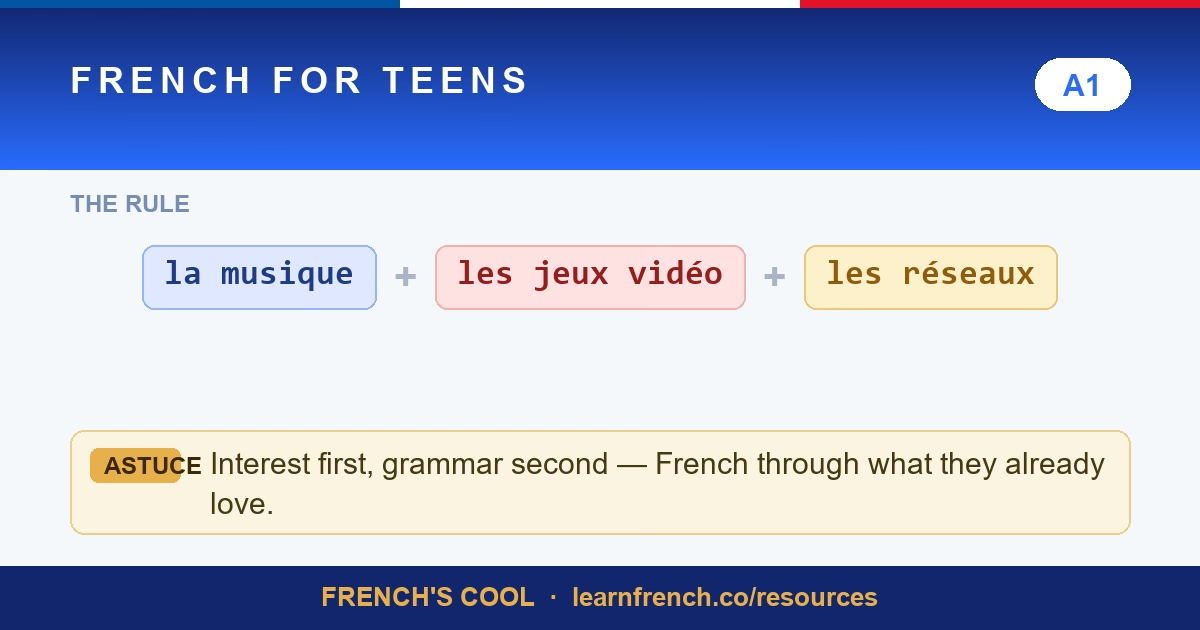
Teenagers don’t learn French from a grammar book — they learn it from the things they already love: music, YouTube, games and group chats. The trick is to point that energy at French . Here’s how a teen (or a parent helping one) can turn screen time into real progress — and where to start…
What you'll learn
Teenagers don’t learn French from a grammar book — they learn it from the things they already love: music, YouTube, games and group chats. The trick is to point that energy at French. Here’s how a teen (or a parent helping one) can turn screen time into real progress — and where to start on this site.
🎮 The mindset
You don’t need a “study session”. You need ten minutes of French inside something fun — a song, a game, a meme, a short video — every day. Consistency beats intensity.
1. Learn through music & video
Follow French creators and artists you’d actually watch. Our creators guide lists YouTubers and TikTokers made for learners, and the video lessons wrap real clips with key phrases and a quiz.
2. The French of the group chat
Texting French is its own language. Learn the big abbreviations and you can read any chat:
More natural spoken markers on the filler words page — genre, du coup, en fait, quoi.
3. Turn learning into a game
Our games are built to feel like games, not homework — and they secretly drill grammar and vocab:
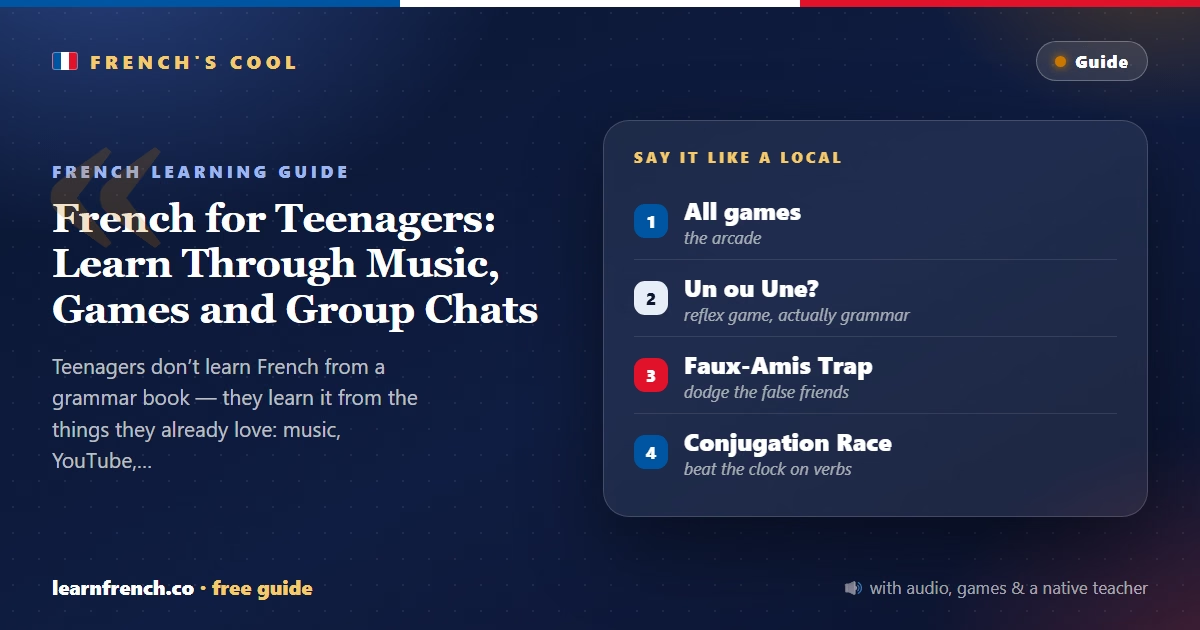
- All games — the arcade.
- Un ou Une? — reflex game, actually grammar.
- Faux-Amis Trap — dodge the false friends.
- Conjugation Race — beat the clock on verbs.
4. Slang that makes you sound your age
These are informal — perfect with friends, not in an exam. Know the difference with registres de langue.
5. When there’s an exam (brevet, bac, GCSE…)
School French still needs the basics solid. Point revision at: the present tense, the past tenses, faux-amis, and the by-level directory to work at the right difficulty.
✍️ Text-speak quiz
« mdr » means… (chat slang)
Show answer
LOL (mort de rire)
« tkt » means… (reassurance)
Show answer
don’t worry (t’inquiète)
« C’est ouf » is verlan for c’est… (backwards slang)
Show answer
fou (crazy)
Play the Quiztap to start · quick practice from this material
Loading the quiz…
What works for teens (and what they’ll actually stick with)
Teenagers are the best-kept secret of language learning: adult discipline hasn’t arrived yet, but adult cognition has — pattern-spotting, abstraction, irony — and when french lessons respect that, teens outpace everyone in the house. The method that works is interest-led input: whatever the teen already loves, in French. Gaming? French streamers and Discord servers. Music? A French playlist and lyrics decoded (rap français is a vocabulary course with a beat). Series? The subtitle ladder from our movies guide, applied to Lupin. This is language acquisition hiding inside a hobby, and it beats any textbook hour-for-hour because it never feels like homework — the learning experience IS the point. Add one structured anchor a week so the input organizes into grammar: an online french course or live class, 50 minutes on Zoom, fits between school and everything else — and the online environment is a feature here, not a compromise: teens talk MORE to a native teacher on a screen than across a classroom.
Give the effort a destination and motivation compounds: the DELF Junior (the official diploma in its school-age version) turns French from a subject into a credential — B1 by the end of lycée is a realistic, CV-ready goal, and French’s Cool prepares teens for exactly that arc with a native teacher who tailors sessions to the teen’s interests and learning style, not a fixed programme (the free trial exists so the fit can be tested before anyone commits). Parents’ role at this age is quartermaster, not co-pilot: supply the subscription, the class slot and the occasional French film night; skip the vocabulary quizzes at dinner. Critical thinking is the teen superpower — let them argue in French about things they care about, and fluency arrives disguised as opinion. The kids and teens who become bilingual are rarely the most drilled; they’re the ones for whom the french language ended up attached to identity — their music, their games, their future plans. Build that attachment and the french skills, language proficiency and exam results all follow; the online classes and french tutors are just the scaffolding around it.
FAQ
How can a teenager learn French fast?
Daily interest-led input (music, series, gaming in French) plus one weekly live class plus a DELF goal. Speed at this age comes from volume of contact, and volume comes from enjoyment.
Is online French tutoring effective for teens?
Often more than in-person: shorter sessions match attention spans, screens lower speaking inhibition, and scheduling survives school life. The teacher fit matters more than the format — hence trial lessons.
What are the 5 W’s in French?
Qui, quoi, où, quand, pourquoi — the interrogatives every DELF Junior speaking task leans on. A teen who can ask and answer all five about their weekend is exam-ready at A2.
What is “I love you” in French Canadian?
« Je t’aime », same as France — a fact your teen will verify against Québécois TikTok within the week.
How can teenagers learn French effectively?
Teenagers learn French fastest when study feels like their own idea, not homework. The winning mix is little-and-often practice, real immersion (music, series, group chats — see above) and just enough structure to build solid grammar. Start as a beginner with high-frequency words and the present tense, add a daily 10-minute habit, and speak French out loud from week one. Motivation is the real subject — tie French to something the teen already loves and the rest follows.
Do teens need a French class or a tutor?
You can absolutely learn a lot alone, but a french class or a private french tutor adds three things a teen rarely gets from an app: someone to speak French with, feedback that fixes mistakes early, and accountability. Your options:
- School French — great for grammar and exams, but often light on real speaking.
- Online French classes — flexible french courses a teen can join from home, ideal alongside school.
- A private tutor — the most personalized, tailored option; a good native French-speaking french teacher will tailor lessons to the teen’s level, interests and any exam.
- Self-study + resources — free charts, games and drills to power any of the above.
Whatever you choose, keep speaking central — a foreign language lives in the mouth, not the notebook. Explore our free learning resources to support classes, tutoring or solo study.
Preparing for a French exam (brevet, bac, GCSE)
Exam French rewards structure. Map the syllabus, drill the tenses examiners love (présent, passé composé, imparfait, futur), build topic vocabulary in sets, and practise speaking to a timer. A tutor who can tailor mock questions to the exact beginner-to-intermediate level speeds this up enormously. Our A1–B2 roadmap shows exactly what to master at each stage.
Learn French for teenagers FAQ
How can a teenager learn French?
Combine immersion (music, videos, subtitles) with a little daily structured practice, speak out loud early, and get feedback from a french teacher or french tutor where possible. Teens who tie French to their real interests — gaming, music, friends abroad — stay motivated far longer.
Can I learn French by myself at 15?
Yes. At 15 you can absolutely learn French solo with free resources, apps and lots of listening. You’ll progress faster with occasional speaking practice — a tutor, an exchange partner, or even reading aloud — but self-study gets you a long way. Start with our beginner first-steps guide.
What are the 5 W’s in French?
The core question words: qui (who), quoi/que (what), où (where), quand (when), pourquoi (why) — plus comment (how). Master these and a teen can ask about anything. Drill them in our asking-questions lesson.
🧢 Your teen starter pack
Fun first — the pages teens actually enjoy:
🎯 More practice — translation — put it into French
Translate into French: « I love this song! (slang) » (translation)
Show answer
Je kiffe cette chanson !
Translate into French: « Did you see the video? It’s so funny. » (translation)
Show answer
Tu as vu la vidéo ? Elle est trop drôle.
Translate into French: « LOL (dying of laughter) » (translation)
Show answer
mdr = mort de rire
Translate into French: « idk / dunno » (translation)
Show answer
jsp = je sais pas
Translate into French: « please » (translation)
Show answer
stp / svp = s’il te / vous plaît
Need a boost before an exam? Book a free lesson with Xavier →
🎮 Practise this lesson
Games built from this exact page — turn what you just read into play:
🧩 Sentence Builder rebuild these sentences
🎧 Listening Game which sentence do you hear?
🎬 This article in 20 seconds
The quick version — the full detail is below. More shorts → Open this short as a page — transcript included →