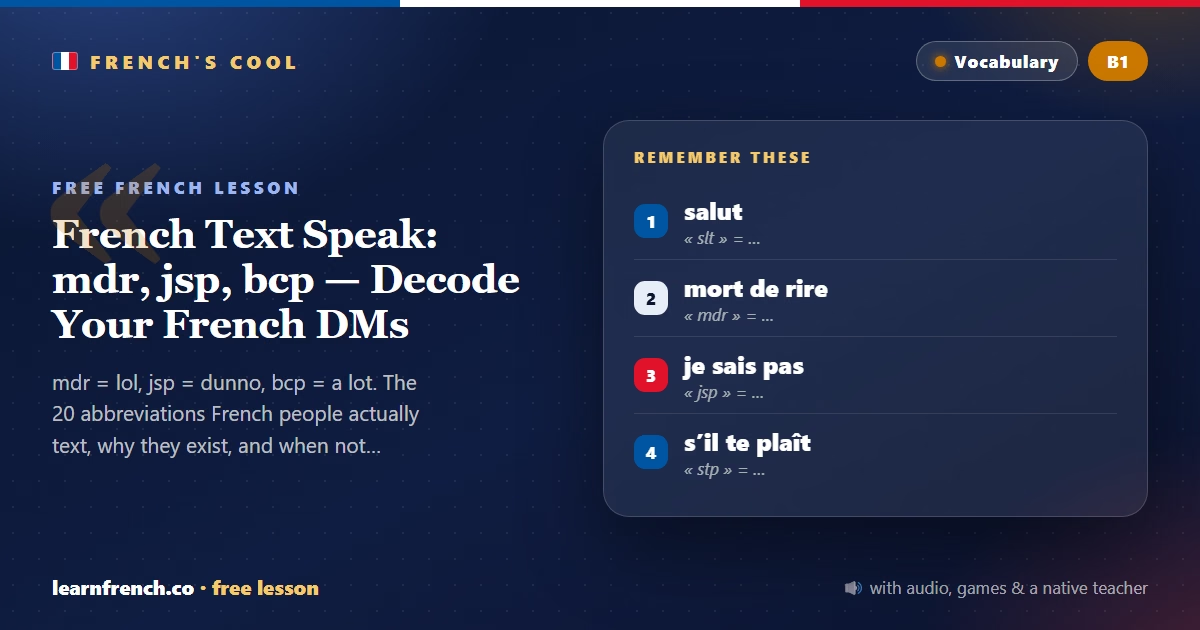
French Text Speak: mdr, jsp, bcp — Decode Your French DMs
mdr = lol, jsp = dunno, bcp = a lot. The 20 abbreviations French people actually text, why they exist, and when not to use them.
What you'll learn
Your first real French DM will look like a cat walked on the keyboard: « slt, jsp si g le tps auj, dsl mdr ». That’s normal French texting — and it runs on rules you can learn in ten minutes. Here’s the decoder.
📱 Spell the sound, not the word
French text-speak shrinks words to their sounds: c = c’est, t = t’es, koi = quoi, bcp = beaucoup, slt = salut, mdr = mort de rire (the French LOL). Read them aloud and the sentence reappears.
🎬 This lesson in one minute
The quick version — the full lesson is below. More shorts →
The essentials
| Texto | Full French | English |
|---|---|---|
| mdr | mort de rire | lol (“dead from laughing”) |
| ptdr | pété de rire | lmao |
| slt | salut | hi |
| bcp | beaucoup | a lot |
| jsp | je sais pas | dunno |
| jpp | j’en peux plus | I can’t even |
| tkt | t’inquiète | don’t worry |
| stp / svp | s’il te/vous plaît | please |
| dsl | désolé(e) | sorry |
| auj | aujourd’hui | today |
The sound-spelling tricks
Half of texto is phonetics, not abbreviation. Letters are read by their NAMES: c = c’est, g = j’ai (both sound right when read aloud!), t = t’es. Numbers join in: 2m1 = demain, a12c4 = à un de ces quatre (see you around). And spelling relaxes: koi = quoi, oé = ouais, jamé = jamais.
Grammar in fast-forward
Real texting French is spoken French written down: the ne of negation vanishes (« je sais pas » → jsp), e muet drops exactly like in speech (« j’suis » — the pattern from our e muet lesson), and question marks do all the work: « tu viens ? »
When NOT to use it
Texto lives in DMs and group chats between friends. Emails to your prof, message to your landlord, anything work-related: full sentences, full words. French formality survives digitization — a « slt » to the wrong person lands like a wink at a funeral.
In real sentences
Read each one aloud, then tap 🔊 and shadow the audio — rhythm first, speed later.
Drill it: spoken fillers · typing French accents · French small talk
✍️ Your turn: decode the message
Decode: « mdr » (the French LOL)
Show answer
mort de rire — dying of laughter. Stronger: ptdr (pété de rire).
Decode: « dsl jpe pa ce soir » (two words shrunk)
Show answer
Désolé, je (ne) peux pas ce soir — sorry, can’t tonight.
What does « a+ » close a message with? (à plus)
Show answer
See you later — short for à plus tard.
« c », « s’est », « sait » — why can texters write just c? (homophones)
Show answer
All sound /sɛ/ — text-speak collapses spelling into sound; context restores the grammar.
Should you write « koi » to your French teacher? (register)
Show answer
No — text-speak is for DMs between friends. To teachers, bosses or offices, write full words (autocorrect has made this the norm anyway).
FAQ
Do French people still write « mdr » or is it dated?
Alive and universal. Ptdr is the stronger variant; jpp adds exasperated affection. LOL itself is understood but reads slightly 2010.
What does « wesh » mean?
A greeting from Arabic via French rap — « wesh, ça va ? ». Very informal, very common among younger speakers. Use with friends only.
How do I type French accents on my phone?
Long-press the letter (a → à, e → é è ê). In texto, accents are optional anyway — « ca va etre bien » raises zero eyebrows in a DM.
Is text-speak dying out because of autocorrect?
The extreme forms (kestufé) have faded — phones type for people now. But the core set (slt, dsl, bcp, jtm, mdr, a+, tkt = t’inquiète) is alive in every French group chat and comment section. You need to READ it fluently; writing it is optional.
What is the difference between mdr and lol?
None in meaning — French teens use both, plus ptdr when it is really funny and xptdr beyond that. Reply with any of them and you will fit right in.
Quick practice
Play the Quiztap to start · quick practice from this material
Keep going: Text-speak’s spoken cousin is argot: French slang 101.