French Small Talk: What to Actually Say After Bonjour
You’ve mastered bonjour — but then what? French small talk is almost entirely formulaic. The ça-va ritual, safe opening topics, the little reaction words that keep a chat going, and how to exit politely. With audio and a quiz.
What you'll learn
You’ve mastered « Bonjour ». The door is open — but then the French person says « Ça va ? » and your mind goes blank. Good news: small talk in French is almost entirely formulaic. Learn these ready-made bricks and you can hold a friendly exchange from « bonjour » to « bonne journée » without improvising a single word.
🎬 This lesson in one minute
The quick version — the full lesson is below. More shorts →
1. The « Ça va ? » ritual
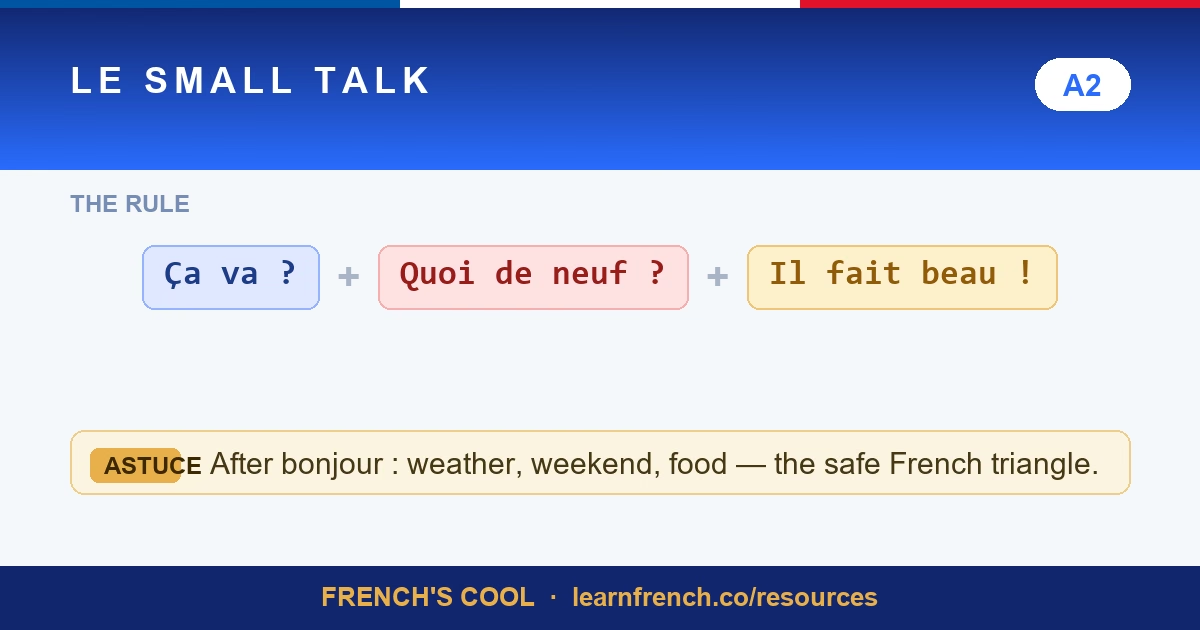
« Ça va ? » is less a real question than a greeting — the expected answer is short and positive, then you bounce it back:
2. Safe topics to open with
Weather, the weekend, and light compliments are the universal ice-breakers:
3. Little words that keep it going
French conversation runs on tiny reactions. Sprinkle these and you sound engaged:
More of these on the filler words page — the secret to sounding natural.
4. Exiting without being rude
Don’t just stop — the French « close » a conversation. « Bon » is the magic signal that you’re wrapping up:
Ready for the full first-conversation playbook? Read your first French conversation.
✍️ Small-talk check
« Ça va ? » — the expected reply is… (the ritual)
Show answer
« Ça va, et toi ? » (short & positive)
« Quoi de neuf ? » means… (greeting)
Show answer
What’s new?
The word that signals you’re wrapping up a chat is… (exit)
Show answer
« Bon… »
Play the Quiztap to start · quick practice from this material
Loading the quiz…
The phrase bank: openers, bridges and graceful exits
French actually has a phrase for small talk — « parler de la pluie et du beau temps », talking about rain and good weather — and that self-aware joke tells you topic one. Here is the bank that carries everyday conversations, whether you’re a complete beginner or polishing fluency. Openers beyond bonjour: « Quoi de neuf ? » (what’s new — informally), « Vous passez une bonne journée ? », at the café « Il fait beau aujourd’hui, non ? » — weather remains the universal key. Bridges — the noises that show interest and keep the other person talking: « Ah bon ? » (really?), « C’est vrai ? », « Et alors ? » (and then?), « Dites-moi tout » (tell me everything). French conversation is a ping-pong of these; mastering them matters more than any vocabulary list because they buy you listening time while sounding engaged.
Topics that work: food (always), current events of the light kind, the neighbourhood, holidays — « Vous partez où cet été ? » is a national sport. Topics to dodge with strangers: salary, politics at first meeting, and « ça va ? » ambushes deeper than people want — keep answers at « ça va bien, merci, et vous ? ». Exits: saying goodbye smoothly is the most underrated skill in a new language — « Bon, je vous laisse » (right, I’ll let you go), « Bonne continuation ! », « À bientôt, j’espère ». Add the politeness glue (s’il vous plaît, merci beaucoup, je voudrais…) and a couple of softeners — « peut-être », « je dirais » — and you can hold the middle of any exchange with french friends or strangers. The trick to feel confident: pre-load three bridges and one exit before any event, en français, out loud. Small talk is a script with slots — and unlike french slang or courant idioms, this register never goes out of style.
FAQ
What is the French expression for small talk?
« Parler de la pluie et du beau temps » — to talk of rain and fine weather. You’ll also hear « les banalités » (pleasantries) and the borrowed « le small talk » in office French.
What are some useful phrases for small talk?
Quoi de neuf ?, Ça se passe bien ?, Ah bon ?, C’est vrai ?, Vous êtes d’ici ?, Bon je vous laisse, Bonne journée. Seven phrases, any queue in France.
What are some cool French phrases?
« Ça roule » (all good), « c’est parti » (here we go), « n’importe quoi ! » (nonsense!), « ça marche » (works for me) — casual, current, and safe with anyone under seventy.
What is the 80/20 rule in French?
Twenty percent of the language does eighty percent of the talking — and small talk is the purest case: a few dozen phrases cover nearly every casual exchange you’ll ever have.
French small talk phrases by situation
These French phrases for making small talk work whether you know the person or not. Match the register: use vous in formal settings and tu when it is informal. Master these basic French lines and the French greetings below and you can carry any short exchange.
Good small talk is mostly a handful of reusable phrases you swap in by context. Here are the openers that keep a light conversation going after « bonjour »:
| Situation | French phrase | English |
|---|---|---|
| At work | Ça se passe bien, ta matinée ? | Morning going well? |
| With a neighbour | Beau temps aujourd’hui, non ? | Nice weather today, isn’t it? |
| Weekend talk | T’as passé un bon week-end ? | Did you have a good weekend? |
| Meeting someone | Vous venez d’où ? Moi, je suis de Toronto. | Where are you from? Me, I’m from Toronto. |
| Keeping it going | Ah bon ? Et alors ? | Oh really? And then? |
| Wrapping up | Bon, je vais y aller. | Right, I’m going to head off. |
Talk about the weather — the safest topic
Just like in English, the weather (la météo) is the universal safe opener. « Il fait beau ! » (it’s lovely), « Il fait un froid de canard » (it’s freezing — literally « duck cold »), « Quel temps de chien ! » (awful weather). Weather small talk is low-stakes, always relevant, and gives you time to warm up before a real conversation.
Filler words that make you sound natural
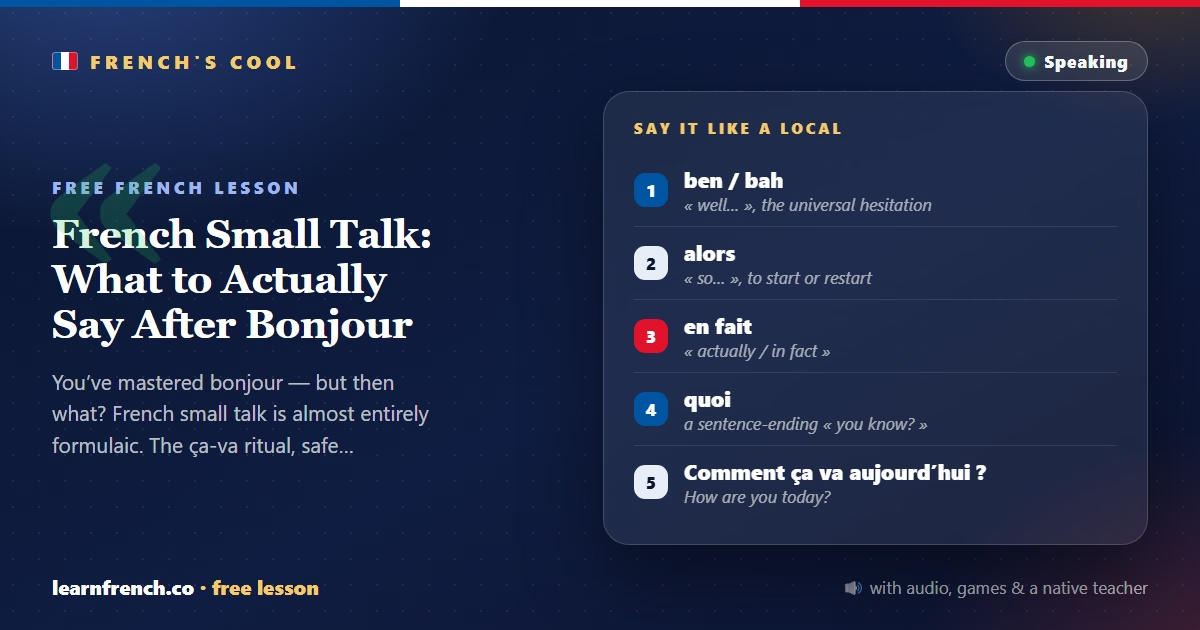
What separates a textbook learner from someone who sounds like a native is the little filler words. Sprinkle these and your French instantly loosens up:
- ben / bah — « well… », the universal hesitation.
- alors — « so… », to start or restart.
- du coup — « so / as a result », wildly overused by real French people.
- en fait — « actually / in fact ».
- quoi — a sentence-ending « you know? ».
- voilà — « there you go », to round something off.
Practise dropping them into sentences on the vocabulary charts.
French small talk FAQ
How do you make small talk in French?
Greet first (« bonjour »), ask a light question about the weather, the weekend or how things are going, react with « ah bon ? », then exit politely with « bonne journée ! ». Keep topics safe and let the other person talk — that’s the whole small talk formula.
What topics are safe for small talk in France?
Weather, food, weekend plans, holidays, sport and culture are all safe. Avoid money, salary and overly personal questions early on — they’re considered private in French conversation. Politics is fine among friends but risky with strangers.
How do I sound more natural in French conversation?
Use filler words (ben, du coup, en fait, quoi), react out loud, and don’t over-explain. Native speakers keep small talk short and rhythmic. Shadow real dialogue and the first-conversation lesson to build the reflex.
15 ready-to-use French small talk phrases
Keep these common French phrases ready and you will never be stuck for something to say:
- Comment ça va aujourd’hui ? — How are you today?
- Ça fait longtemps ! — Long time no see!
- Quoi de neuf ? — What’s new?
- Tu as passé une bonne journée ? — Did you have a good day?
- Il fait beau, hein ? — Nice weather, right?
- Comme le temps passe vite ! — How time flies!
- Je suis d’accord. — I agree.
- C’est vrai ? — Is that true / really?
- Tu fais quoi ce week-end ? — What are you doing this weekend?
- On se voit bientôt ? — Shall we meet up soon?
- Où est-ce que tu habites ? — Where do you live?
- Je dois y aller, désolé(e). — I have to go, sorry.
- Ravi(e) de t’avoir vu(e) ! — Great to have seen you!
- Passe le bonjour à… — Say hi to… for me.
- Bonne continuation ! — All the best (going forward)!
🧰 Your small-talk toolkit
Everything to chat from bonjour to bonne journée:
🎯 More practice — translation — put it into French
Translate into French: « How’s it going? — Good, and you? » (translation)
Show answer
Ça va ? — Ça va, et toi ?
Translate into French: « How are you? (formal) — Very well, thanks. » (translation)
Show answer
Comment allez-vous ? — Très bien, merci.
Translate into French: « What’s new? — Not much! » (translation)
Show answer
Quoi de neuf ? — Pas grand-chose !
Translate into French: « Nice weather today, isn’t it? » (translation)
Show answer
Il fait beau aujourd’hui, hein ?
Translate into French: « Did you have a good weekend? » (translation)
Show answer
Tu as passé un bon week-end ?
Want to practise real conversations out loud? Book a free lesson with Xavier →
🎮 Practise this lesson
Games built from this exact page — turn what you just read into play:
🧩 Sentence Builder rebuild these sentences
🎧 Listening Game which sentence do you hear?
Keep going: Weather is small-talk fuel — get the forecast vocabulary in French weather expressions.
Keep going: Sound human while you chat: the fillers and interjections natives actually use.