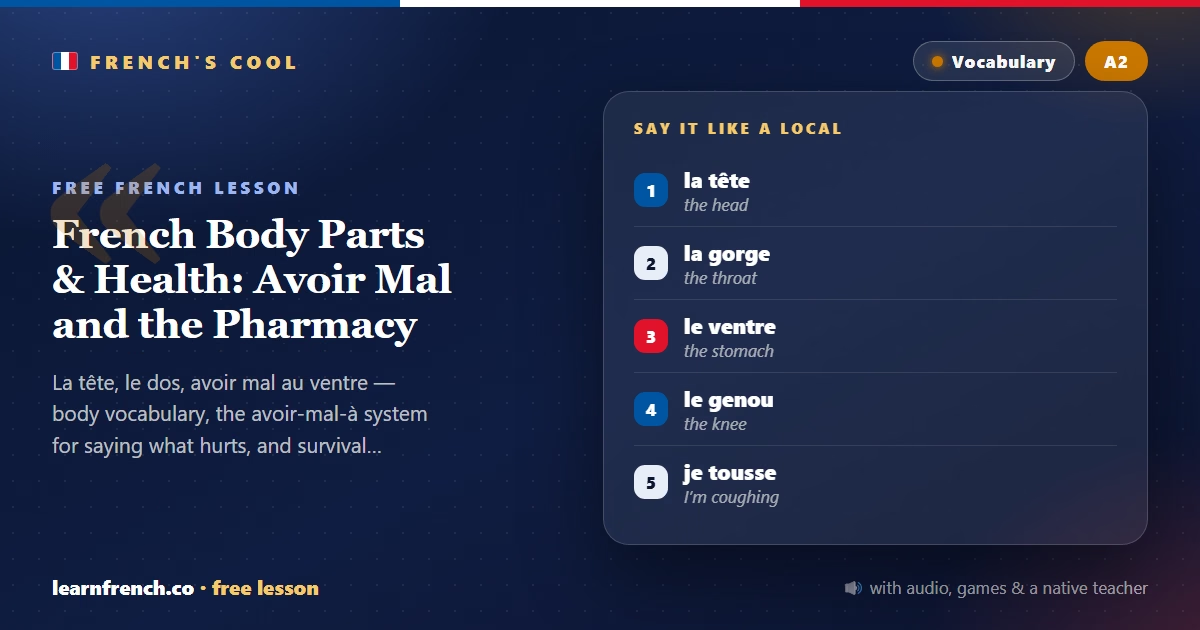
French Body Parts & Health: Avoir Mal and the Pharmacy
La tête, le dos, avoir mal au ventre — body vocabulary, the avoir-mal-à system for saying what hurts, and survival French for the pharmacy and doctor.
What you'll learn
One structure runs all French pain: avoir mal à + body part. Learn the body, plug it into the machine, and you can handle a pharmacy, a doctor, or a French friend’s sympathy.
🎬 This lesson in one minute
The quick version — the full lesson is below. More shorts →
The body, top to bottom
- la tête — head · les yeux — eyes (one: un œil!) · la gorge — throat
- le dos — back · le ventre — stomach · le cœur — heart
- le bras — arm · la main — hand · le doigt — finger
- la jambe — leg · le genou — knee · le pied — foot
Avoir mal à — the pain machine
À contracts with the article, so watch the gender:
- J’ai mal à la tête. — I have a headache.
- J’ai mal au ventre. — My stomach hurts. (à + le = au)
- J’ai mal aux dents. — My teeth hurt. (à + les = aux)
- J’ai mal partout. — Everything hurts.
Note the French logic: no possessive. Not « ma tête me fait mal » in everyday speech — just j’ai mal à la tête.
At the pharmacy — your first stop
French pharmacists give real medical advice; for small things you go there, not to the doctor.
- « J’ai de la fièvre. » — I have a fever.
- « Je tousse. » — I’m coughing. · « Je suis enrhumé(e). » — I have a cold.
- « Vous avez quelque chose contre le mal de tête ? » — Do you have something for headaches?
- « Il me faut une ordonnance ? » — Do I need a prescription?
Chez le médecin
« Où avez-vous mal ? » (where does it hurt?) — answer with the machine. « Depuis quand ? » (since when?) — « Depuis deux jours. » Remember chez + person: chez le médecin, chez le dentiste.
The grammar of the body: why it’s LES dents, not MES dents
The strangest thing about body vocabulary for English speakers is not the words — it is the grammar. Where English uses a possessive adjective (“I brush my teeth”), nouns in French for the body take the definite article: « je me brosse les dents ». The reflexive pronoun already says whose body it is, so French drops the possessive. The same logic drives reflexive verbs like se laver les mains and se casser la jambe — one of the patterns that makes authentic French sound native, and native French speakers never get it wrong.
Every noun also carries a gender, and the body splits between masculine and feminine with no logic to rescue you — each French word must be memorized with its article:
- Head and face — la tête, le visage (face), le nez (nose), la bouche (mouth), les oreilles (ears), les yeux (one œil, plural yeux — the strangest plural in the French language).
- Upper body — l’épaule, le bras, la main, le dos, la poitrine.
- Lower body parts — la jambe (leg), le genou, le pied, les jambes for both legs.
- Internal body parts — le cœur, l’estomac, le cerveau (brain), les poumons (lungs): the anatomy in French a doctor’s questions will use.
These are the main body parts — the basic vocabulary that covers the pharmacy, the doctor’s office and everyday French conversation. Different parts follow in time; start with these twenty and the example sentences above, and this corner of French vocabulary is yours in a week. Learners in a French-speaking country pick this set up fastest for a simple reason: it comes up every single day, and it is the vocabulary in French that unlocks describing how you feel — the first genuinely fluent thing most people learn to do.
Test yourself with the video lesson
After the quiz below, watch any French body parts video lesson with the sound off and name each part aloud before the speaker does — an old trick from language learning classrooms that works because recall beats recognition. Human body vocabulary sticks fastest when your own body is the flashcard: tap your nose and say le nez, point at your face parts in the mirror — visage, bouche, oreilles — until the words for the french body come without translation.
FAQ
What are the names of the 20 body parts?
The twenty above: tête, visage, nez, bouche, oreilles, yeux, épaule, bras, main, dos, poitrine, jambe, genou, pied, cœur, estomac, cerveau, poumons, plus les dents (teeth) and les cheveux (hair).
What is leg called in French?
« La jambe » — feminine. Both legs: les jambes. “I broke my leg” is « je me suis cassé la jambe » — definite article, not possessive.
What are 12 parts of the body?
A good starter twelve: la tête, le nez, la bouche, les yeux, les oreilles, le bras, la main, le dos, la jambe, le genou, le pied, le cœur.
What is anatomy in French?
« L’anatomie » — feminine. Medical French borrows heavily from Latin, so french body parts in a hospital setting often resemble their English anatomy cousins.
Why « au » in « mal au dos »?
À + le contracts to au: mal au dos, mal au ventre. Feminine keeps à la: mal à la gorge. The system is in à vs de.
« Je suis malade » or « j’ai mal »?
J’ai mal = something hurts. Je suis malade = I’m ill. A headache doesn’t make you malade — French keeps them separate.
Why « chez » le médecin?
Chez + person = at their place/practice: chez in French covers this lovely little word.
Quick practice
Play the Quiztap to start · quick practice from this material
📊 Chart it: Drill the body with audio: le corps vocabulary chart.