À vs De: The Two Little Prepositions That Run French
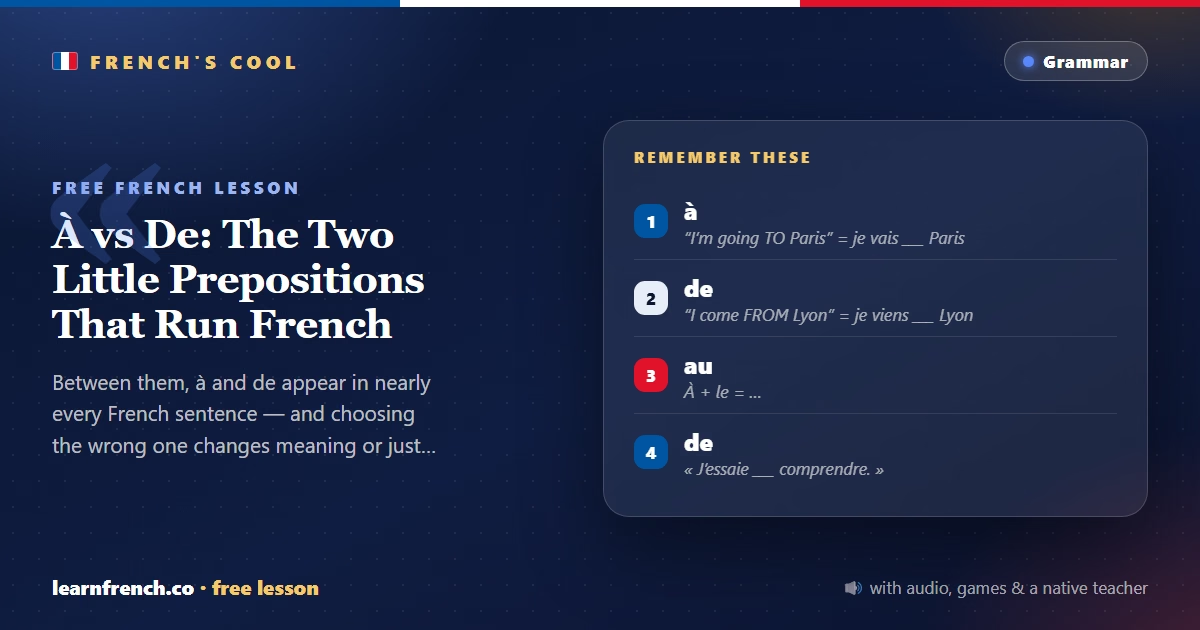
Between them, à and de appear in nearly every French sentence — and choosing the wrong one changes meaning or just sounds off.
What you'll learn
Between them, à and de appear in nearly every French sentence — and choosing the wrong one changes meaning or just sounds off. There’s logic underneath: à points TOWARD things; de points AWAY from them.
🧭 à points toward, de comes from
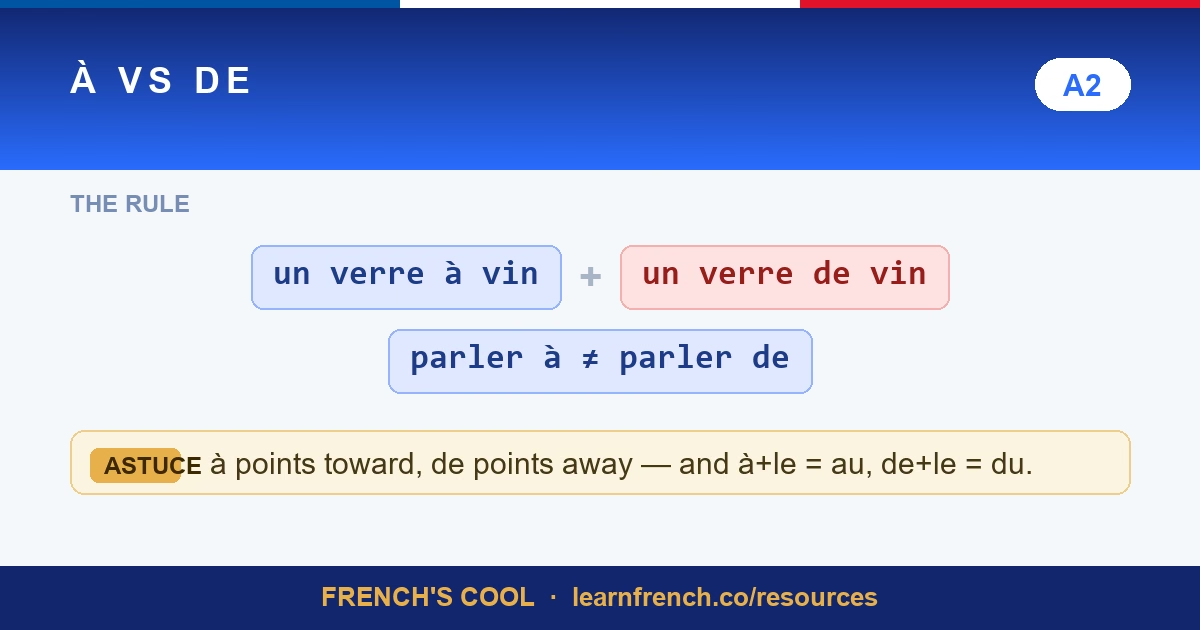
À aims at a destination, position or recipient: je vais à Paris, à midi, à toi. De marks origin, possession and content: je viens de Lyon, le vélo de Marc, un verre de vin. And the contractions are law: à+le=au, à+les=aux, de+le=du, de+les=des.
🎬 This lesson in one minute
The quick version — the full lesson is below. More shorts →
The core intuition
| à = toward / at | de = from / of | |
|---|---|---|
| Place | Je vais à Paris. | Je viens de Paris. |
| Ownership | Ce livre est à moi. | le livre de Marie |
| Purpose vs content | un verre à vin (a WINE glass) | un verre de vin (a glass OF wine) |
| Recipient | Je parle à Paul. | Je parle de Paul. |
That last row is worth the whole lesson: parler à = talk TO, parler de = talk ABOUT. Mixing them up gets you gossiping instead of chatting.
The contractions (non-negotiable)
à + le = au, à + les = aux, de + le = du, de + les = des. Never « à le cinéma » — always au cinéma, aux États-Unis, du bureau. (Yes, that du is the same one from the partitive articles.)
Verbs that demand one or the other
- + à : commencer à, réussir à, apprendre à, penser à (think of), jouer à (games/sports)
- + de : essayer de, décider de, finir de, rêver de, jouer de (instruments), avoir envie de
There’s no universal rule for these — learn each verb WITH its preposition, like a surname. « Commencer à », never plain « commencer » + infinitive.
In real sentences
Read each one aloud, then tap 🔊 and shadow the audio — rhythm first, speed later.
Drill it: the à / de chart · chez in French · en vs y
✍️ Your turn: à or de?
à + le marché = ? (contraction)
Show answer
au marché — à le does not exist in French.
« my brother’s bike » = ? (possession runs backwards)
Show answer
Le vélo de mon frère — French says the bike OF my brother, always.
commencer ___ / essayer ___ + infinitive? (verb pairs)
Show answer
Commencer À, essayer DE — verb-preposition pairs are vocabulary: learn the verb WITH its preposition.
Une tasse de thé vs une tasse à thé — different? (content vs purpose)
Show answer
De = content (a cup of tea, full); à = purpose (a teacup, possibly empty). Same with un verre à vin / un verre de vin.
Penser à vs penser de = ? (two meanings)
Show answer
Penser à = have in mind (je pense à toi); penser de = have an opinion of (qu’est-ce que tu penses de ce film ?).
FAQ
Why is it « en France » but « au Japon »?
Country gender: feminine countries (and those starting with a vowel) take en — en France, en Italie; masculine ones take au — au Japon, au Canada; plurals take aux — aux États-Unis.
Une tasse à café or une tasse de café?
Both exist! à = what it’s FOR (a coffee cup, possibly empty), de = what’s IN it (a cup of coffee). Order une tasse de café; buy une tasse à café.
What is the best way to learn verb + preposition pairs?
In example sentences, never as bare lists — j’apprends à parler français sticks; “apprendre à” doesn’t. The à vs de chart gives you one sentence per verb.
See also en and y — the pronouns that replace à and de phrases once you’ve mastered them.
How am I supposed to memorise which verbs take à and which take de?
Not from a list — in chunks. Learn commencer à faire, essayer de faire, réussir à, décider de as single breath-units, the way you learned the words themselves. Ten high-frequency chunks cover most real sentences.
Why do I hear « des » everywhere — is it always de + les?
Two different des share one face: the contraction de + les (je parle des voisins = about the neighbours) and the plural article (j’ai des voisins = I have neighbours). Context separates them; the grammar police accept both without asking.
Quick practice
Play the Quiztap to start · quick practice from this material
Keep going: Once the preposition is right, replace the noun: le, la, les or lui, leur?