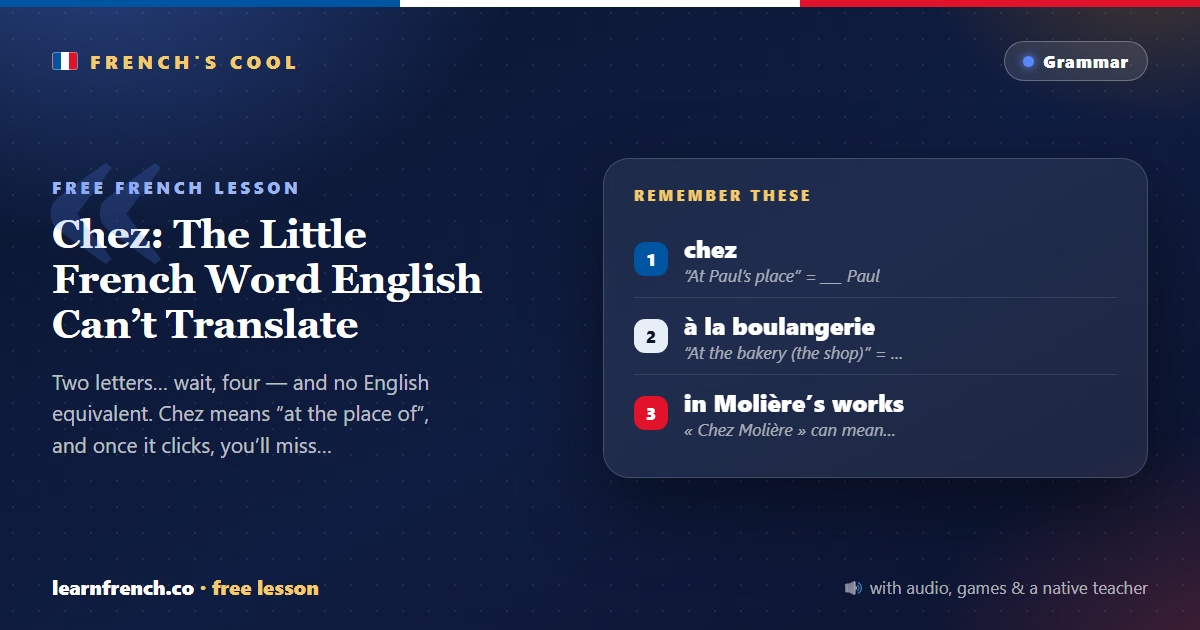
Chez: The Little French Word English Can’t Translate
Two letters… wait, four — and no English equivalent. Chez means “at the place of”, and once it clicks, you’ll miss it in every other language.
What you'll learn
Two letters… wait, four — and no English equivalent. Chez means “at the place of”, and once it clicks, you’ll miss it in every other language. From Latin casa (house), it turns any PERSON into a location.
🏠 chez + person, never chez + place
Chez means « at the place of » a PERSON: chez moi, chez mes parents, chez le médecin — and by extension a shop named by its keeper (chez le boulanger) or someone’s character (c’est typique chez lui). A place name takes à: à Paris, jamais chez Paris.
🎬 This lesson in one minute
The quick version — the full lesson is below. More shorts →
Use 1: someone’s home
- chez moi — at/to my place: On va chez moi ?
- chez Paul — at Paul’s: Le dîner est chez Paul.
- chez mes parents — J’habite encore chez mes parents. (a whole demographic in one phrase)
- Faites comme chez vous ! — Make yourself at home.
Use 2: professionals
People-shaped businesses take chez: chez le médecin, chez le coiffeur, chez le dentiste. Place-shaped businesses take à: à la pharmacie, à la boulangerie, au supermarché. Rule of thumb: if you’d name the PERSON, use chez — a whole visit’s worth of vocabulary lives on the chez le médecin chart.
Use 3: companies and restaurants
Il travaille chez Renault, elle est chez Google — companies are treated as people’s houses. Restaurants monetised the warmth long ago: Chez Marcel, Chez Julien… every French town has one.
Use 4: “in the world of”
The elegant literary use: chez Proust, la mémoire est centrale (in Proust’s work); chez les Français, le déjeuner est sacré (among the French); c’est rare chez les enfants (in children). One preposition, instant sophistication.
In real sentences
Read each one aloud, then tap 🔊 and shadow the audio — rhythm first, speed later.
Drill it: à vs de · en vs y · food & meals
✍️ Your turn: chez or à?
« at my place » = ? (the classic)
Show answer
chez moi — chez + stressed pronoun (moi, toi, lui, elle, nous, vous, eux).
« to the bakery » — two ways? (shop or shopkeeper)
Show answer
À la boulangerie (the place) or chez le boulanger (the person) — both natural, same errand.
« I’m going to Paris » = chez Paris? (place name)
Show answer
No — je vais à Paris. Chez needs a person behind it.
What does « c’est fréquent chez les enfants » mean? (extended use)
Show answer
It’s common among/in children — chez covers a group’s character, even an author’s style: chez Molière.
« back home » after a trip = ? (rentrer)
Show answer
Rentrer chez soi — and note the generic soi: chacun rentre chez soi.
FAQ
Chez moi or à la maison?
Nearly interchangeable for home: je rentre chez moi = je rentre à la maison. Chez moi is personal (MY place); à la maison is the household. Only chez works for other people’s homes: chez Léa, never « à la maison de Léa ».
Can chez take a pronoun?
The stressed ones: chez moi, chez toi, chez lui, chez elle, chez nous, chez vous, chez eux. « Chez nous » often stretches to mean “back home / in my country”.
Is « aller au coiffeur » wrong?
Traditionally yes — people take chez: chez le coiffeur. You’ll hear au coiffeur in the street; exams and careful speakers keep chez.
Where chez ends, à and de begin: the full system is in à vs de, with the city-navigation words on the directions chart.
Why are so many restaurants called Chez Something?
Because chez + name literally means « at X’s place » — Chez Marcel promises you are eating at Marcel’s own table. The warmth of the preposition is the marketing.
Is there a difference between chez le médecin and au cabinet médical?
Same visit, different framing: chez le médecin names the person (usual in speech), au cabinet names the premises (admin flavour). Doctors, dentists, hairdressers — French prefers the person.
Quick practice
Play the Quiztap to start · quick practice from this material
Keep going: Chez le médecin, chez le dentiste — see the word at work in body parts & health French.