Gens, Personnes, Monde: How to Say “People” in French
English has one word for “people”; French spreads the job across three — and picks them by COUNTING. Les gens can’t be counted, personnes exists to be counted, and du monde measures the crowd.
What you'll learn
English has one word for “people”; French spreads the job across three — and picks them by COUNTING. Les gens can’t be counted, personnes exists to be counted, and du monde measures the crowd. Here’s the sorting machine.
🔢 If you can count them, they are personnes
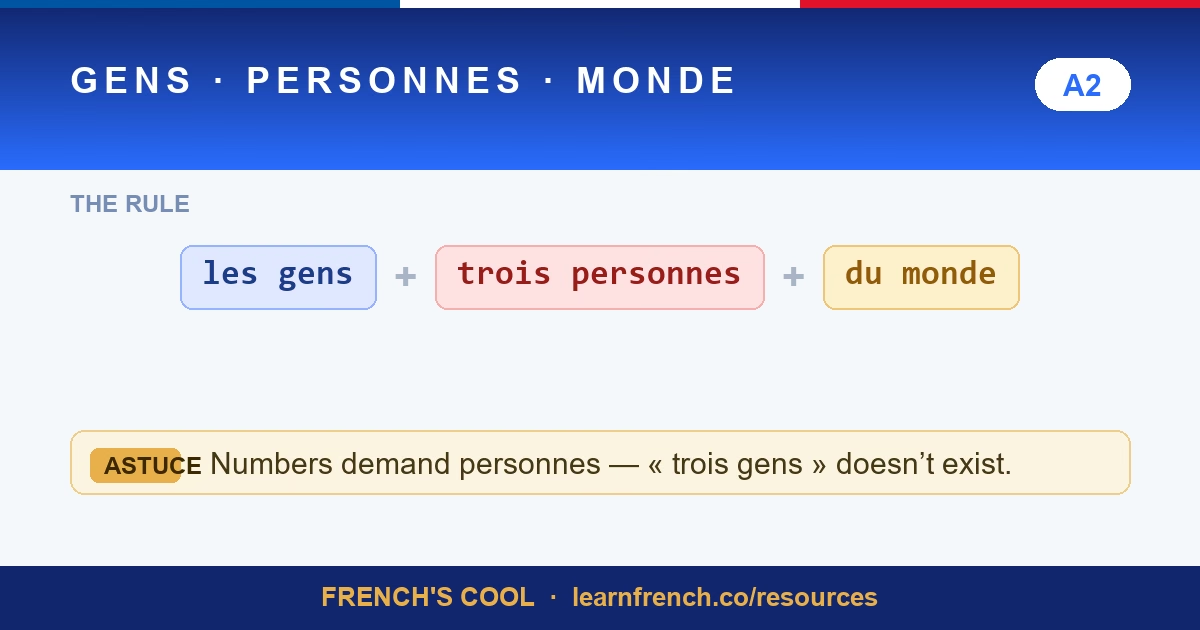
Les gens = people as an uncounted mass — you can never put a number on it. Personnes = countable individuals: trois personnes, plusieurs personnes. The moment a number or precise quantity appears, gens becomes impossible.
🎬 This lesson in one minute
The quick version — the full lesson is below. More shorts →
Les gens — people in general
Plural-only, never with a number: Les gens sont sympas ici. (People are nice here.) Beaucoup de gens pensent que… Vague quantities are fine (beaucoup de, peu de, la plupart des gens) — precise numbers are not.
Personnes — people you can count
The moment a number appears, switch: une table pour quatre personnes, trois personnes attendent. « Trois gens » is the error that instantly flags a learner — numbers demand personnes. (Bonus: personne alone, with ne, means NOBODY: Je ne vois personne.)
Du monde — the crowd-o-meter
To say how busy a place is, French measures “world”: Il y a du monde ! (It’s crowded!) Il y avait beaucoup de monde au marché. And of course tout le monde = everyone — grammatically singular, as covered in the tout lesson.
The quick sorter
| You want to say | Use | Example |
|---|---|---|
| people in general | les gens | Les gens adorent ce café. |
| N people | N personnes | Nous sommes cinq personnes. |
| a crowd / “busy” | du monde | Il y a trop de monde. |
| everyone | tout le monde | Tout le monde est là. |
| people = “one/you” | on | En France, on dîne tard. |
In real sentences
Read each one aloud, then tap 🔊 and shadow the audio — rhythm first, speed later.
Drill it: the pronoun on · tout in all its forms · plural nouns
✍️ Your turn: countable or not?
« Four people are waiting » = ? (number)
Show answer
Quatre personnes attendent — a number forces personnes.
« People say it’s difficult » = ? (the mass)
Show answer
Les gens disent que c’est difficile (or: on dit que…).
What does « personne ne travaille » mean? (the trap)
Show answer
Nobody works — personne + ne flips into « nobody ». Context and the ne keep it apart from « a person ».
Can you say « quelques gens »? (count check)
Show answer
No — quelques counts, so it needs personnes: quelques personnes. With gens use beaucoup de, peu de, la plupart des.
Is « une personne » masculine when it’s a man? (grammar vs person)
Show answer
No — personne is always feminine: cette personne est très gentille, even about your grandfather.
FAQ
Can gens ever take a number?
No — that’s the whole division of labour: gens is the uncountable mass, personnes the countable unit. Des milliers de gens works (vague thousands); « mille gens » doesn’t.
What about « peuple »?
Un peuple = a people, a nation (le peuple français). Using it for “people around town” sounds like a political speech.
Is « personne » feminine even for men?
Always: Paul est une personne intéressante. Grammatical gender ≠ real-world gender — same as une victime, une star. More in noun gender.
The last row of the table deserves its own lesson: on, the most French pronoun of all.
Is there a third option between gens and personnes?
Du monde — the crowd word: il y a du monde (it’s busy), il y avait un monde fou (it was packed). Everyday spoken French reaches for it constantly.
I saw « les vieilles gens » in a novel — feminine gens?!
A fossil: an adjective placed directly BEFORE gens goes feminine (les vieilles gens, les bonnes gens) while everything after stays masculine. Literary French only — recognise it, never build it.
Quick practice
Play the Quiztap to start · quick practice from this material