How to Say and Write the Date in French
Booking a table, signing a form, making plans — dates in French come up daily, and they work differently from English in three small ways: the order, the numbers, and the little word le.
What you'll learn
Booking a table, signing a form, making plans — dates in French come up daily, and they work differently from English in three small ways: the order, the numbers, and the little word le. Two minutes and you’ll have it.
📅 Day-month-year, lowercase, and only the 1st is special
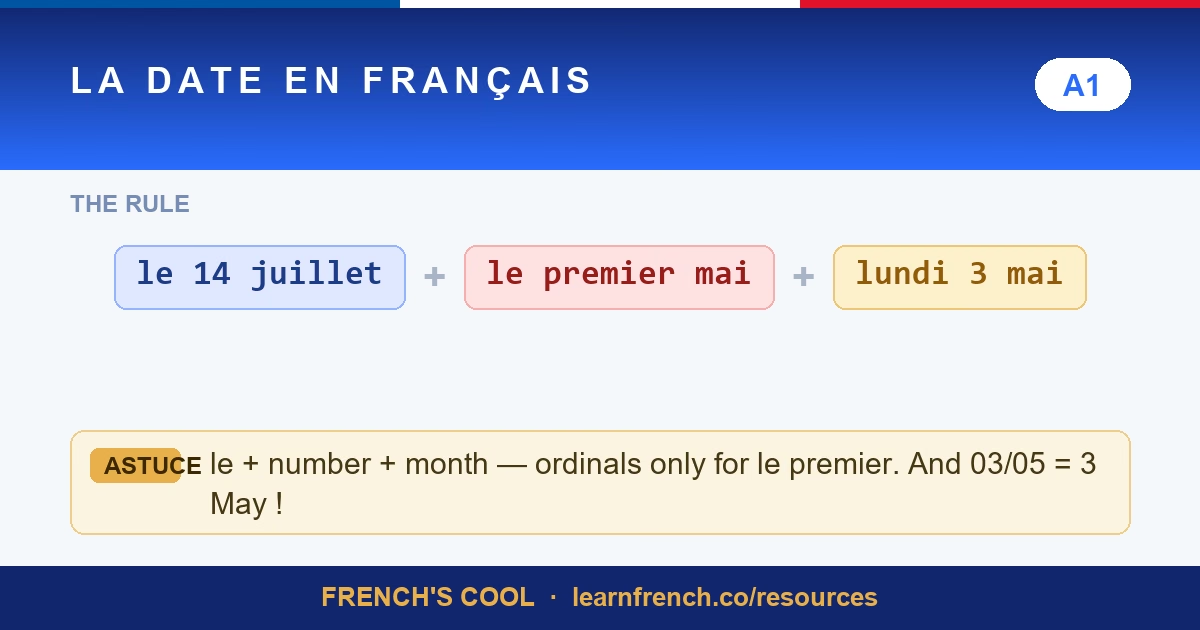
French dates run day → month → year with plain numbers: le 14 juillet 2026. No capitals on days or months, no ordinals — except the first of the month, which keeps its er: le 1er janvier. And 05/09 means the 5th of September, never May 9th.
🎬 This lesson in one minute
The quick version — the full lesson is below. More shorts →
The formula
le + number + month (+ year) — « le 14 juillet 2026 ». Said aloud: « le quatorze juillet ». That’s it — no « of », no ordinals…
…except the first
The 1st of the month is the lone exception: le premier — « le premier mai », written « le 1er mai ». Every other day uses the plain number: le deux, le trois, le vingt et un.
Asking and answering
- « Quelle est la date aujourd’hui ? » / « On est le combien ? » (spoken)
- « Nous sommes le trois mai. » / « On est le trois. »
- Days join in without prepositions: « lundi 3 mai » — no comma, no « the ».
Writing dates: watch the numbers
French numeric dates are day/month/year: 03/05/2026 is the 3rd of May, not March 5th — a genuinely dangerous difference on bookings and forms. Months are lowercase (mai, juillet), and years read as plain numbers: deux mille vingt-six.
Making plans: dates in real sentences
- « Tu es libre le 12 ? » — Are you free on the 12th? (le + number = “on the”)
- « On se voit samedi ? » — See each other Saturday? (no preposition!)
- « Je suis disponible à partir du 3 mai. » — available from May 3rd.
- « C’est pour le 14 juillet. » — it’s for the 14th (bookings).
- « Vers la fin du mois. » — around the end of the month.
Notice English says on Monday; French just says the day. Rehearse with the calendar chart before your next booking.
Years, decades and centuries
- In + year: en 2026 — « Je suis arrivé en 2020. »
- Decades: les années 90 (the nineties) — never add an -s to the number.
- Centuries: au XXIe siècle (in the 21st century) — centuries use Roman numerals and ordinals: le vingt-et-unième siècle.
Practise with the French calendar itself
France’s fixed holidays are perfect date drills: le 1er janvier (le jour de l’an), le 1er mai (la fête du Travail), le 14 juillet (la fête nationale), le 11 novembre (l’Armistice), le 25 décembre (Noël). Say each aloud — two are premier dates, and that’s no accident: the exception gets drilled for free. More celebrations on the fêtes chart.
In real sentences
Read each one aloud, then tap 🔊 and shadow the audio — rhythm first, speed later.
Drill it: temps, fois or heure · days & months chart · French numbers
✍️ Your turn: date it like the French
A French letter dated 05/09/2026 was written on…? (order)
Show answer
The 5th of September — day first, always.
« March 1st » = ? (the only ordinal)
Show answer
Le 1er mars — every other day is cardinal: le 2 mars, le 21 mars.
Lundi vs le lundi — difference? (article = habit)
Show answer
Lundi = this Monday (on se voit lundi); le lundi = every Monday (je travaille le lundi).
« in 1995 » = ? (year preposition)
Show answer
En 1995 — en + year, en + month too (en septembre).
Read aloud: 14 h 30. (24-hour life)
Show answer
Quatorze heures trente — France runs officially on the 24-hour clock; deux heures et demie survives in casual talk.
FAQ
Do French dates use ordinal numbers like English?
Only for the 1st (le premier). English says « May third »; French says « le trois mai » — cardinal numbers everywhere else.
How do I write the date in a French letter?
City + comma + date: « Nantes, le 14 juillet 2026 ». The « le » stays, the month stays lowercase.
What about days of the week with dates?
Just stack them: « mercredi 14 juillet ». No preposition, no comma. All the days and months, with audio, are on the calendar chart and the new months & seasons page.
How do I ask what the date is?
On est le combien ? (casual) or Quel jour sommes-nous ? (careful). Answer with the article: on est le 3. For the weekday: on est quel jour ? — on est mardi.
Why 14 h 30 with spaces and an h?
That is the official French time format: hours, the letter h, minutes — 9 h 05, 14 h 30, 20 h. The colon (14:30) is digital-display style; the h wins in prose.
Quick practice
Play the Quiztap to start · quick practice from this material