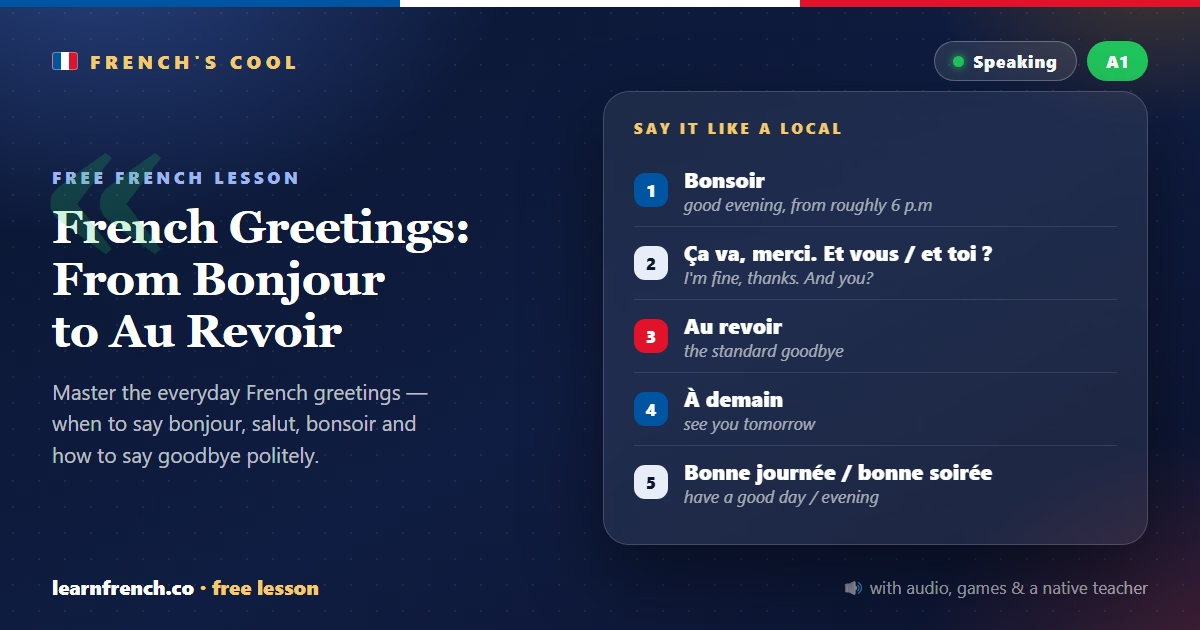
French Greetings: From Bonjour to Au Revoir
Master the everyday French greetings — when to say bonjour, salut, bonsoir and how to say goodbye politely.
What you'll learn
Greetings are the very first thing you’ll use in French — and getting them right instantly makes you sound warmer and more at home. They’re also where politeness lives in France: a good bonjour opens doors that grammar never will.
🎬 This lesson in one minute
The quick version — the full lesson is below. More shorts →
Saying hello
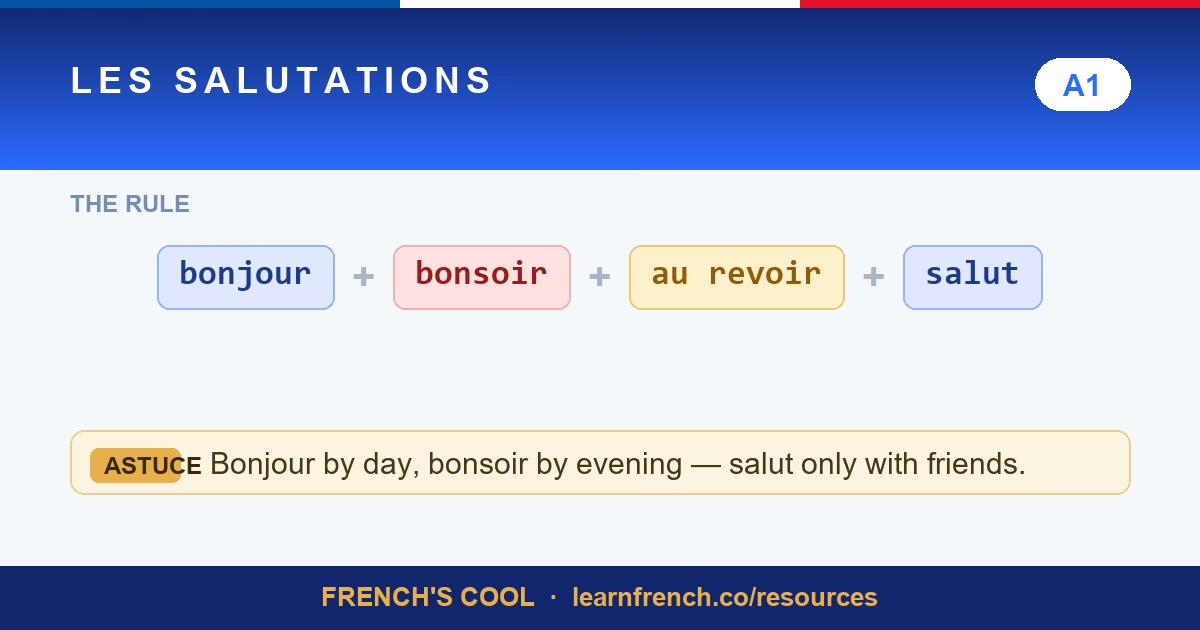
- Bonjour — hello / good day. The universal greeting, used until the early evening. Say it when you enter a shop, a lift, a waiting room.
- Bonsoir — good evening, from roughly 6 p.m.
- Salut — casual ‘hi’ (and also ‘bye’), for friends only.
- Coucou — a very informal, affectionate ‘hiya’, for close friends and family.
- Rebonjour — ‘hello again’, when you cross paths with someone twice in a day.
Asking how someone is
- Comment allez-vous ? — How are you? (formal)
- Comment ça va ? / Ça va ? — How’s it going? (informal)
- Ça va, merci. Et vous / et toi ? — I’m fine, thanks. And you?
Note that Ça va ? works as both the question and the answer — a small, useful piece of French magic.
Saying goodbye
- Au revoir — the standard goodbye.
- À bientôt — see you soon · À plus (tard) — see you later (informal)
- À demain — see you tomorrow
- Bonne journée / bonne soirée — have a good day / evening
- Bonne nuit — good night (only when going to bed)
La bise: the cheek kiss
Among friends and family, French people greet with la bise — a light kiss on each cheek (the number varies by region, usually two). In professional or first-meeting contexts, a handshake is the safe choice. The golden rule: follow the other person’s lead.
A note on politeness
Always attach a title or name: Bonjour madame, Bonjour Monsieur Martin sounds far warmer than a bare bonjour. And in France, greeting shopkeepers and staff when you enter isn’t optional — it’s simply expected, and skipping it is the most common way tourists accidentally seem rude.
Written greetings
In messages and emails, Bonjour opens almost everything. To close warmly, use Bonne journée or, more formally, Cordialement. Friends sign off with Bisous or À plus.
Which greeting, when? Time of day, formality, place
Every way of saying hello in French answers three questions: what time is it, how well do you know the person, and where are you? Here is how a native speaker picks the right expression, and how to greet someone without thinking.
- “Bonjour” — literally means “good day”, and covers “good morning”, “good afternoon” and plain “hello”. It is the default in formal settings and with strangers: the polite way to greet people in any shop, and the one greeting a French course drills first for good reason.
- “Bonsoir” — “good evening”. The switch happens around 6 p.m.: same word for arriving at dinner or entering a bakery at night.
- “Salut” — “hi” (and also “bye”!). Informal, used with people you know. Saying “hi” to your boss with a salut is a small gamble; with friends it is the norm.
- “Coucou” — a playful “hey there”, for close friends, kids and text messages.
- “Allô” — only for answering the phone. Nobody says allô in the street; it is the one greeting French reserves for the telephone.
- “Ça va ?” — “how are you?” doubling as a greeting between people who know each other. Reply « ça va » (fine), « comme ci, comme ça » (“so-so”), and bounce it back.
Body language is part of the greeting: colleagues shake hands, friends do la bise (see above). When meeting someone for the first time in a professional context, a handshake plus “bonjour” plus the name is the way French people do it — formality first, warmth after. In Quebec the same words apply, with « bonjour-hi » famously used in Montreal shops, and « allô » often used to say hi in person.
Two rhythm tips on French pronunciation: bonjour is bon-ZHOOR (soft j, no hard n), and the -t- liaison in « comment allez-vous ? » is customary. If you can hear the difference between bonjour and bonsoir at native speed, you are already ahead of most learners of the French language.
FAQ
How do you greet in French?
Use “bonjour” with everyone until the evening, “bonsoir” after about 6 p.m., and “salut” only with people you know. Add « madame » or « monsieur » in formal greetings, and a handshake or la bise depending on the relationship.
Do I say bonjour or bonsoir?
Before roughly 18h, “bonjour”; after, “bonsoir”. There is no “good night” greeting for arriving — « bonne nuit » is only for someone going to bed.
How do I reply to Merci?
« De rien » (it’s nothing), « je vous en prie » (formal), or « avec plaisir » (with pleasure — very common in the south). All three are a polite way to close the exchange.
Which US state speaks the most French?
Louisiana — its Cajun French heritage survives in place names and family speech — with Maine a close second thanks to Quebec, the French-speaking province next door.
Practise it with a real teacher
Reading about French is one thing — saying it out loud, with someone who corrects you gently and adapts to your level, is what makes it stick. Your first 20-minute lesson with Xavier is free, with no card and no commitment. Book your free lesson and let’s put this into practice.
🎬 Video lesson
 French Greetings (French Essentials Lesson 1)
✍️ Quick quiz — did it stick?
After 6 pm, greet with ___ (evening)
Show answer
Bonsoir
See you tomorrow → à ___ ! (time word)
Show answer
demain
You’re welcome (formal) → je vous en ___ (politeness)
Show answer
prie
Play the Quiztap to start · quick practice from this material
Loading the quiz…
10 French greetings, from formal to street
Your quick-reference ladder, most formal first:
- Bonjour — hello / good day (safe with everyone, always)
- Bonsoir — good evening (from roughly 6 pm)
- Bonjour à tous — hello everyone (groups, meetings)
- Enchanté(e) — nice to meet you (first meetings)
- Salut — hi / bye (friends, tu-territory only)
- Coucou — hey! (playful, family and close friends, big with kids)
- Ça va ? — hi, how’s it going? (greeting and question in one)
- Quoi de neuf ? — what’s new? (casual)
- Allô ? — hello? (telephone only — never in person!)
- Re / Re-bonjour — hi again (seeing someone twice the same day)
Until what time can you say bonjour?
« Bonjour » works all day until the evening — switch to « bonsoir » around 6 pm, or whenever it feels like evening. There is no true French « good afternoon »: from noon to six you simply keep saying « bonjour ». And one golden rule: say bonjour once per person per day — greeting the same person twice reads as forgetting them (hence the playful « re-bonjour! »).
The « bonne … ! » family: parting wishes
Yes, French people say « bonne journée » constantly — it is how you leave a shop. The pattern is « bonne + moment »:
- Bonne journée ! — have a good day (leaving, daytime)
- Bonne soirée ! — have a good evening
- Bon week-end ! — have a good weekend
- Bonne nuit — good night (only when someone is going to bed)
- Bon courage ! — good luck / hang in there (before something hard)
Combine on your way out: « Merci, au revoir, bonne journée ! » — the complete, deeply French shop exit.
French greetings FAQ
What are 5 casual ways to say hi in French?
Salut, coucou, ça va ?, quoi de neuf ?, and the very informal « wesh » (street slang — recognise it, use with care). All of these live strictly in tu territory.
Bonjour or salut with a stranger?
Bonjour, always. « Salut » with a stranger is like opening with « hey buddy » — fine at a party of twenty-somethings, jarring at the bakery. When in doubt, bonjour + vous never fails.
How do the French answer the phone?
« Allô ? » — and it exists only on the phone. In a shop or meeting it is bonjour; saying « allô » face-to-face is a classic learner giveaway (or a joke: « allô, tu m’écoutes ? »).
🧰 Your practice kit
This guide gave you the big picture — now drill the details with these free interactive charts (each with audio examples and exercises):
Prefer a human? Book a free lesson with Xavier →