French Fillers & Interjections: Euh, Bah, Du Coup, Quoi
Euh, ben, bref, du coup, hein ? — the little noises and glue-words that make you sound like a person instead of a textbook, and how to use each one.
What you'll learn
Here’s a secret: fluency isn’t just vocabulary — it’s the little noises between the vocabulary. French conversation floats on fillers, and using three of them well makes you sound more natural than a hundred perfect sentences.
🗣️ Ten little words make you sound alive
Fillers are the punctuation of spoken French. Master about ten — euh, bah, ben, hein, quoi, bref, du coup, en fait, franchement, voilà — and your sentences breathe like a native’s instead of landing like written homework read aloud.
🎬 This lesson in one minute
The quick version — the full lesson is below. More shorts →
The thinking noises
- euh… — the French “um”. Never “um”! The mouth shape is different and natives hear it instantly.
- ben… (from bien) — “well…”: « Ben, je sais pas. »
- bah… — “well, obviously”: « Bah oui ! » (well, YES!)
- alors… — “so…”, the universal sentence-starter while your brain loads.
The glue words
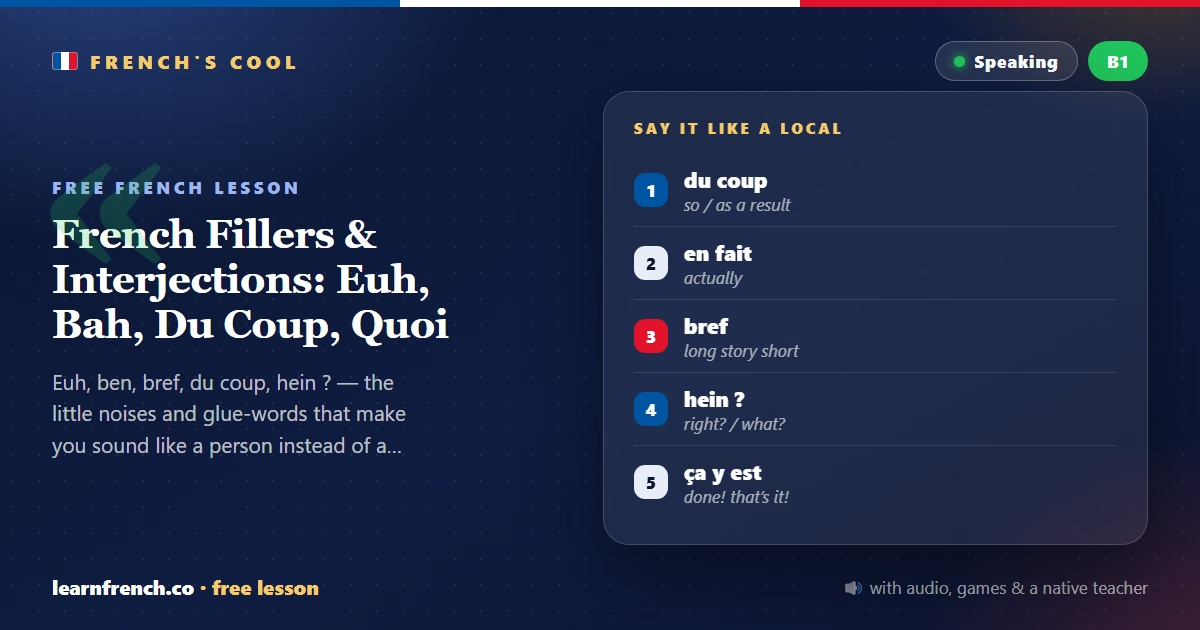
- du coup — “so / as a result”. The most-used (and most-mocked) filler in modern French: « Du coup, on y va ? »
- en fait — “actually”. Rescues any correction: « En fait, c’est le contraire. »
- bref — “anyway / long story short”. Ends a story you’ve talked too long about.
- enfin — “I mean / well” as a softener: « C’est nul… enfin, pas terrible. »
- genre — “like”, teen-flavoured: « Il était genre furieux. »
The reaction pack
- hein ? — “what? / right?”: casual repeat-request or agreement-seeker: « Il fait beau, hein ? »
- quoi (sentence-final) — untranslatable emphasis: « C’est simple, quoi. » (it’s just simple, you know)
- oh là là — real, and NOT about romance: dismay, surprise, sympathy. « Oh là là, quelle journée… »
- tiens ! — “oh look / well well”: « Tiens, salut ! »
- ça y est — “that’s it / done!”: « Ça y est, j’ai fini ! »
How to practise them
Adopt ONE thinking noise (euh), ONE glue word (du coup or en fait) and ONE reaction (hein or quoi). Use them for a week. They buy you thinking time in conversation — which means fewer panicked silences and better grammar in what follows.
In real sentences
Read each one aloud, then tap 🔊 and shadow the audio — rhythm first, speed later.
Drill it: French small talk · French text-speak · saying no politely
✍️ Your turn: place the filler
Which filler asks for agreement, like English « right? » (tag)
Show answer
hein — c’est joli, hein ?
What does du coup signal? (the 2020s tic)
Show answer
Consequence — « so / as a result ». The most overused connector in modern spoken French.
You’ve rambled and want to land the story. One word? (wrap up)
Show answer
Bref.
What is quoi doing at the end of « c’est compliqué, quoi »? (not a question)
Show answer
Pure emphasis — « you know / basically ». It asks nothing.
Which of these belong in your DELF essay? (register check)
Show answer
None — on paper use donc, en réalité, enfin. Fillers live in the mouth, not the pen (en fait and franchement survive in the oral).
FAQ
Is « du coup » bad French?
Purists tease it, everyone says it. In an exam essay, avoid it; in conversation, it’s the most native-sounding two syllables you can produce.
What’s the difference between ben and bah?
Ben hesitates (“well…”), bah asserts the obvious (“well, duh”). « Ben… peut-être » vs « Bah oui ! »
Where do I hear these in action?
Street interviews are filler goldmines — try our Easy French video lessons, and the spoken-French survival kit in the e muet lesson.
Will fillers make me sound less professional?
In speech, the opposite — a filler-free delivery sounds recited. Calibrate register instead: en fait, franchement and donc pass everywhere; bah, ben and quoi are for friends.
Hein sounds rude to me — is it?
Between friends it is pure friendliness. In formal settings swap it for n’est-ce pas, or for « comment ? » when you mean « pardon? » — a bare « hein ? » as « what? » is the one genuinely casual use.
Quick practice
Play the Quiztap to start · quick practice from this material