Tu vs Vous: When to Use Each in French (Without Offending Anyone)
Tu or vous? This simple guide explains when to use each form of you in French, so you sound polite and natural in every situation.
What you'll learn
Tu or vous? It’s the question that makes English speakers freeze — because English lost its ‘thou’ centuries ago. Get it slightly wrong and you’ll be forgiven; understand the logic and you’ll navigate French social life with ease.
🎬 This lesson in one minute
The quick version — the full lesson is below. More shorts →
The basic rule
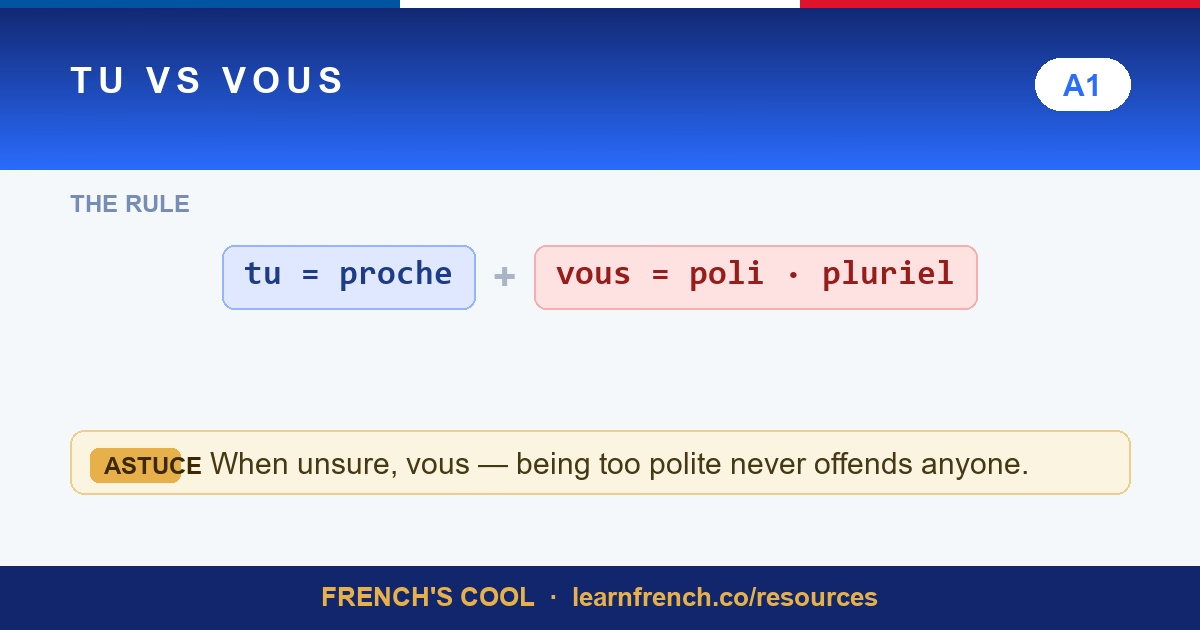
- Vous — for someone you don’t know, someone older, anyone in a position of authority, and in any professional or formal setting. It’s also the plural ‘you’ for any group.
- Tu — for friends, family, children, pets, and people who’ve invited you to use it.
The safe default with a stranger is always vous. Over-formality is mildly amusing; over-familiarity can genuinely offend.
The grey areas
Real life isn’t a textbook. A few judgement calls:
- Colleagues: many teams use tu internally, but start with vous and follow the local norm. Larger and more traditional companies lean vous; startups lean tu.
- People your own age in a relaxed setting: a party, a hostel, a sports club — tu is often fine and expected.
- Shops and services: vous, always, in both directions.
- Online and social media: tu is common, even with strangers.
How to switch to tu
There’s a polite ritual for moving from vous to tu. Someone will usually say:
- On peut se tutoyer ? — Can we use ‘tu’?
- On se dit tu ? — Shall we say ‘tu’?
The verbs are worth knowing: tutoyer (to use tu) and vouvoyer (to use vous). Let the older person or the host propose the switch.
Generational and regional notes
Younger French people move to tu faster than previous generations, especially in creative and tech circles. In the south and in rural areas, you may also find a warmer, quicker tu. But these are tendencies, not rules — reading the room beats memorising exceptions.
Mistakes to avoid
- Tutoie-ing a shopkeeper or official — it sounds disrespectful, even if you mean well.
- Mixing the two with the same person in one conversation — pick one and stay consistent.
- Assuming friendliness means tu — a warm waiter is still ‘vous’.
- Forgetting the verb changes: tu as vs vous avez, tu peux vs vous pouvez.
The bottom line
When unsure, choose vous and let the other person invite you to tu. You’ll never give offence that way — and watching for the moment someone offers tu is one of the small pleasures of belonging in French.
Practise it with a real teacher
Reading about French is one thing — saying it out loud, with someone who corrects you gently and adapts to your level, is what makes it stick. Your first 20-minute lesson with Xavier is free, with no card and no commitment. Book your free lesson and let’s put this into practice.
🎬 Video lesson
 Tu vs Vous — how to say YOU in French
✍️ Quick quiz — did it stick?
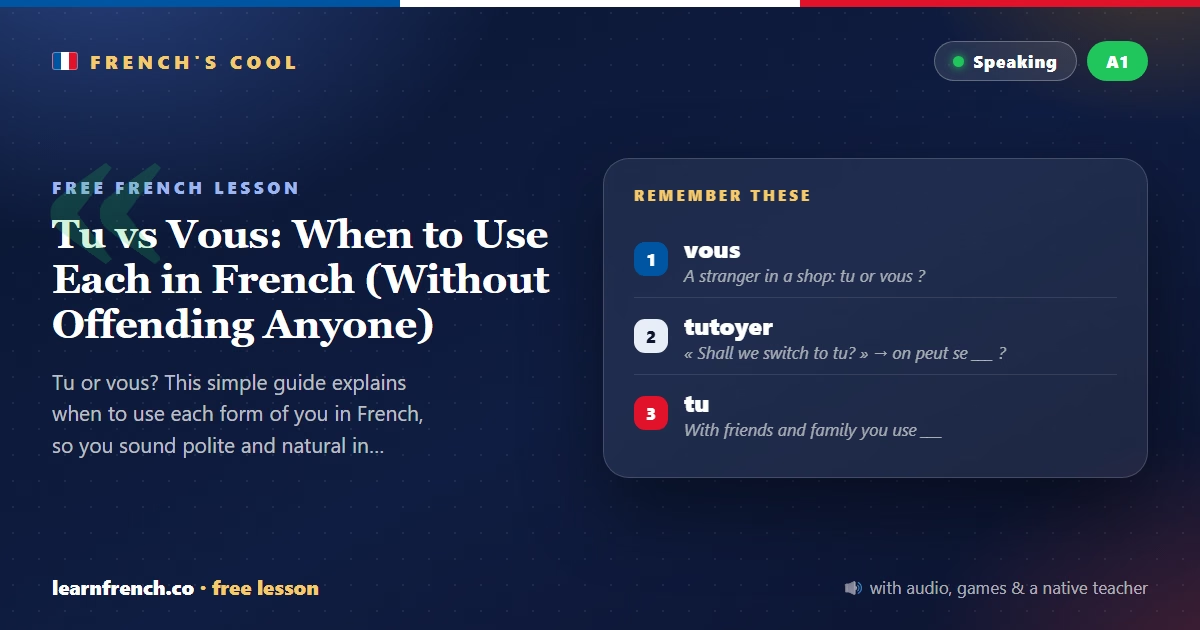
A stranger in a shop: tu or vous ? (politeness)
Show answer
vous
« Shall we switch to tu? » → on peut se ___ ? (verb)
Show answer
tutoyer
With friends and family you use ___ (informal)
Show answer
tu
Play the Quiztap to start · quick practice from this material
Loading the quiz…
The grammar under the politeness: tu, vous, toi and te
Tu and vous are both “you”, but grammatically they are two different words with two different jobs each. Tu is the informal singular subject pronoun — one person, addressed informally — and drags its own verb form along: tu es, tu as, tu parles. Vous doubles as the formal singular AND the plural pronoun: whether you address someone formally or talk to a group, the verb takes the vous form — vous êtes, vous avez, vous parlez. That is why the choice runs deeper than politeness: every sentence you build commits grammatically to one or the other, and french speakers hear the verb ending as clearly as the pronoun.
The family extends further, and the PAA-style confusions all live here. Toi is the stressed form of tu — after prepositions and for emphasis: « et toi ? », « c’est pour toi » (the vous family reuses vous: « et vous ? »). Te is the object form: « je te vois » (I see you-informal) vs « je vous vois ». And in questions, the inversion follows the same split: « as-tu…? » informally, « avez-vous…? » formally — same question, two registers. Non-native speakers worry most about the switch: when a French person uses vous with you, mirror it; the invitation « on peut se tutoyer ? » (shall we say tu?) marks the border crossing, and it is always the older person or senior colleague who offers. Until then, vous with strangers and older people is never wrong — a certain distance reads as respect, while an uninvited tu can read as anything from friendly to presumptuous. One pronoun choice, all of French social grammar and vocabulary in miniature: that is why tu vs vous is famously one of the trickiest aspects of french — and, once the reflex sets in through speaking french daily, one of the most satisfying to get right.
FAQ
What is the difference between tu es and vous êtes?
Same meaning — “you are” — different register and number: tu es to one person informally, vous êtes to one person formally or to any group. The verb always agrees with the pronoun you chose.
What is the difference between as-tu and avez-vous?
Both invert “do you have”: as-tu with informal tu, avez-vous with formal/plural vous. Pick the register first; the inversion follows automatically.
What is the difference between vous and toi?
Different slots: vous is both subject and stressed form (« et vous ? »); tu’s stressed form is toi (« et toi ? », « chez toi »). You never say « et tu ? » — that’s the giveaway error.
What is the difference between te and vous?
Te is the object form of tu: « je te comprends ». Vous stays vous as an object: « je vous comprends ». Same politeness split, applied to whoever receives the action.
tu, te, toi vs vous: the full picture
« Tu » is not just one word — it is a little family, and « vous » quietly covers all of it:
- Subject: tu parles → vous parlez
- Object: je te vois → je vous vois
- Stressed / after a preposition: avec toi → avec vous
So when you switch a sentence from informal to formal, you swap the whole set: « Je te donne ton livre » becomes « Je vous donne votre livre. »
tu es vs vous êtes: what changes on the verb
Each pronoun takes a different verb ending. « Vous » almost always ends in -ez (vous parlez, vous avez), while « tu » ends in -s (tu parles, tu as). The two you will say most: tu es / vous êtes (to be) and tu as / vous avez (to have). Pick the pronoun and the ending follows — drill both columns on the être and avoir charts.
tu vs vous FAQ
Is it rude to use tu instead of vous?
With someone who expects « vous » — an older stranger, a shopkeeper, your boss — yes, jumping to « tu » can feel over-familiar or even disrespectful. The safe rule: start with vous and let the other person invite « tu ». You will never offend anyone by being a touch too polite.
tu or vous with coworkers and your boss?
It depends on the workplace. Many modern offices, start-ups especially, are on « tu » from day one; traditional companies and anyone senior usually stay on « vous » until they invite otherwise. Listen to how colleagues address each other and mirror it.
Can vous be used for a single person?
Yes — that is the whole point. « Vous » is both the plural « you » (any group) and the formal singular « you » (one person you do not tutoie). Context makes it clear which you mean.
How do you ask to switch to tu?
Just ask: « On peut se tutoyer ? » (« Can we use tu? »). It is a small, friendly moment — say yes and the relationship moves one step closer.
🧰 Your practice kit
This guide gave you the big picture — now drill the details with these free interactive charts (each with audio examples and exercises):
Prefer a human? Book a free lesson with Xavier →