Faire vs Jouer: Sports, Music and the du/au/de la Puzzle
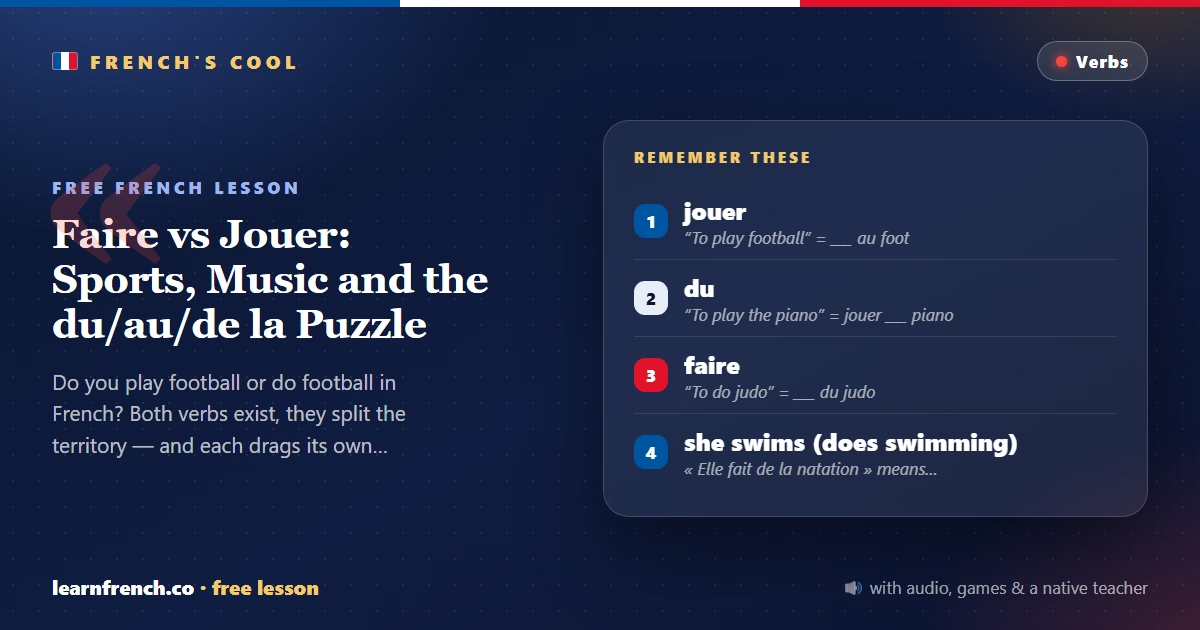
Do you play football or do football in French? Both verbs exist, they split the territory — and each drags its own preposition along. One table ends the confusion for good.
What you'll learn
Do you play football or do football in French? Both verbs exist, they split the territory — and each drags its own preposition along. One table ends the confusion for good.
🎲 When unsure, faire de is nearly always safe
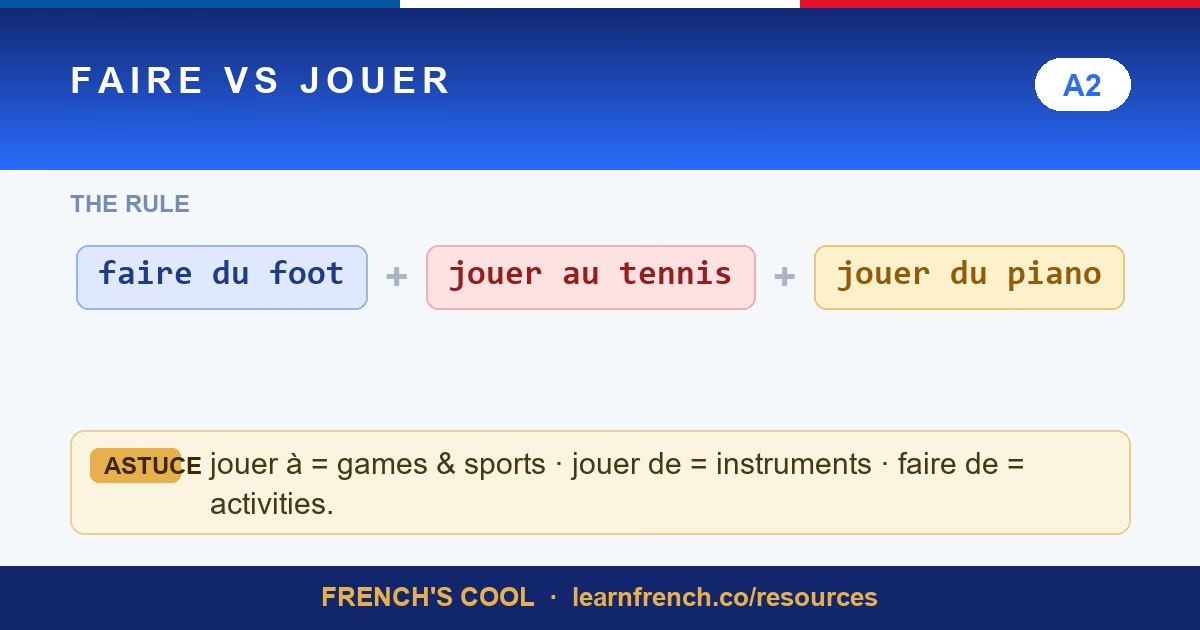
jouer à = games and sports you play against someone. jouer de = musical instruments, nothing else. faire de = the universal activity verb — sports practised alone, arts, chores. Je fais du judo will never be wrong; je joue au judo will.
🎬 This lesson in one minute
The quick version — the full lesson is below. More shorts →
The system
| Activity | Verb + preposition | Example |
|---|---|---|
| Team & ball sports (games you play) | jouer à | jouer au foot, au tennis, aux échecs |
| Sports as activity (no “game”) | faire de | faire du yoga, de la natation, de l’escalade |
| Musical instruments | jouer de | jouer du piano, de la guitare |
| Music as activity | faire de | faire de la musique |
The logic (yes, there is one)
Jouer à = games with rules and opponents — anything you could win. Jouer de = instruments, uniquely. Faire de = the catch-all “I do that activity”: it works for EVERY sport and hobby, which makes it the safe choice when unsure — « je fais du tennis » is fine even though « je joue au tennis » is more precise.
Watch the contractions
The prepositions fuse with the article: à+le=au, à+les=aux, de+le=du, de+les=des. So it’s jouer au basket (m), jouer à la pétanque (f), jouer aux cartes (pl); faire du judo (m), faire de la danse (f), faire de l’aviron (vowel).
In real sentences
Read each one aloud, then tap 🔊 and shadow the audio — rhythm first, speed later.
Drill it: hobbies vocabulary · the faire chart · à vs de
✍️ Your turn: which verb, which preposition?
Chess: tu joues ___ échecs. (plural game)
Show answer
aux — à + les échecs.
Drums: il joue ___ batterie. (instrument, feminine)
Show answer
de la.
Cycling: je fais ___ vélo. (solo activity)
Show answer
du — faire du vélo.
« The kids are playing » — which preposition? (none needed)
Show answer
None: les enfants jouent. Playing in the child’s sense takes no preposition at all.
Can you say « je fais du foot »? (honest nuance)
Show answer
Yes — it stresses the practice/training side. Je joue au foot stresses the game. Both are natural.
FAQ
Is « jouer le piano » ever right?
No — instruments always take de: jouer du piano. « Jouer le rôle » exists, but that’s playing a ROLE, theatre vocabulary.
How do I say « I play video games »?
« Je joue aux jeux vidéo » — games with rules, so jouer à. Casual French also just says « je joue » (I game).
Which verb for gym and running?
Faire: je fais de la musculation, je fais de la course (or the lovely « je cours »). No opponent, no game — no jouer.
All the sports with audio: sports chart; instruments on the music chart; and faire’s full conjugation.
Is there a list of jouer à sports vs faire de sports?
The test is opposition: if two sides face each other (foot, tennis, échecs, cartes), jouer à works. Solo or artistic pursuits (natation, danse, ski, musculation) take faire de. Team-facing sports accept both — je fais du basket / je joue au basket.
What about video games?
Jouer à: je joue à des jeux vidéo, je joue à Zelda. And the player is un joueur / une joueuse — same family.
Quick practice
Play the Quiztap to start · quick practice from this material
Keep going: Put the pair to work on your whole free time: hobbies vocabulary.