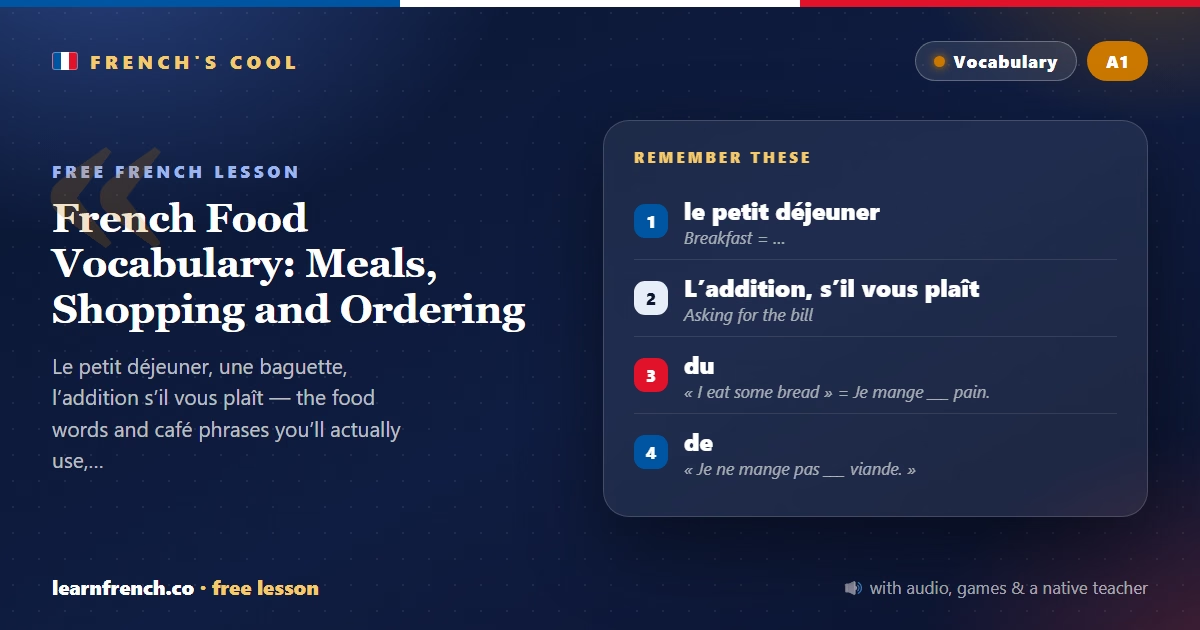
French Food Vocabulary: Meals, Shopping and Ordering
Le petit déjeuner, une baguette, l’addition s’il vous plaît — the food words and café phrases you’ll actually use, plus the du / de la rule that goes with them.
What you'll learn
Food is the fastest way into French life — and the vocabulary pays for itself on day one. Here’s what to know before your first boulangerie queue.
🥖 Three meals — and a moving target
France eats petit déjeuner → déjeuner → dîner (children add the 4 p.m. goûter). Beware the moving target: in Belgium, Switzerland and Québec the same words shift one meal earlier — their déjeuner is breakfast and their dîner is lunch.
🎬 This lesson in one minute
The quick version — the full lesson is below. More shorts →
Les repas — the meals
- le petit déjeuner — breakfast (coffee + tartine or croissant)
- le déjeuner — lunch (often the main meal, 12h–14h)
- le goûter — the 4 pm snack, sacred for children
- le dîner — dinner (rarely before 19h30)
The starter kit
- le pain — bread · une baguette — the baguette · un croissant
- le fromage — cheese · le jambon — ham · un œuf — an egg
- les légumes — vegetables · les fruits — fruit · une pomme — an apple
- le poulet — chicken · le poisson — fish · le riz — rice
- l’eau — water · le lait — milk · le vin — wine · une bière — a beer
Ordering at the café
- « Bonjour, je voudrais un café, s’il vous plaît. » — I’d like…
- « Je vais prendre le menu à 15 euros. » — I’ll have…
- « Qu’est-ce que vous me conseillez ? » — What do you recommend?
- « L’addition, s’il vous plaît ! » — The bill, please!
- « C’était délicieux. » — It was delicious (say it, they glow).
Du pain, de la confiture: “some”
Talking about food usually means some of it, and French makes you say so: je mange du pain, de la confiture, des œufs. After a negative it all collapses to de: « Je ne mange pas de viande. »
In real sentences
Read each one aloud, then tap 🔊 and shadow the audio — rhythm first, speed later.
Drill it: food vocabulary chart · the partitive articles · hobbies vocabulary
✍️ Your turn: at the table
« I’m hungry » = ? (avoir, not être)
Show answer
J’ai faim — hunger is something you HAVE in French. (Very hungry: j’ai très faim.)
« some bread, some jam » = ? (partitive)
Show answer
du pain, de la confiture — food usually travels with du / de la / des.
At the restaurant, you ask for…? (not le bill)
Show answer
L’addition, s’il vous plaît.
What is le goûter? (4 p.m.)
Show answer
The children’s afternoon snack — a real institution: bread, chocolate, fruit around 4:30.
Une entrée in France is…? (faux ami)
Show answer
The starter — not the main course (that’s le plat principal). The US usage is the odd one out.
FAQ
Is « un café » an espresso?
Yes — un café ordered plain is a small espresso. Want milk? Un café crème (big, milky) or une noisette (espresso with a dash of milk). “Un café au lait” is mostly a home drink.
What’s the difference between le dîner and le souper?
In France, dinner = le dîner. In Belgium, Switzerland and Québec, le dîner is LUNCH and le souper is dinner — worth knowing before you accept an invitation.
Where do I learn the du / de la system properly?
The partitive has its own lesson: French partitive articles. For the rest of your trip mouth-to-mouth, take essential travel phrases and the full travel phrasebook.
What is a « formule » on a café menu?
A fixed-price combo: entrée + plat, or plat + dessert, cheaper than ordering separately. Le menu means the same thing (a set menu) — the printed list you read is la carte, which is why eating à la carte means off the full list.
Do the French really say bon appétit every time?
At home and among colleagues, yes — skipping it feels abrupt. One etiquette note: very formal French considers it slightly common, so at a state dinner, follow the host. Everywhere else: bon app’ !
Quick practice
Play the Quiztap to start · quick practice from this material
🎬 Watch next: Cook a croque-monsieur in French — kitchen vocabulary with gestures.
📊 Chart it: Go deeper at the table: la nourriture vocabulary chart.