Du, De la, Des: How to Say “Some” in French
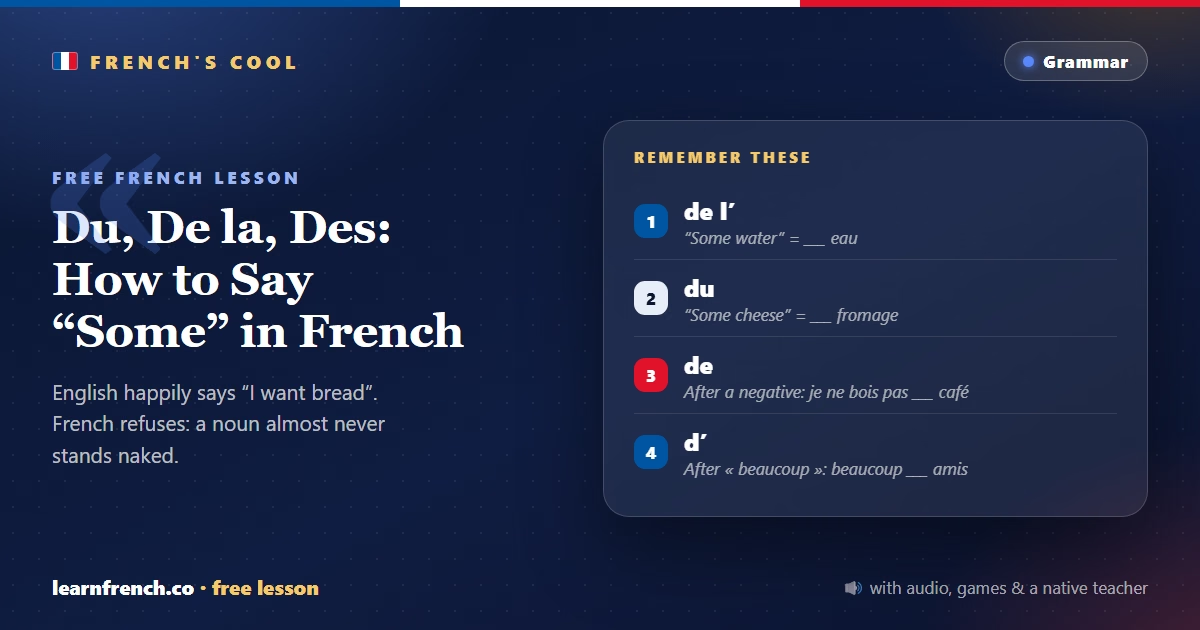
English happily says “I want bread”. French refuses: a noun almost never stands naked.
What you'll learn
English happily says “I want bread”. French refuses: a noun almost never stands naked. Enter the partitive articles — du, de la, de l’, des — the little words for “some”, and the reason learners say “je veux pain” exactly once before being corrected.
🎬 This lesson in one minute
The quick version — the full lesson is below. More shorts →
The four forms
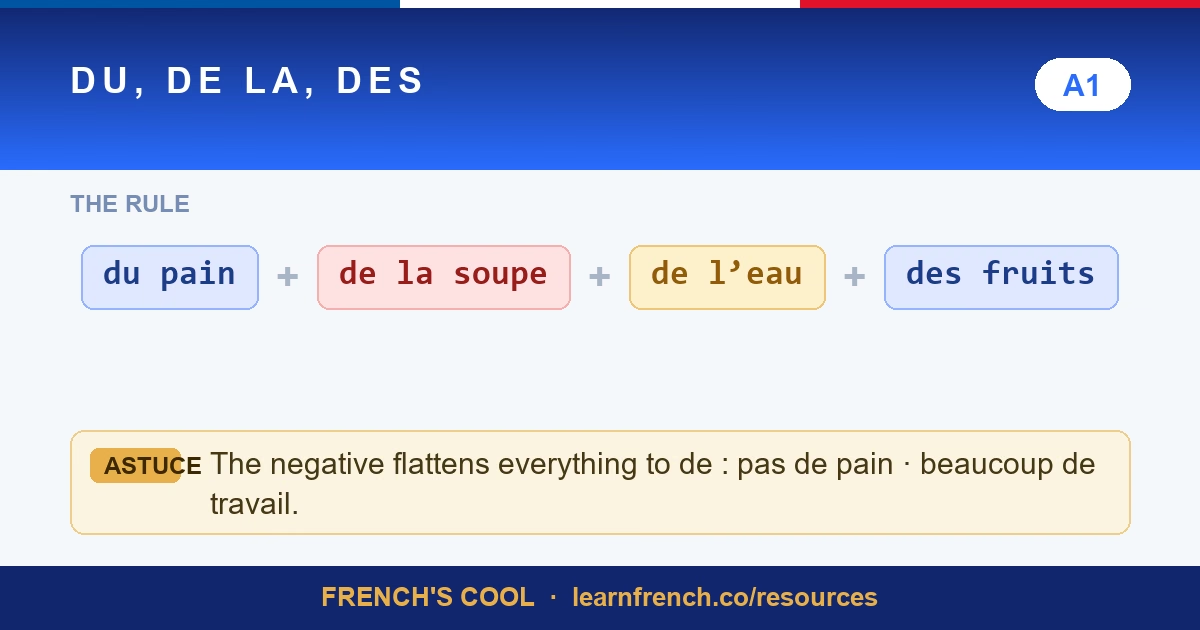
| Form | Used with | Example |
|---|---|---|
| du | masculine | Je mange du pain. |
| de la | feminine | Elle boit de la limonade. |
| de l’ | before a vowel | Tu veux de l’eau ? |
| des | plural | On achète des croissants. |
The negation rule: everything becomes de
After a negative, all four collapse to plain de: Je ne mange pas de pain. Il n’y a plus d’eau. One exception: after être, nothing changes — ce n’est pas du café, c’est du chocolat.
The quantity rule: beaucoup de
Expressions of quantity also take bare de: beaucoup de travail, un peu de sucre, un kilo de tomates, trop de bruit. Never “beaucoup des”.
Du café or le café? The aimer trap
Verbs of preference — aimer, adorer, détester, préférer — talk about things IN GENERAL, so they take le/la/les: J’aime le café (I like coffee as a concept). Verbs of consuming take the partitive: Je bois du café (an actual amount). Same drink, different article, both correct.
At the market: partitives in the wild
— Bonjour ! Je voudrais du fromage de chèvre, s’il vous plaît.
— Bien sûr. Et avec ça ?
— De la crème fraîche, des œufs… et vous avez de l’ail ?
— Ah non, désolé, il n’y a plus d’ail. Mais j’ai de très beaux oignons.
One tiny exchange, the whole system at work: unmeasured stuff (du fromage, de la crème), a vague plural (des œufs), the vowel form (de l’ail) and the negative collapse (plus d’ail). And did you catch the stallholder’s de très beaux oignons? That’s the next rule.
The des that shrinks before adjectives
In careful French, des slims down to de when a plural adjective comes before its noun: de bons amis, de belles vacances, de gros progrès. Put the adjective after the noun and des survives: des amis fidèles, des vacances reposantes. Natives often keep des in relaxed speech, so nobody will faint if you forget — but write de bonnes idées in an email and watch a French colleague quietly upgrade their opinion of you.
Partitives you can’t eat
The “some” logic runs far beyond the fridge. Activities, instruments and abstract qualities are all uncountable stuff in French:
- faire du / de la + activity: je fais du sport, elle fait de la natation — you do “some” of an activity
- jouer du / de la + instrument: il joue du piano, tu joues de la guitare
- avoir de la chance — to be lucky (luck comes in amounts, apparently)
- avoir du mal à: j’ai du mal à me lever — to struggle to
- faire du bruit, avoir du courage, avoir de la patience — noise, courage and patience, all served by the portion
Un café or du café? Ordering without the puzzled look
At the counter, order countable servings: un café, une bière, un verre de rouge. Ask a waiter for “du café” and you’ll earn a polite frown — how much coffee, exactly? The partitive lives at the table, where amounts stay open: Tu reprends du café ? Il reste de la tarte. Quick test: if the serving has edges — a cup, a glass, a slice — reach for un/une. If it’s a helping of stuff, you’re in partitive territory.
FAQ
Is du just de + le?
Exactly — du and des are contractions (de+le, de+les), which is why they double as “of the”: le prix du billet. French never writes “de le”.
Why “je n’ai pas de voiture” but “j’ai une voiture”?
Un/une follow the same collapse rule in the negative: pas de voiture, pas d’idée. Think of pas de as one welded unit.
How do I practise this with food vocabulary?
The food chart is the natural gym — order du fromage, de la soupe and des légumes, then check yourself on the partitive articles chart.
Compare with the definite and indefinite system on the articles chart, and see all the quantity expressions in exprimer la quantité.
Quick practice
Play the Quiztap to start · quick practice from this material
Keep going: See the partitive in its natural habitat: French food vocabulary.