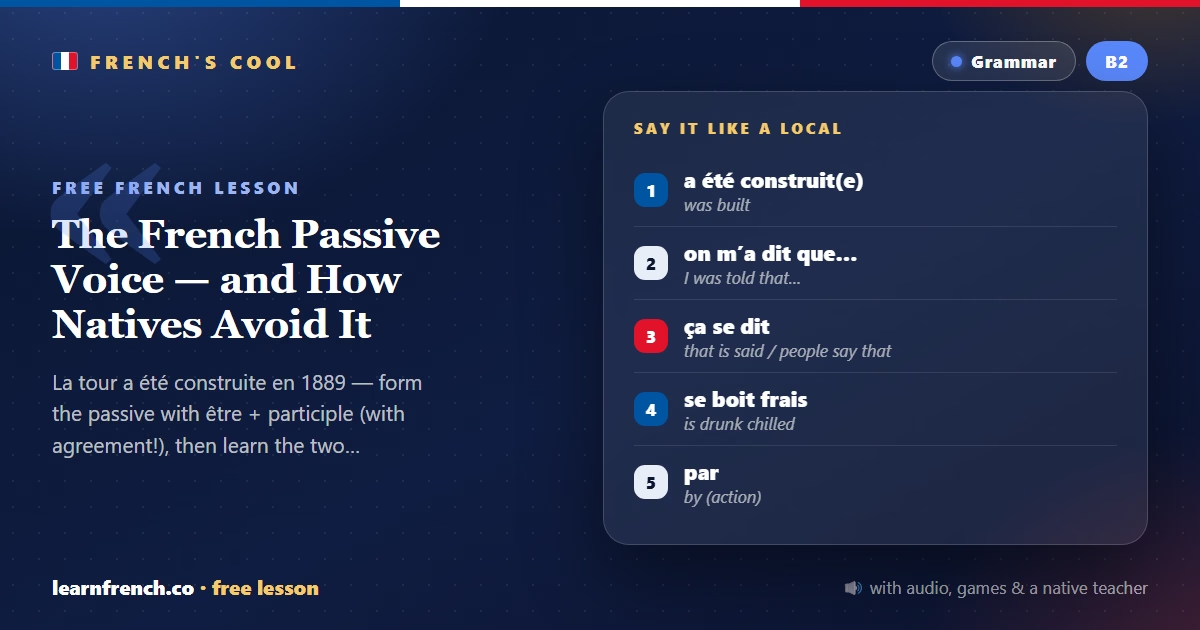
The French Passive Voice — and How Natives Avoid It
La tour a été construite en 1889 — form the passive with être + participle (with agreement!), then learn the two structures French actually prefers: on and reflexives.
What you'll learn
French has a passive voice — « la tour a été construite en 1889 » — but here’s the insider truth: natives often dodge it. Learn the form, then learn the dodges; the dodges are what make you sound French.
🎭 French can build the passive — and mostly avoids it
The form is être + past participle, agreeing with the subject: la maison a été construite. But everyday French dodges it three ways: on (on m’a volé mon vélo), se-verbs (ça se boit frais) and c’est…qui. Recognise the passive everywhere; produce the dodges.
🎬 This lesson in one minute
The quick version — the full lesson is below. More shorts →
The true passive: être + participle
Conjugate être in any tense, add the participle, and make it agree with the subject:
- Le château est visité par des milliers de touristes. (present)
- La lettre a été envoyée hier. (passé composé — envoyée agrees with la lettre)
- Les résultats seront publiés demain. (future)
The doer takes par (action) or de (state/feeling): entouré de montagnes, aimé de tous.
Dodge 1: on
No known doer? French grabs on: « On m’a volé mon vélo » (my bike was stolen), « On parle français ici » (French is spoken here). This is THE most common passive-replacement in speech.
Dodge 2: the reflexive passive
For general truths about things: « Le vin blanc se boit frais » (white wine is drunk chilled), « Ça se dit ? » (is that said?), « Ce plat se prépare en dix minutes ». Elegant, everywhere, and worth stealing immediately.
When the true passive IS the right choice
News, formal writing, and whenever the receiver matters more than the doer: « Trois personnes ont été blessées. » Journalism French is passive country — useful for reading Le Monde.
Dodge 3: se faire + infinitive
There’s a third dodge, and it’s the most conversational of all: se faire + infinitive. « Il s’est fait voler son portable » (he got his phone stolen), « Elle s’est fait couper les cheveux » (she got her hair cut), « Tu vas te faire gronder ! » (you’re going to get told off!).
Two things to love here. It works even when the victim is an indirect object — exactly where the true passive is forbidden. And fait never agrees before an infinitive: elle s’est fait voler, no -e. One agreement fewer in your life; savour it.
At the police station: a real exchange
— Bonjour, je voudrais signaler un vol. On m’a volé mon sac dans le métro.
— D’accord. Qu’est-ce qu’il y avait dedans ?
— Mon portefeuille et mes clés. Je me suis fait bousculer juste avant, je n’ai rien vu.
— Très bien. Votre déclaration sera enregistrée, et le sac vous sera restitué s’il est retrouvé.
Notice who uses what: you, the victim, speak in dodges — on m’a volé, je me suis fait bousculer — while the officer answers in official true-passive French: sera enregistrée, sera restitué. One conversation, both registers. That’s the whole lesson in four lines.
Common mistakes
Three errors I hear every week — fix them now and you’re ahead of most learners:
- « La tour est construite en 1889 » → « La tour a été construite en 1889 ». The tense lives on être; a present-tense passive means it’s happening or true now.
- « Elle s’est faite voler son sac » → « Elle s’est fait voler son sac ». Before an infinitive, fait is frozen — no agreement, ever. Plenty of natives slip on this one; enjoy the moral high ground.
- « Le pain se vend par le boulanger » → « Le pain se vend à la boulangerie ». The reflexive passive never names the doer. If you must say who did it, switch to the true passive or simply go active.
Which one do you pick?
A ten-second decision rule:
- General truths about things? Reflexive: ça se voit, ça se fait.
- Something happened to somebody — often you? on or se faire: on m’a prévenu, je me suis fait avoir.
- Writing formally, or reporting news? True passive: le suspect a été arrêté.
In real sentences
Read each one aloud, then tap 🔊 and shadow the audio — rhythm first, speed later.
Drill it: the pronoun on · object pronouns · compound tenses
✍️ Your turn: build it, then dodge it
Passivise: « on a pris la décision ». (être + participle)
Show answer
La décision a été prise — and prise agrees with la décision.
Why « construite » with an e? (agreement)
Show answer
The participle agrees with the passive SUBJECT: la maison… construite.
Par or de: « elle est aimée ___ tous ». (feeling verbs)
Show answer
DE tous — verbs of feeling and accompaniment prefer de; concrete actions take par.
« My bike was stolen » — the spoken way? (the dodge)
Show answer
On m’a volé mon vélo — French grabs on before it builds a passive.
What does « ça se voit » literally do? (se-passive)
Show answer
« It sees itself » = it shows / it’s obvious — the pronominal passive, everywhere in speech: ça se comprend, ça se fait.
FAQ
Why can’t I say « je suis donné un livre »?
Only DIRECT objects can become passive subjects. Donner takes à quelqu’un (indirect) — so English “I was given” must become « on m’a donné un livre ». The direct/indirect split: object pronouns.
Par or de after the passive?
Par for real actions (construit par Eiffel); de for states, feelings and descriptions (couvert de neige, respecté de tous).
Does the participle always agree?
In the passive, yes — it behaves like an adjective on être: la porte est ouverte, les lettres ont été écrites. Same agreement logic as être-tenses everywhere.
When is the real passive the RIGHT choice?
News, history, formal writing, and whenever the receiver matters more than the doer: le suspect a été interpellé. In conversation it can sound stiff — if on works, on wins.
Why can’t « téléphoner à » be passivised?
Only DIRECT objects can become passive subjects. Téléphoner à quelqu’un has no direct object, so « elle a été téléphonée » is impossible — French says on lui a téléphoné. Same for demander à, répondre à, plaire à.
Quick practice
Play the Quiztap to start · quick practice from this material