On: The Most French Pronoun of All (and Why Nobody Says Nous)
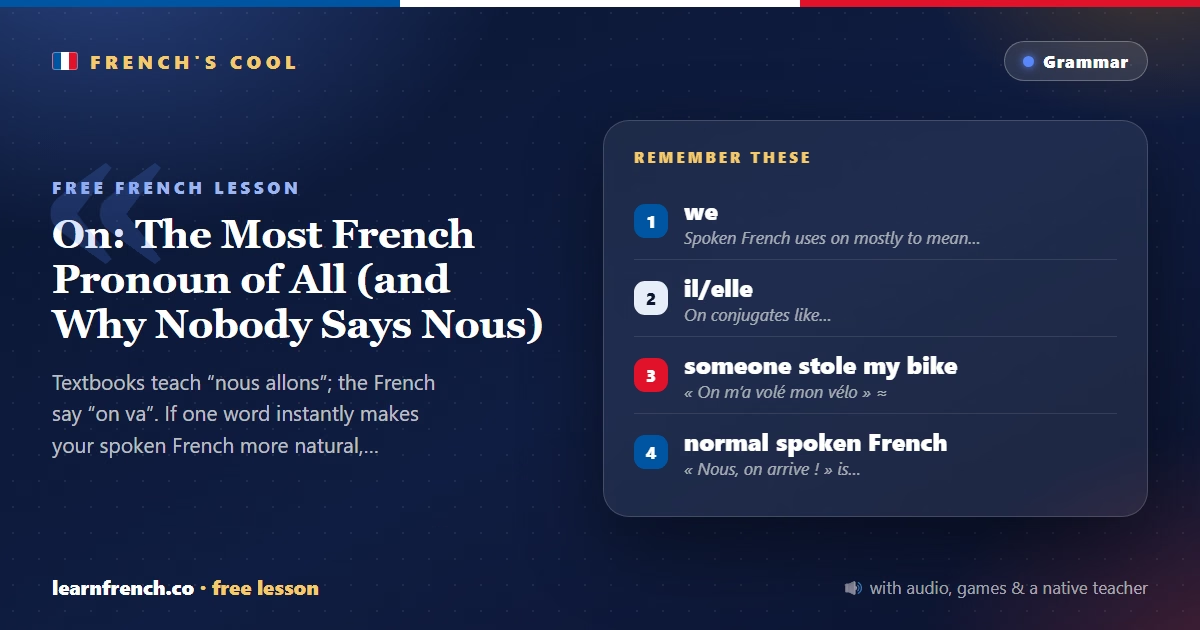
Textbooks teach “nous allons”; the French say “on va”. If one word instantly makes your spoken French more natural, it’s this two-letter pronoun — and it conveniently uses the EASIEST conjugation in…
What you'll learn
Textbooks teach “nous allons”; the French say “on va”. If one word instantly makes your spoken French more natural, it’s this two-letter pronoun — and it conveniently uses the EASIEST conjugation in the language.
👥 One pronoun, one conjugation
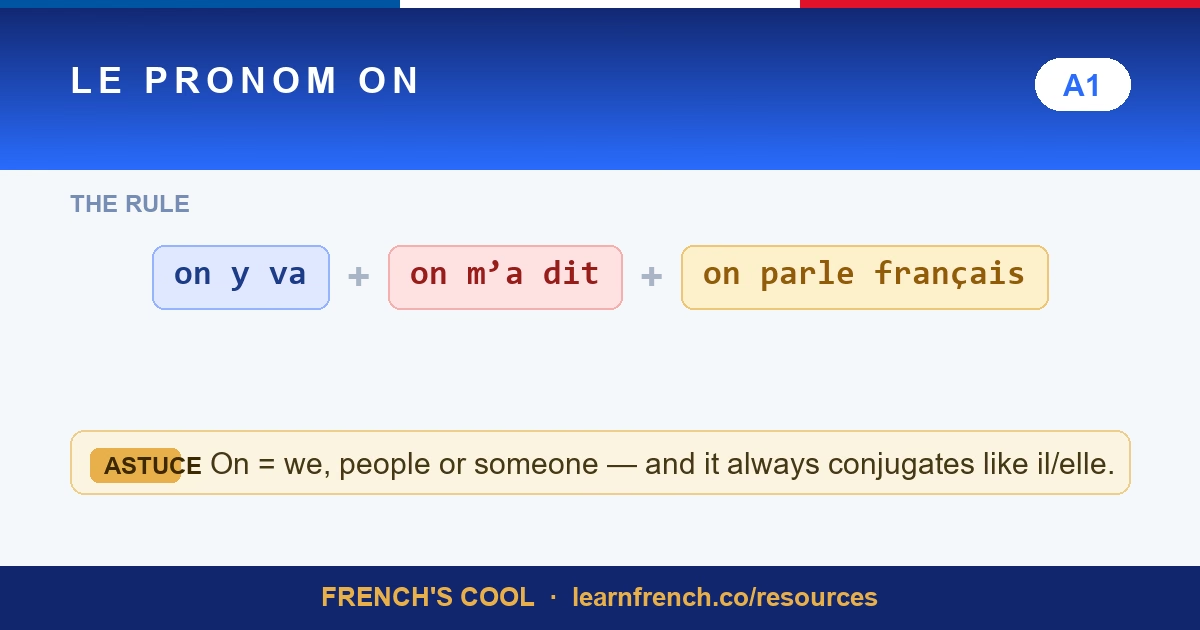
Whatever on means — we, people, someone — it always conjugates like il/elle, third person singular: on va, on est, on a. That is the entire grammar. The meaning comes from context, the verb never changes.
🎬 This lesson in one minute
The quick version — the full lesson is below. More shorts →
Meaning 1: we (the spoken default)
In conversation, on has almost fully replaced nous as the subject: On y va ? (Shall we go?), On habite à Lyon. (We live in Lyon.), On se voit demain ? (See each other tomorrow?). Nous survives in writing and formal speech.
Meaning 2: people in general / “one”
En France, on dîne tard. — In France, people eat late. On ne sait jamais. — You never know. This is English’s vague “you/they/one”, without the stiffness.
Meaning 3: someone (unknown)
On m’a volé mon vélo. — Someone stole my bike. On sonne à la porte. — Someone’s at the door. French often prefers this to a passive sentence.
The grammar bonus: il/elle conjugation
Whatever it means, on conjugates like il/elle — third person singular: on est, on a, on fait, on peut. No new endings to learn. One quirk: when on means “we”, the agreement often follows the real people — On est allés au cinéma (plural -s, standard and accepted).
In real sentences
Read each one aloud, then tap 🔊 and shadow the audio — rhythm first, speed later.
Drill it: object pronouns · tu or vous at work · the aller chart
✍️ Your turn: who is on?
On ___ (aller) au cinéma ce soir. (third singular)
Show answer
va — always: on va, never on allons.
Who did it in « on m’a volé mon vélo »? (unknown doer)
Show answer
Somebody unspecified — French says on where English says « someone » or uses a passive (my bike was stolen).
Why « on est arrivés » with a plural participle? (on = nous)
Show answer
When on clearly means we, the participle usually agrees in the plural — standard in writing that reflects speech.
When would you still choose nous over on? (register)
Show answer
Formal writing and prepared speech: essays, cover letters, presentations. In conversation, on dominates.
What is « l’on » in « le restaurant où l’on mange bien »? (pure sound)
Show answer
The same on with a decorative l’ for euphony after que, où, si — formal flavour, zero change in meaning.
FAQ
Is on informal or bad French?
Neither — it’s universal in speech at every social level. What IS marked is register: in a formal letter or presentation, write nous. Speaking? On, every time.
What is “l’on” with the extra l?
Pure elegance: after words like si, ou, que, written French may insert l’ for sound — si l’on veut. Same meaning, dressier outfit. Never required.
Does on ever mean “you” directly?
Colloquially yes — a waiter’s “On a choisi ?” means “Have you decided?”. Context does the work; smile and answer.
See the full paradigm on the pronom on chart, and pair it with tu vs vous — together they cover every “who am I talking to” decision in French.
Is nous disappearing?
No — it has simply retreated to writing and formal speech. In conversation the French say on nine times out of ten, but your DELF essay still wants nous.
Can on mean « you » in general statements?
Yes — that is its generic use: « quand on est fatigué, on fait des erreurs » = when you’re tired, you make mistakes. English you / one / people all collapse into on.
Quick practice
Play the Quiztap to start · quick practice from this material
Keep going: On is also how French dodges the passive — see the passive voice and its native alternatives.