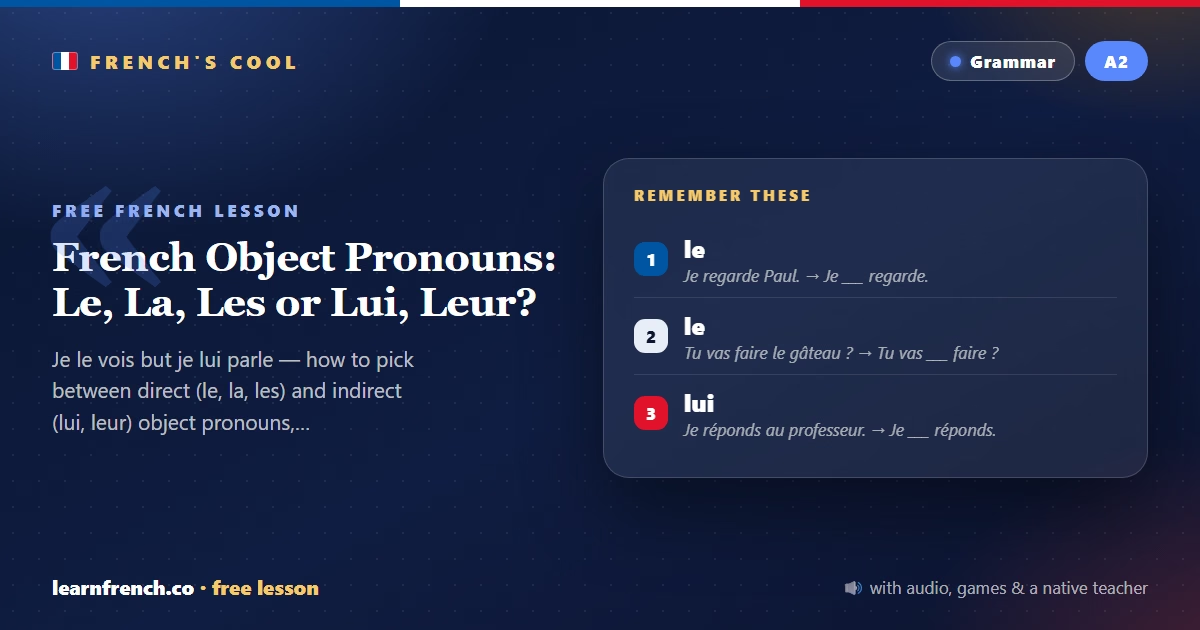
French Object Pronouns: Le, La, Les or Lui, Leur?
Je le vois but je lui parle — how to pick between direct (le, la, les) and indirect (lui, leur) object pronouns, where they go, and the double-pronoun order.
What you'll learn
« Tu as appelé ta mère ? — Oui, je l’ai appelée. » French replaces nouns with tiny pronouns that jump in front of the verb. The only real decision is: direct or indirect?
📍 The order is fixed — learn it once
Before the verb, pronouns line up in one unchangeable order: me/te/nous/vous → le/la/les → lui/leur → y → en. « Il me le donne », « je lui en parle ». Memorise the ladder and every sentence assembles itself.
🎬 This lesson in one minute
The quick version — the full lesson is below. More shorts →
Direct: le, la, l’, les
If the verb connects to its object with no preposition, use a direct pronoun:
- Je vois Marie → Je la vois. — I see her.
- Tu prends le bus ? → Tu le prends ? — Do you take it?
- Il aime ses voisins → Il les aime. — He likes them.
Indirect: lui, leur
If the verb needs à before a person — parler à, téléphoner à, répondre à, donner à, dire à — use lui (him or her) and leur (them):
- Je parle à Paul → Je lui parle.
- Elle téléphone à ses parents → Elle leur téléphone.
The trap: some verbs are direct in French but indirect in English, and vice versa. Regarder and écouter take NO à (je l’écoute — I listen to him), while téléphoner DOES (je lui téléphone — I phone him).
Where does the pronoun go?
- Before the conjugated verb: Je le connais. / Je ne le connais pas.
- Before the infinitive when there is one: Je vais le faire. (not « je le vais faire »)
- In the passé composé, before avoir: Je l’ai vu.
Two pronouns? Fixed order
me / te / nous / vous come first, then le / la / les, then lui / leur: « Tu me le donnes ? » but « Je le lui donne. » You will mostly meet these in set phrases — don’t memorise tables, collect examples.
In real sentences
Read each one aloud, then tap 🔊 and shadow the audio — rhythm first, speed later.
Drill it: the COD & COI chart · tu me manques · the pronoun on
✍️ Your turn: place the pronoun
« I see her » = ? (direct)
Show answer
Je la vois.
« I phone my parents » with a pronoun = ? (téléphoner À)
Show answer
Je leur téléphone — téléphoner takes à, so the pronoun is indirect: leur, not les.
« He gives it to me » = ? (ladder order)
Show answer
Il me le donne — me before le, always.
« I want two of them » = ? (quantity)
Show answer
J’en veux deux — en replaces de + thing and pairs happily with a number.
Affirmative command: « give it to me » = ? (order flips)
Show answer
Donne-le-moi — after the verb, direct object first, and moi replaces me.
FAQ
Is it « je lui vois » or « je le vois »?
Je le vois. Voir is direct (voir quelqu’un, no à). Lui is only for à-verbs: je lui parle, je lui écris.
Why « je l’ai appelée » with an extra -e?
With avoir, the participle agrees with a direct object placed BEFORE the verb. La → l’ triggers appelée. Indirect lui/leur never triggers agreement.
What about y and en?
They replace à + thing and de + thing. They have their own lesson: en vs y — and the à/de verb families are mapped in à vs de.
How can lui mean both him and her?
Lui is the indirect pronoun for either gender: je lui parle = I’m talking to him OR to her. Only context decides — the gendered pair le/la exists solely for direct objects.
Why does the participle sometimes agree, like je l’ai vue?
When the direct object comes BEFORE the verb, the past participle agrees with it: je l’ai vue (her), les photos que j’ai prises. Silent in most verbs, audible in some (pris/prise) — and examiners love it.
Quick practice
Play the Quiztap to start · quick practice from this material