French Silent Letters: The Rules Behind What You Don’t Say
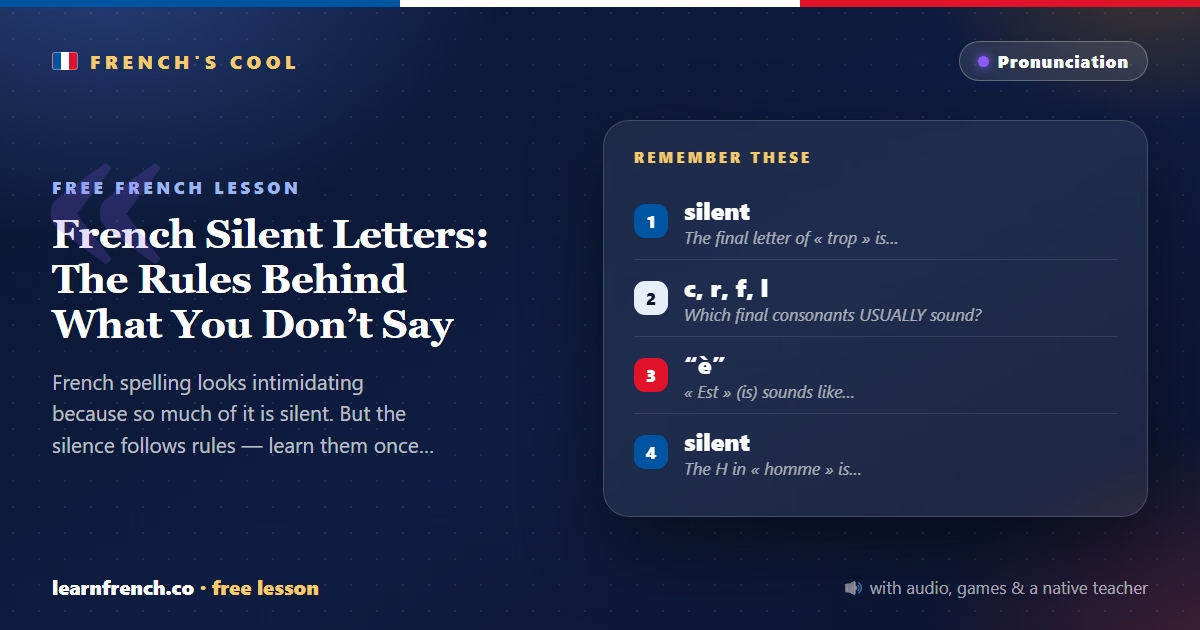
French spelling looks intimidating because so much of it is silent. But the silence follows rules — learn them once and you can pronounce almost any French word correctly on sight. Here’s the system.
What you'll learn
French spelling looks intimidating because so much of it is silent. But the silence follows rules — learn them once and you can pronounce almost any French word correctly on sight. Here’s the system.
🎬 This lesson in one minute
The quick version — the full lesson is below. More shorts →
Rule 1: final consonants are usually silent
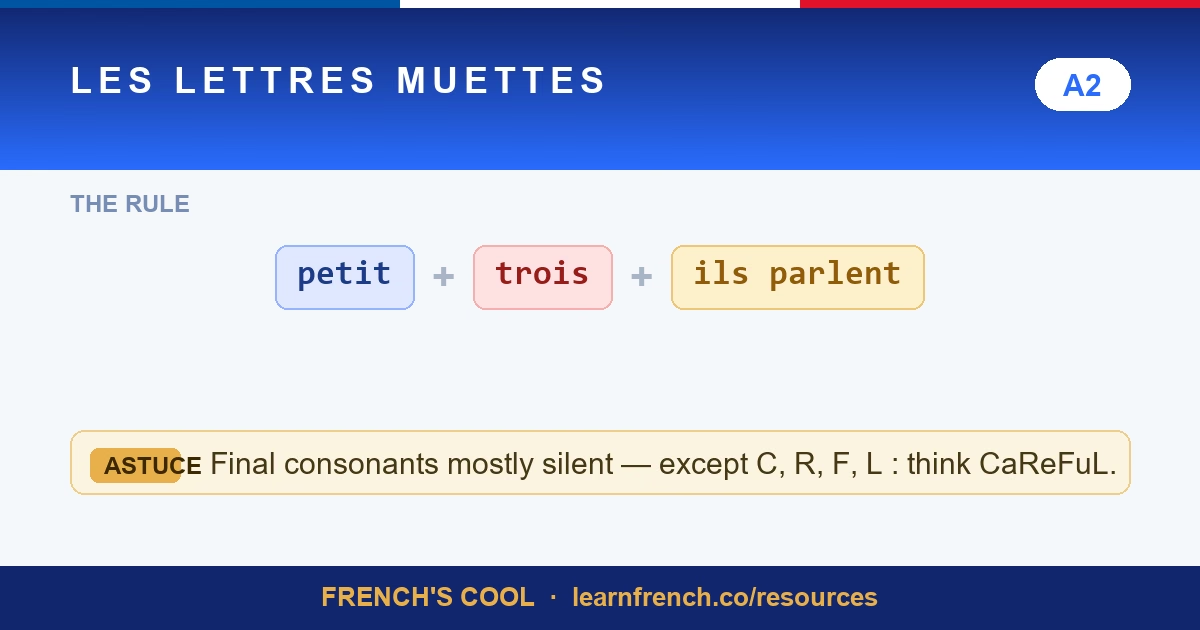
Most final consonants disappear: petit, grand, trop, blanc, nous. The famous exception set is C, R, F, L — think of the word CaReFuL — which usually ARE pronounced: avec, pour, neuf, hôtel.
Rule 2: final -e is silent (but changes everything before it)
A final -e isn’t spoken — its job is to wake up the consonant before it: petit (silent t) vs petite (t pronounced!). This is exactly how you HEAR the difference between masculine and feminine adjectives — see the agreement chart.
Rule 3: verb endings that vanish
The -ent of ils/elles verbs is completely silent: « ils parlent » sounds exactly like « il parle ». And -er, -ez both say « ay »: parler, parlez, parlé — three spellings, one sound. Full patterns on the verb charts.
Rule 4: h is always silent (but comes in two flavours)
French h makes no sound, ever: hôtel, hiver. But some h’s are « aspirated » — they silently BLOCK liaison and elision: l’hôtel (mute h) vs le héros (aspirated — never l’héros, which would sound like… les zéros!).
When silent letters come back to life: liaison
A silent final consonant often revives before a vowel: « vous » alone, but « vous_avez » = « vou-z-avez ». Liaison is the glue of spoken French — the deep dive is in our pronunciation guide and the liaison chart.
Liaison: when silence is forbidden — or compulsory
Some liaisons are obligatoires: after determiners (les_amis, un_homme), pronoun+verb (nous_avons, vous_êtes), and short prepositions (en_été, chez_eux). Others are interdites — never link: after et (et // aussi), before an aspirated h (les // héros), and after singular nouns (un étudiant // intelligent… optional at best). When in doubt: make the compulsory ones, skip the rest — that’s exactly what modern French does.
Train your eyes AND ears
Read a sentence aloud, then check yourself against audio on the liaison chart. Ten sentences a day for a week and silent letters stop being guesswork — your mouth learns the CaReFuL rule before your brain does.
One special case deserves its own list: the aspirated h, a silent letter that still blocks liaison and elision — browse the complete h aspiré word list.
FAQ
Why does French have so many silent letters?
French pronunciation kept evolving while spelling froze centuries ago — the letters record the language’s history. The upside: those silent letters often reveal meaning and grammar (plurals, feminine forms, verb endings) even when unheard.
Is the final s ever pronounced?
Rarely — in some words like fils (son, « feess »), bus, tennis, and in liaison (vous_êtes). Otherwise final s is silent, including every plural: le chat sounds like « le sha ».
How do I know if an h is aspirated?
You can’t hear it — dictionaries mark it (often with *). Common aspirated-h words: héros, haricot, huit. When unsure, listen for whether the French say l’h… or le h… and copy them.
Quick practice
Play the Quiztap to start · quick practice from this material